Why a Cinematic Elopement Film in Spain Feels Different
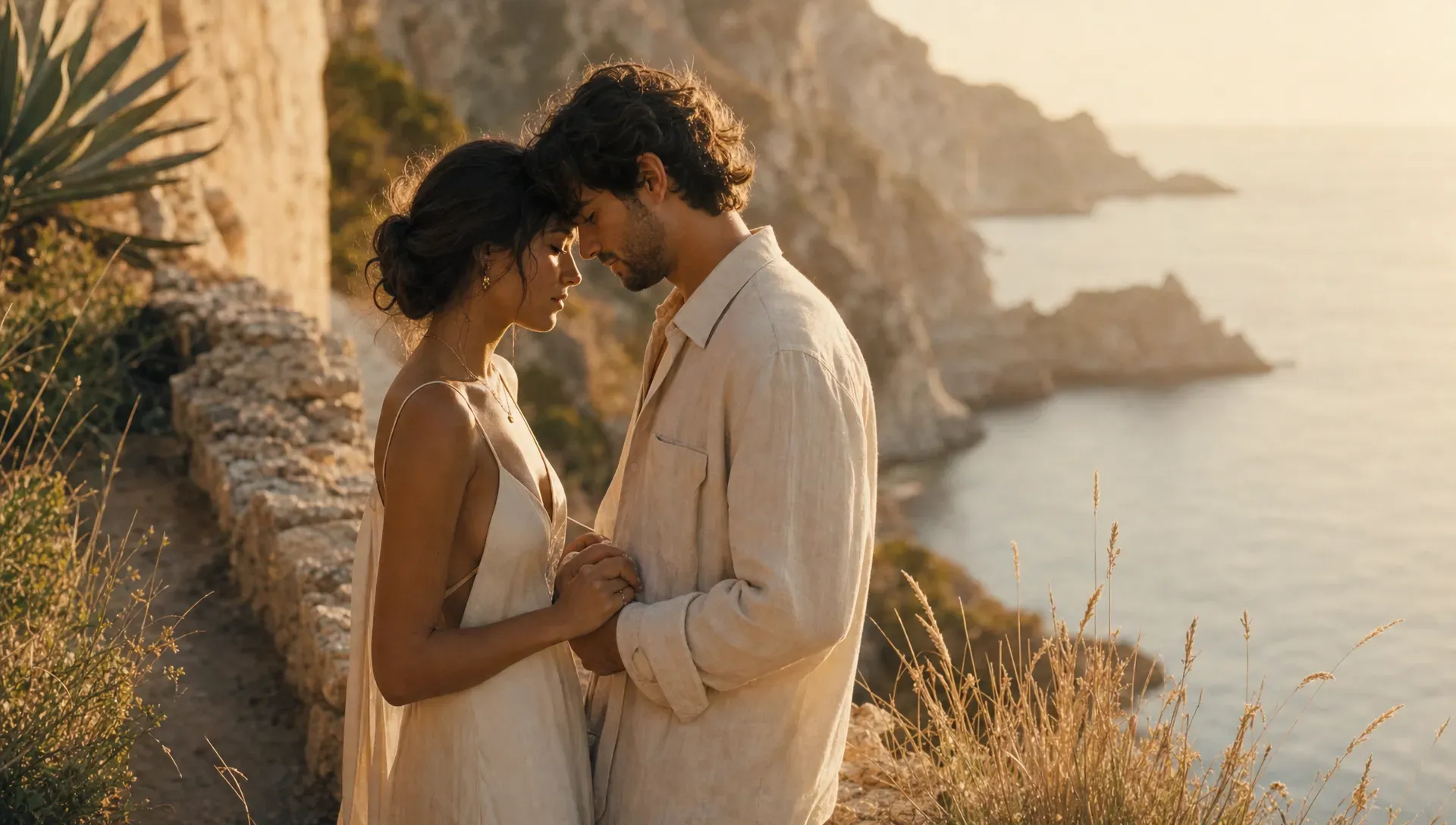
You do not want a wedding that rushes past you.
You want the kind of memory that still has weather in it.
A cliff edge. Salt on your lips. Your fingers finding each other when the wind turns.
That is why a cinematic elopement film in Spain feels different. It does not simply show what happened. It lets you return to what it felt like to be there, before the world came back in.
When memory needs more than photographs
There are moments too alive to freeze.
The way your voice shakes on the first word of your vows. The small laugh that comes before the tears. The hem of your dress moving through dry grass. The silence after you say everything you came there to say.
A photograph can hold one breath.
A film holds the breathing.
Spain gives that breathing room. The country has a way of making intimacy feel vast. You can stand beneath ochre cliffs in Andalucía, walk through an olive grove before the heat rises, or say your vows beside a cove where the sea folds itself into blue stone.
Nothing needs to be performed there.
The landscape already knows how to hold a story.
Why a cinematic elopement film in Spain carries another kind of weight
A traditional wedding film often follows an event.
A cinematic elopement film follows a feeling.
That difference begins long before the camera comes out. It begins with choosing a place that does not just look beautiful, but feels like it belongs to you. It begins with the hour of light, the path you take in, the quiet before the ceremony, the decision to let the day unfold without a crowd asking you to be anything but present.
Spain is built for that kind of storytelling.
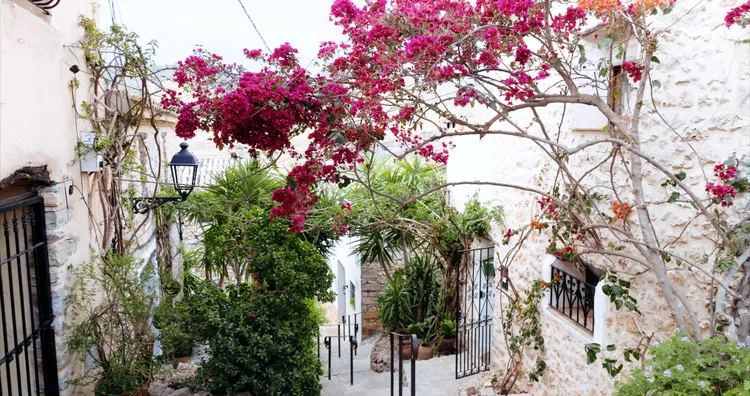
Its landscapes change quickly. Morning in the mountains can feel ancient and blue. By late afternoon, a white village wall can turn gold. At dusk, the Mediterranean can become a sheet of silver, and the whole coastline feels like it is holding its breath.
A cinematic film notices those changes.
It does not treat them as background.
It lets them become part of the story.
If you want to understand how this kind of day is shaped from the inside out, Dominick writes more about an elopement wedding in Spain planned like a film, where the location, timing, movement, and emotion are designed to belong together.
The camera is not just watching you
The difference is not only in the edit.
It is in the way the whole day is seen.
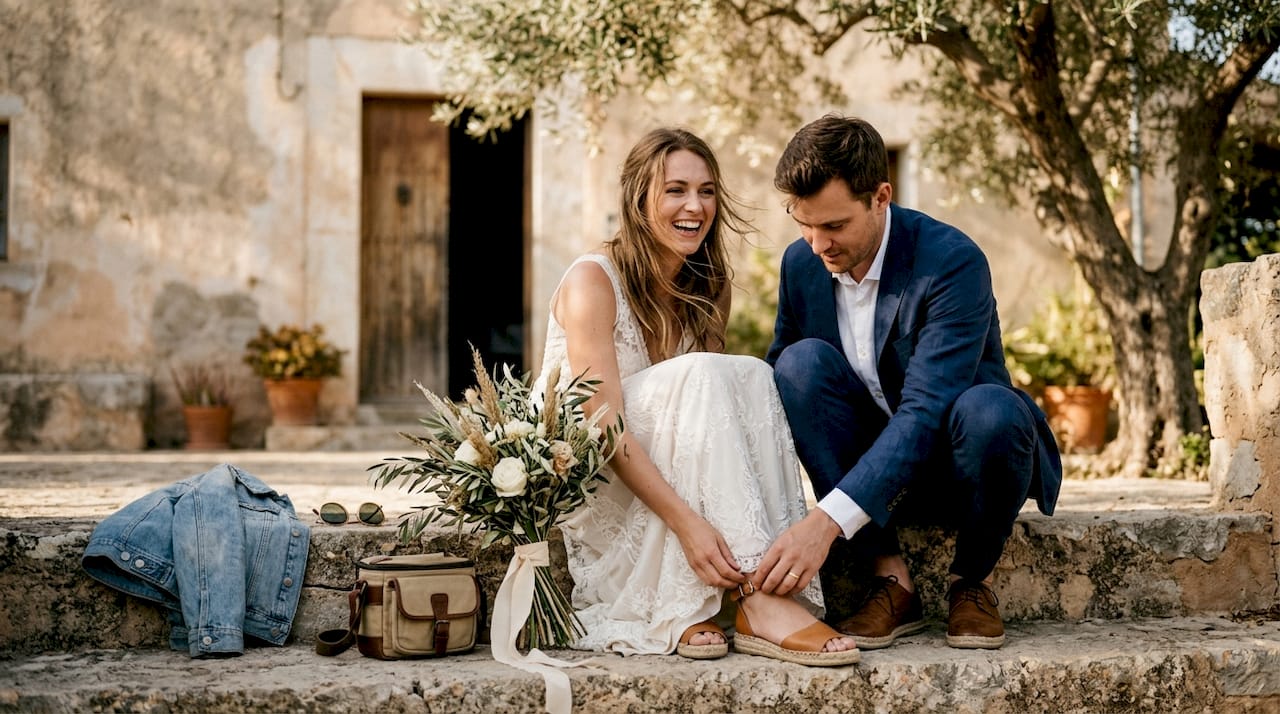
A cinematic approach gives attention to the small things most people miss. Your hand resting on a stone wall while you steady yourself. The sound of shoes on a village path. Your partner turning toward you before you even speak.
It is not about staging a perfect version of you.
It is about protecting the real one.
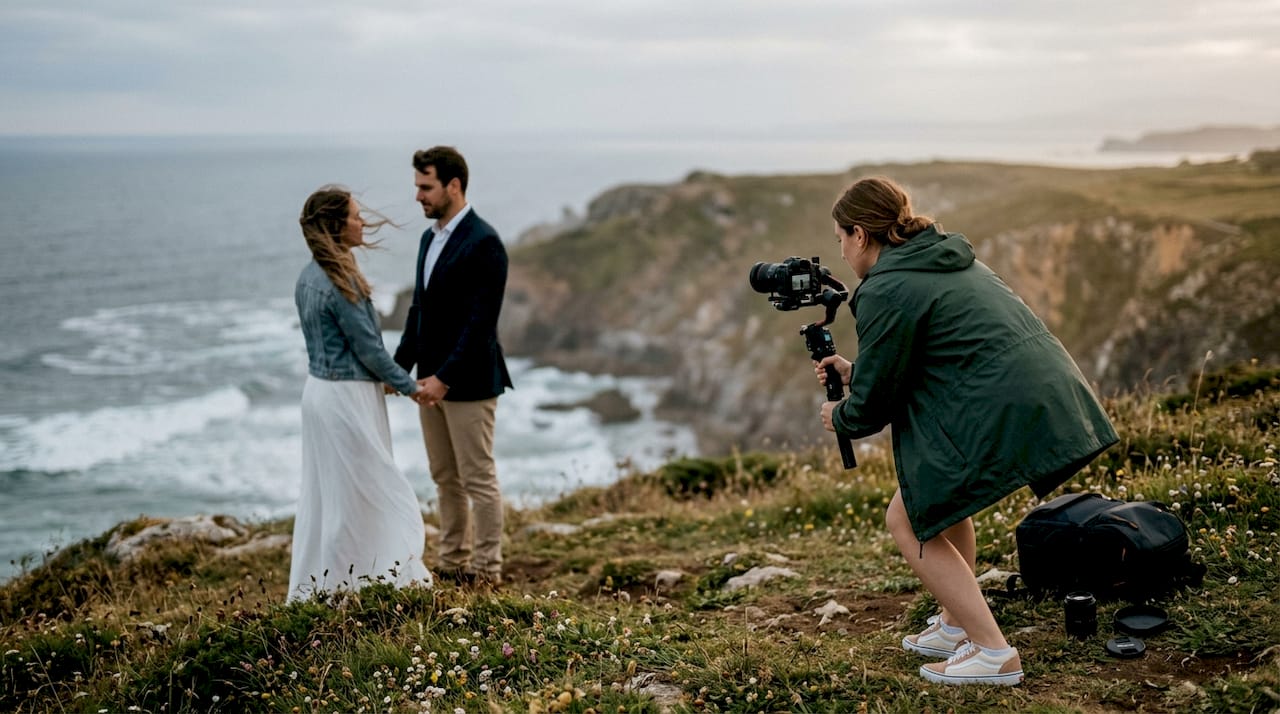
Dominick’s role is not to arrive as a stranger with a camera at the end of someone else’s plan. He helps shape the plan itself, so the film has space to breathe. The timeline is not built around convenience. It is built around light, privacy, emotion, access, and the way your energy will feel throughout the day.
Because if the day feels rushed, the film remembers that.
If the day feels spacious, the film remembers that too.
The practical things that make the film feel effortless
The most emotional films often come from very practical care.
A quiet elopement can feel simple from the outside, but simplicity usually needs someone paying attention to the invisible things. Where the sun rises. How long the walk takes in wedding clothes. Whether a location is too exposed to wind. Whether the most beautiful overlook is also the place where fifty people arrive at sunset.
For a cinematic elopement film to feel natural, these details matter:
- Light: Spain’s midday sun can be hard and bright, especially in summer. Softer morning or evening light gives skin, landscapes, and movement a gentler texture.
- Sound: Vows beside the sea are beautiful, but waves and wind need to be considered. The right position can protect your words without losing the atmosphere.
- Access: Some hidden places require walking, uneven paths, or early starts. The film feels calmer when the journey is planned honestly.
- Privacy: A location can be visually perfect and emotionally wrong if it is crowded. Scouting matters because intimacy needs protection.
- Permits and respect: Natural parks, heritage sites, and protected areas may have rules. A meaningful elopement should leave the place as untouched as you found it.
- Legal clarity: Many international couples choose a symbolic ceremony in Spain and complete legal paperwork at home, since marriage requirements can depend on nationality, residency, and local rules.
This is where guidance changes everything.
You are not trying to turn your wedding into a production. You are trying to remove the pressure, so you can actually feel the moment while someone who understands film quietly protects it.
Spain gives the story texture
A cinematic elopement film in Spain feels different because Spain is not one mood.
It is many.
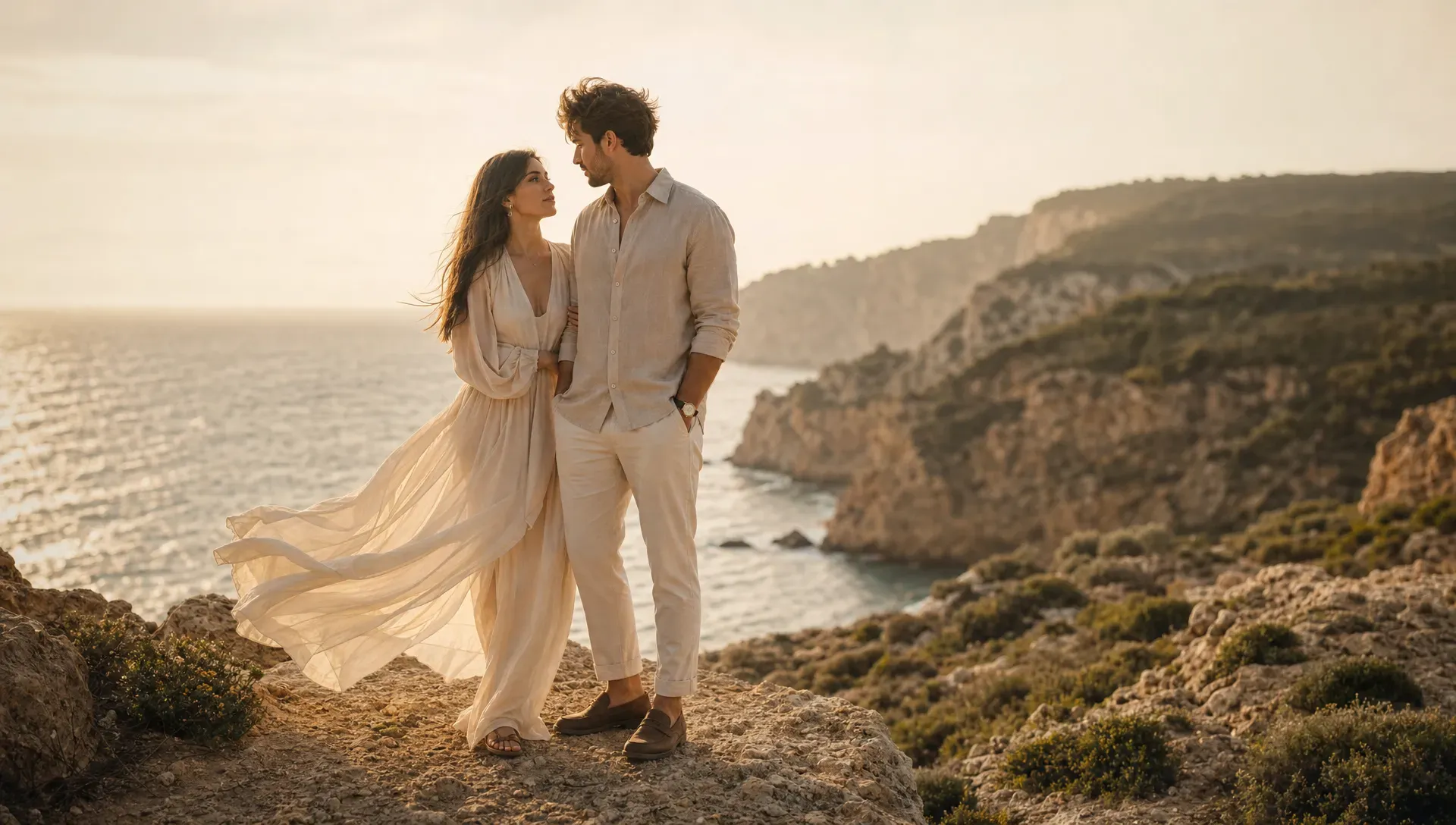
In the north, the air can feel green and wild, with cliffs that drop into a restless Atlantic. In the south, the light lands warm on dry hills, white villages, and olive trees that seem older than memory. On the islands, volcanic rock meets clear water, and the silence can feel almost lunar before the sea rushes back in.
There are places where the morning smells like rosemary and dust.
Places where church bells move through narrow streets before anyone else is awake.
Places where you can hear goats somewhere in the hills, then nothing but your own breath.
That texture changes the film.
Your vows do not float in empty space. They belong to a place. Years later, when you watch the film, you do not only remember what you said. You remember the air around it.
The wind. The shadow. The exact color of the stone beneath your feet.
Why movement tells the truth
You might think you are awkward on camera.
Most couples do.
But cinematic elopement filmmaking is not about asking you to pose until you become someone else. It is about giving you something real to do, then letting the camera witness it.
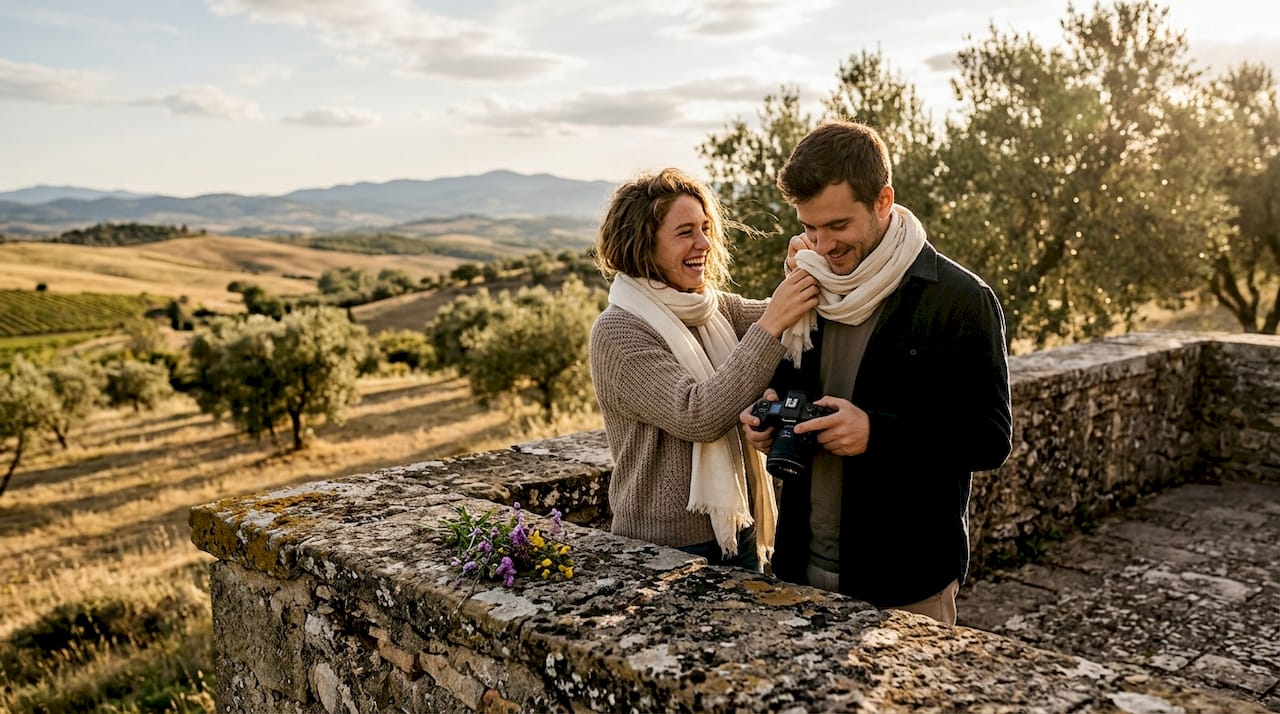
Walk slowly through the olive trees.
Read your vows where no one can interrupt you.
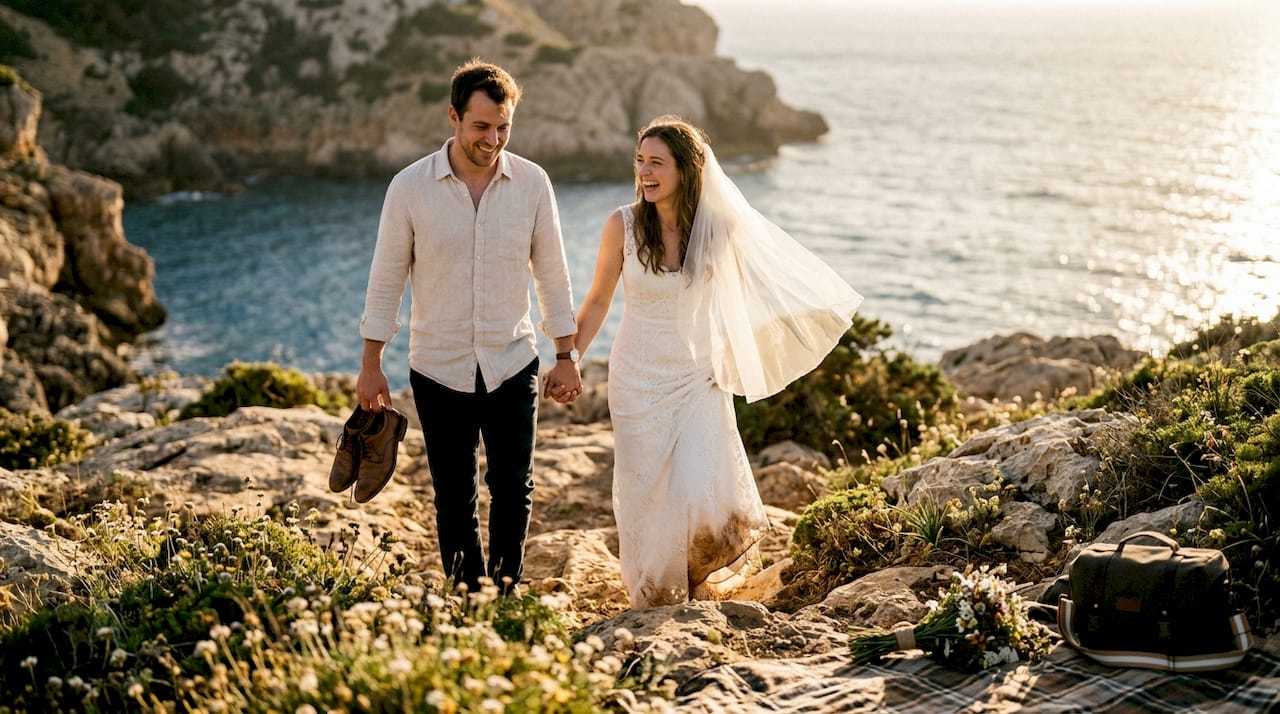
Climb down to the cove with your shoes in one hand.
Sit together after the ceremony and say nothing for a while.
Movement softens self-consciousness. It lets your body return to the person you are with, instead of the idea of being filmed.
That is why film can feel so honest.
It catches the in-between. The almost-smile. The nervous exhale. The way you touch your partner’s sleeve without thinking.
And because Dominick creates still frames from the film, your photographs come from the same living source as the story itself. They are not separate performances. They are moments pulled from motion, which you can explore more deeply in his piece on stills pulled from real motion.
A film-first timeline feels calmer in your body
A film-first elopement does not mean everything becomes cinematic at the expense of your experience.
It means the opposite.
It means the day is built so you do not have to fight for presence.
Here is how the rhythm often changes when the film and the experience are planned together:
| Part of the day | What often happens without film-first planning | What changes with a cinematic approach |
|---|---|---|
| Getting ready | The morning becomes logistical and hurried | You have quiet space for anticipation and small details |
| Travel to location | The journey is treated as a transfer | The movement becomes part of the story |
| Ceremony | Vows happen wherever the view is easiest | The place is chosen for privacy, sound, light, and meaning |
| Portrait time | You are asked to pose repeatedly | You are guided through movement that feels natural |
| Sunset | It is squeezed in if time allows | The timeline is built around the light from the beginning |
This kind of planning does not make the day rigid.
It makes it safer.
There is a strange freedom in knowing someone has thought about the path, the hour, the weather, the sound, the light, and the way you might feel after saying your vows.
You do not have to hold all of it.
You only have to be there.
The sound of your vows matters
A cinematic film is not only image.
It is voice.
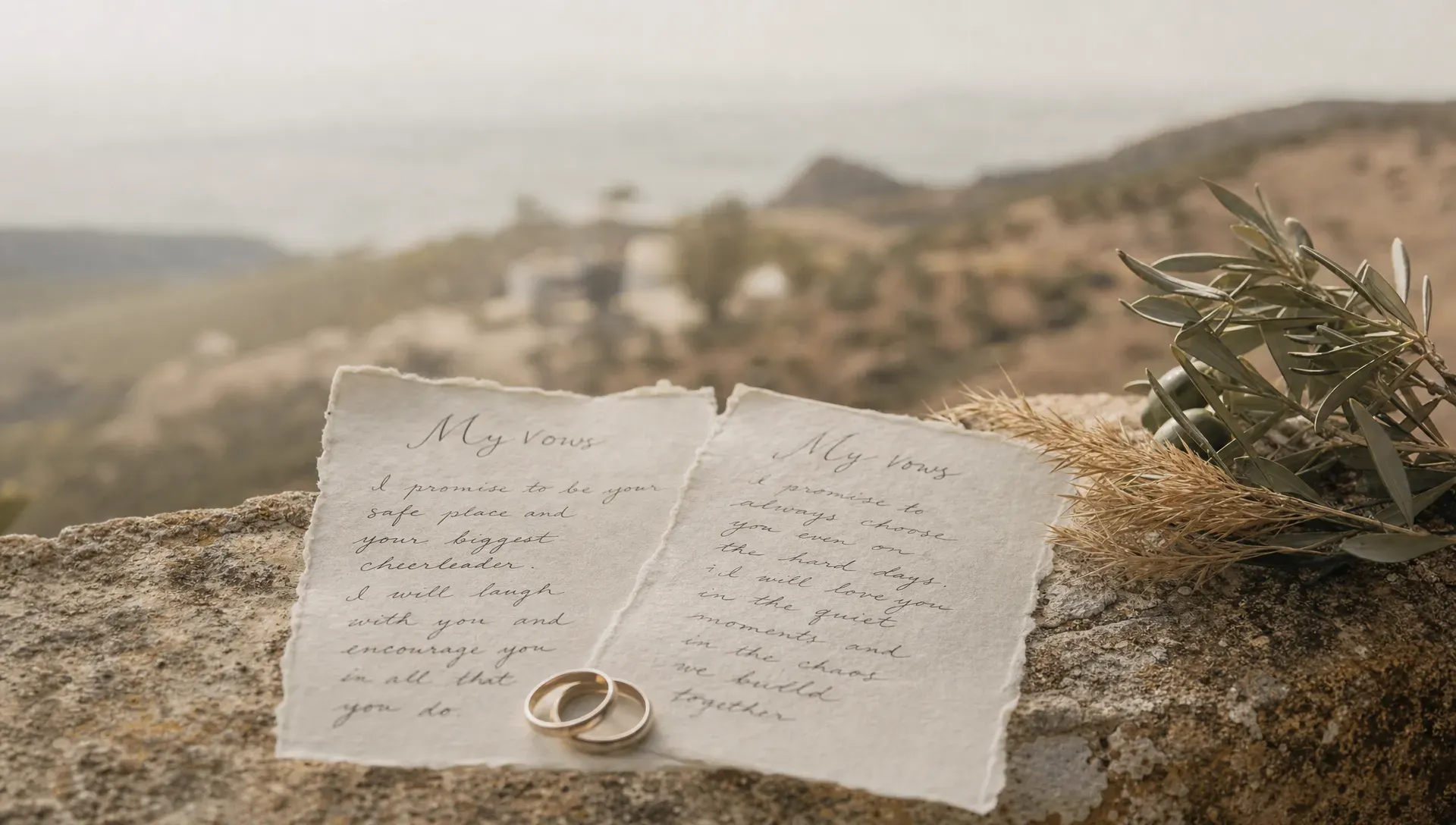
Years from now, you may remember the shape of the landscape, but your own words may blur at the edges. Film keeps them close. Your partner’s voice. The pause before they say your name. The laugh that breaks through because both of you are overwhelmed and happy and a little stunned by the reality of it.
That sound changes everything.
It makes the film less like a recap and more like a time capsule.
Not polished. Not distant.
Alive.
This is one of the quiet reasons an elopement film can feel more intimate than a large wedding film. There is less noise around the promise. Fewer interruptions. Fewer eyes. More space for the words to land.
You are not hiring coverage. You are choosing a witness.
Coverage asks, “What happened?”
Storytelling asks, “What did it mean?”
That is the heart of the difference.
A cinematic elopement film in Spain is not just a record of a ceremony. It is the emotional architecture of the whole experience. It holds the before, the arriving, the trembling, the quiet after. It lets the landscape speak without making you disappear inside it.
Dominick’s work lives in that space between guide and filmmaker.
He helps find the hidden places. He thinks through the rhythm. He watches the light. He knows that a day this intimate does not need a big team surrounding you. It needs one person who can carry the story carefully, from planning to film, without turning your elopement into a performance.
For a deeper look at that role, his article on what an elopement videographer in Spain really gives you explains why the right person is not only there for the camera, but for the calm before it.
What to ask before choosing your filmmaker
Before you choose who holds this memory, listen for more than technical skill.
Beautiful images matter. But your elopement asks for more than beauty.
Ask whether the person understands privacy. Ask how they scout. Ask how they protect sound during vows. Ask what happens if the weather shifts. Ask whether they can help you shape the day, not just document it after someone else has shaped it for you.
Most of all, ask how they want you to feel.
That answer tells you everything.
Because the film will carry the emotional temperature of the day. If you feel rushed, watched, overdirected, or managed, that energy finds its way into the frame. If you feel safe, seen, and gently guided, the camera can come close without stealing the moment from you.
Frequently Asked Questions
What makes a cinematic elopement film different from a regular wedding video? A cinematic elopement film is shaped around story, atmosphere, sound, movement, and emotional rhythm. It does not simply document events in order. It preserves how the day feels, from the landscape and light to the quiet pauses between vows.
Is Spain a good place for a cinematic elopement film? Yes. Spain offers dramatic variety within one country, from Mediterranean coves and mountain villages to olive groves, desert textures, northern cliffs, and island landscapes. That range gives your film a strong sense of place without needing a large production.
Do you still need photos if your elopement is filmed? You can still want photographs, of course. With Dominick’s approach, beautiful still frames are pulled from the cinematic film itself, so your images and film come from the same emotional moments rather than from two separate directions.
Can international couples legally elope in Spain? It depends on your nationality, residency status, and local requirements. Many international couples choose to complete the legal paperwork at home and have a symbolic ceremony in Spain, which allows the vows and experience to remain deeply personal and flexible.
How far ahead should you plan a cinematic elopement in Spain? It is wise to begin early enough to choose the right season, scout locations, consider permits, and build a timeline around light and privacy. The most important part is not rushing the decisions that shape how the day will feel.
If your heart keeps returning to Spain
Maybe you do not want more spectacle.
Maybe you want a morning that begins quietly, a road into the hills, a place where no one asks you to perform your love.
Wanting that is not too much.
It is beautiful to want a day that feels honest.
Dominick knows the kind of places where a cinematic elopement film in Spain can become more than a memory. He knows the cliffs, the hidden paths, the hours when the light softens and the world seems to step back.
If you are beginning to imagine your own version of this, you can commence the adventure with a quiet conversation between dreamers.
You bring the feeling.
He helps find the place where it can become real.
Previous Article
Best Beach Elopement Spots on the Costa Blanca
Next Article
How to Plan a Vow Renewal in Spain That Feels Honest

I'm Dominick let's craft your perfect Mediterranean elopement.
Let's create a day that captures your love, surrounded by the Mediterranean's beauty. Ready to plan your perfect escape?
Start your Adventure Let's talk!