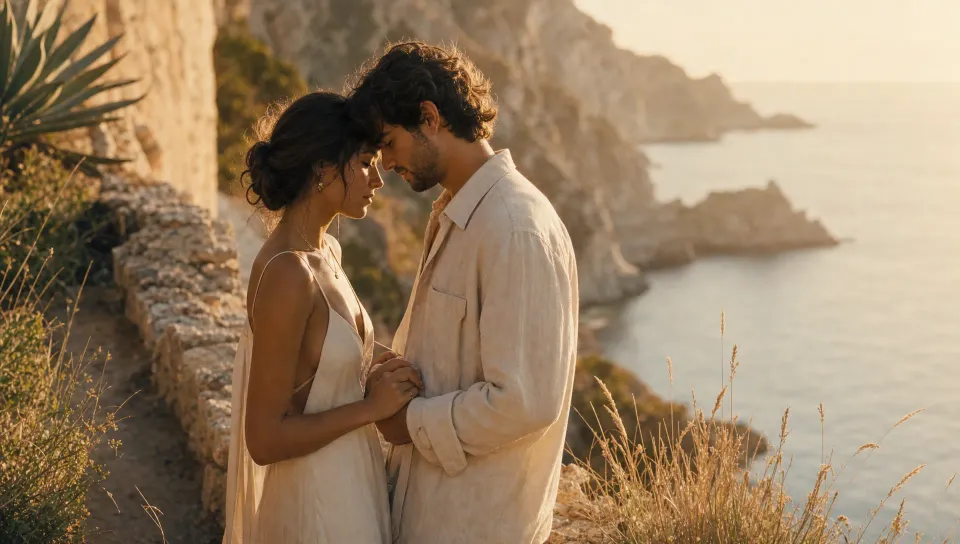
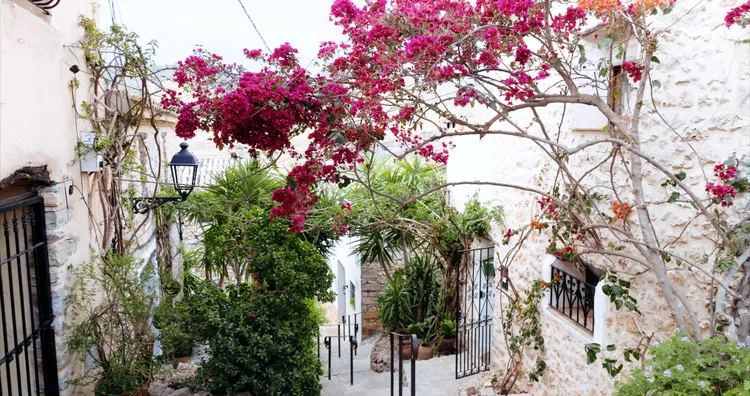
Cinematic wedding storytelling for elopements in Spain
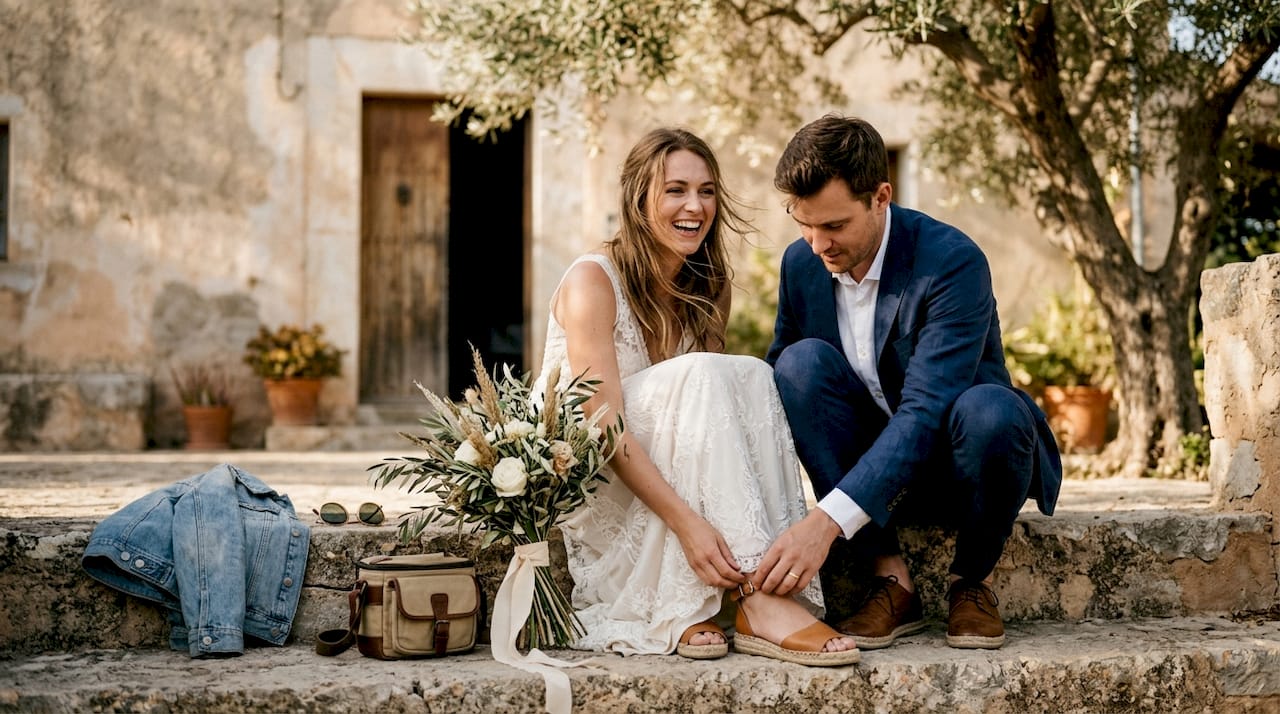
TL;DR:Cinematic wedding storytelling captures feelings and emotion rather than just footage.Techniques like natural lighting, slow motion, and artistic editing create a memorable, intimate film.Spain’s landscapes and light enhance cinematic elopements focused on authentic, emotional moments.
Between 35% and 75% of couples regret skipping wedding videography entirely. That number is striking, but what’s even more revealing is why they regret it. It’s rarely about missing footage. It’s about missing the feeling. The way light fell across your partner’s face. The sound of your own voice trembling with joy. Cinematic wedding storytelling exists to preserve exactly that, not as a record, but as a living, breathing memory. This guide is for adventurous couples planning an intimate elopement in Spain who want their story told with the artistry and emotion it truly deserves.
Table of Contents
- What is cinematic wedding storytelling?
- Key techniques of cinematic wedding films
- Cinematic vs traditional wedding videography
- Cinematic storytelling for elopements in Spain
- Expert perspective: What most guides miss about cinematic wedding films
- Take the next step: Planning your cinematic elopement in Spain
- Frequently asked questions
Key Takeaways
| Point | Details |
|---|---|
| Movie-like storytelling | Cinematic wedding films use artistic methods to create emotional, narrative-driven highlight reels. |
| Creative techniques matter | Lighting, editing, and sound design are crucial for transforming a wedding into a powerful story. |
| Spain enhances intimacy | Spanish landscapes and film-first planning create ideal conditions for cinematic elopements. |
| Hybrid packages rising | Many couples now choose hybrid video packages that blend cinematic highlights and documentary coverage. |
| Authenticity trends strong | Short, authentic edits are in demand as Gen Z couples seek genuine, social-ready memories. |
What is cinematic wedding storytelling?
With the importance of emotional impact established, let’s break down what cinematic wedding storytelling actually means. At its heart, it is not documentation. It is art. Where a traditional wedding video captures what happened, a cinematic film captures how it felt.
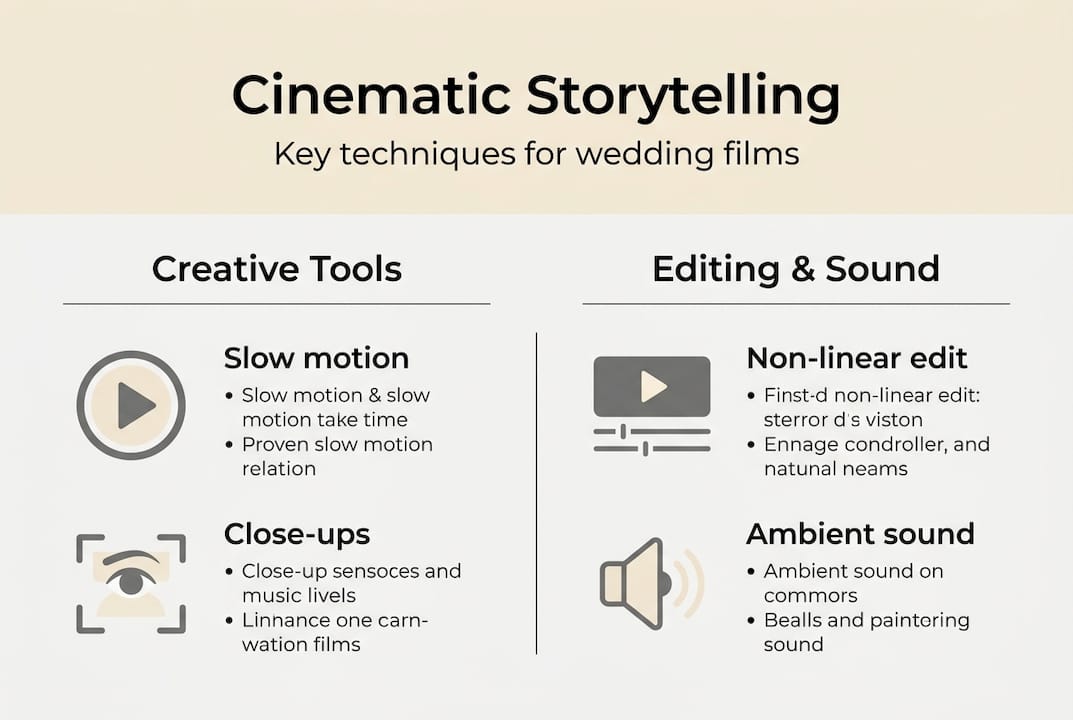
Cinematic wedding storytelling is a narrative-driven, artistic approach that uses non-linear editing, slow motion, natural lighting, and music synchronization to create an emotional highlight film rather than a chronological record. Think of it like the difference between a home movie and a short film that happens to star you and the person you love most.
The storytelling in elopements is especially powerful because the day itself is already stripped of performance and pretense. There’s no audience to impress. There’s only you, your partner, and the landscape around you. Cinematic storytelling honors that intimacy by building a story arc, a beginning that breathes with anticipation, a middle that pulses with emotion, and an ending that lingers long after the screen goes dark.
Here’s what separates a cinematic film from a standard wedding video:
- Story arc: Every film has a beginning, middle, and end shaped around emotional beats, not the clock
- Artistic editing: Non-linear structure, layered audio, and intentional pacing replace simple chronological cuts
- Emotional focus: Close-ups, stolen glances, and quiet in-between moments are prioritized over posed shots
- Music as narrative: The score doesn’t accompany the film, it drives it
- Short and powerful: Highlight films typically run 5 to 10 minutes, designed to be watched again and again
“A cinematic wedding film is not a recording of your wedding. It is a portrait of your love.”
This distinction matters enormously for elopements. You’re not hosting 150 guests who need a full event captured for posterity. You’re creating a memory for two people who chose presence over performance. Storytelling in elopements is the art of making that choice visible on screen, and it changes everything about how your day is planned, filmed, and remembered.
Key techniques of cinematic wedding films
Now that we understand the concept, let’s explore the creative techniques that bring cinematic storytelling to life. These are not just camera tricks. They are deliberate choices that shape how your story feels.
Natural and soft lighting, slow motion, close-ups, ambient sound, non-linear editing, smooth camera movements, and creative angles are the core mechanics of cinematic filmmaking. Each element plays a specific emotional role.
Lighting and golden hour are perhaps the most transformative tools available. The warm, directional light that floods Spain’s landscapes in the hour after sunrise and before sunset does something extraordinary to skin, to stone, to sea. It makes everything glow. Planning your ceremony around this light is not just aesthetic preference, it’s a storytelling decision.
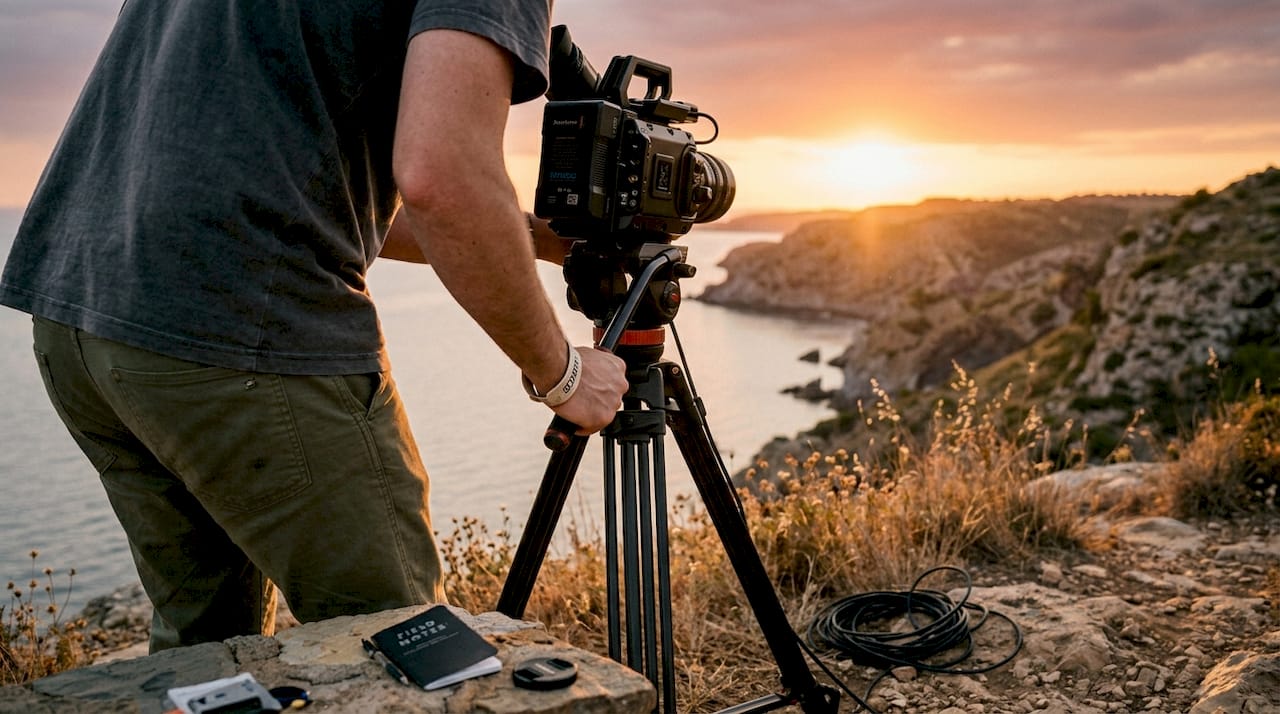
Slow motion is used sparingly but powerfully. A slow-motion shot of your partner turning toward you, or of a veil lifting in the coastal breeze, transforms a single second into a full emotional experience. It gives viewers time to feel what happened.
Close-ups and detail shots capture the things you won’t remember on your own. The way your hands intertwined. The single tear that escaped before you could catch it. These micro-moments are the soul of a cinematic film.
Ambient sound is often overlooked, but it’s what makes a film feel real. Waves. Wind through olive trees. Your voice cracking on a vow. Layering these sounds beneath the music creates a sensory world that pulls viewers back into the moment.
Non-linear editing allows the story to breathe. Rather than starting at the beginning and ending at the end, a cinematic edit might open with a whispered vow, then pull back to show the mountain you climbed to speak it. This structure creates emotional tension and release.
Pro Tip: Ask your filmmaker how they plan the edit before the day. A filmmaker who thinks in story arcs before they press record will always deliver a more emotionally resonant film than one who figures it out in post-production.
All of these techniques come together in a full-service cinematic elopement approach, where the film is not an afterthought but the creative foundation of the entire day. When your elopement is designed with the camera in mind from the very start, the result is something that feels less like a wedding video and more like a magical memory captured in Spain.
Cinematic vs traditional wedding videography
Understanding the techniques, it’s valuable to see how cinematic differs from the standard wedding video. Both have their place, but they serve very different purposes and produce very different results.
Traditional documentary style is chronological, full-length, and minimally edited, focusing on complete event coverage for archival purposes. It answers the question: “What happened?” Cinematic storytelling answers a different question entirely: “How did it feel?”
Here’s a clear comparison:
| Feature | Cinematic | Traditional |
|---|---|---|
| Length | 5 to 10 minutes | 1 to 3 hours |
| Structure | Non-linear, story-driven | Chronological |
| Editing style | Artistic, layered | Minimal, functional |
| Primary goal | Emotional impact | Complete documentation |
| Rewatchability | Very high | Occasional |
| Best for | Elopements, intimate weddings | Large traditional weddings |
For couples planning an elopement vs a traditional wedding, the cinematic approach almost always wins. Here’s why:
- Elopements are intimate by design. There’s no need to document a six-hour reception when your day is four hours of pure, intentional connection.
- You’ll actually watch it. A 7-minute film gets rewatched on anniversaries. A 2-hour video gets watched once.
- It reflects your values. Choosing an elopement is already a statement about authenticity. Your film should match that.
- It shares beautifully. Cinematic films are made to be experienced, and yes, shared with the people you love.
Hybrid packages are growing in popularity among couples who want the best of both worlds, a cinematic highlight film and a longer documentary cut for family members who couldn’t attend. This is worth discussing with your filmmaker when exploring elopement trends in Spain for 2026.
Cinematic storytelling for elopements in Spain
Having contrasted approaches, let’s see how cinematic storytelling adapts perfectly to Spanish elopements. Spain is not just a beautiful backdrop. It is a character in your story.
Cinematic storytelling leverages dramatic landscapes, golden hour lighting, minimal vendors, and film-first planning to create intimate, adventure-driven narratives that feel genuinely alive. Spain offers all of this in abundance.
Here’s a look at some of the most extraordinary locations for cinematic elopements across Spain:
| Location | Visual character | Best season |
|---|---|---|
| Cap de Formentor, Mallorca | Dramatic cliffs, turquoise sea | Spring, early fall |
| Siurana mountains | Ancient village, rugged rock | Spring, fall |
| Andalusia olive groves | Golden light, timeless landscape | Fall, winter |
| Costa Brava coastline | Wild coves, pine-covered cliffs | Late spring, fall |
| Ronda gorge | Breathtaking canyon views | Spring, fall |
What makes Spain so uniquely suited to cinematic elopements is the quality of its natural light. The Mediterranean sun casts long, warm shadows that make every frame feel like a painting. Location shapes the storytelling in ways that no studio lighting can replicate.
Beyond the visuals, the minimal team approach is what truly elevates the experience. When your elopement involves just you, your partner, and one trusted filmmaker and planner, something remarkable happens. You forget the camera is there. You stop performing and start living. That authenticity is exactly what cinematic storytelling needs to do its best work.
Here’s what a film-first planning approach looks like in practice:
- Scout locations based on light direction and emotional resonance, not just aesthetics
- Build your timeline around golden hour rather than convenience
- Choose ceremony spots that offer natural framing and depth
- Allow unscripted moments to breathe rather than rushing through a checklist
For couples ready to explore personal elopement planning in Spain, this approach transforms the entire day into a collaborative, creative experience.
Expert perspective: What most guides miss about cinematic wedding films
To truly understand cinematic wedding storytelling, we need to look beyond the surface and see what most guides overlook. Here’s the honest truth: technical perfection is not what makes a film extraordinary. Emotion is.
I’ve seen technically flawless films that feel completely empty, and I’ve seen imperfect films that make you sob within thirty seconds. The difference is always authenticity. When couples feel safe, seen, and unhurried, they stop performing for the camera. That’s when the real magic happens.
Gen Z couples in 2026 are shifting toward authentic, social-first short edits and hybrid packages that feel raw rather than hyper-produced. This is not a trend to resist. It’s a reminder that emotion has always been the point.
AI tools are entering the editing world, and yes, they can speed up certain processes. But no algorithm can decide which moment of your ceremony deserves to be stretched into slow motion. That judgment comes from a filmmaker who was there, who felt the air shift when you said your vows.
One practical reality nobody mentions: wind, tides, and weather are real creative forces in outdoor elopements. A backup location plan is not a sign of pessimism. It’s what allows slow, cinematic elopements in Spain to remain beautiful even when nature surprises you. The best stories always have an unexpected turn.
Take the next step: Planning your cinematic elopement in Spain
With all these insights in mind, here’s how to make cinematic storytelling part of your own Spanish elopement. Your story deserves more than footage. It deserves a film.
At Stories by DJ, we work with just 3 to 6 couples per year, which means your elopement receives our full creative attention from the very first conversation. We plan, scout, film, and deliver your story as a complete cinematic experience, including beautiful still frames pulled directly from the film. Explore our elopement planning tips to understand what goes into crafting a day like this, or learn more about what an elopement planner actually does. When you’re ready to see what’s possible, our cinematic wedding videography page is the perfect place to begin.
Frequently asked questions
What makes a wedding film ‘cinematic’?
A cinematic wedding film uses artistic, movie-like techniques including non-linear editing, dramatic lighting, close-ups, and intentional music to tell an emotional story rather than simply documenting events.
How long is a typical cinematic wedding highlight film?
Most cinematic highlight films run between 5 and 10 minutes, focusing on key emotional moments rather than complete event coverage.
Is cinematic videography suitable for elopements in Spain?
Absolutely. Spain’s landscapes and Mediterranean light are ideal for cinematic storytelling, and the intimate, adventure-driven narratives that minimal-team elopements produce are exactly what cinematic filmmaking thrives on.
How much does cinematic wedding videography typically cost?
Full-day premium cinematic videography typically ranges from $3,000 to $8,000 or more, depending on the team, location, and package selected.
What are emerging cinematic videography trends in 2026?
In 2026, couples are favoring authentic, social-first short edits and hybrid packages that blend cinematic artistry with a more raw, documentary feel.
Recommended
Previous Article
Best Ways to Elope: A Quiet Plan for a Cinematic Yes

I'm Dominick let's craft your perfect Mediterranean elopement.
Let's create a day that captures your love, surrounded by the Mediterranean's beauty. Ready to plan your perfect escape?
Start your Adventure Let's talk!