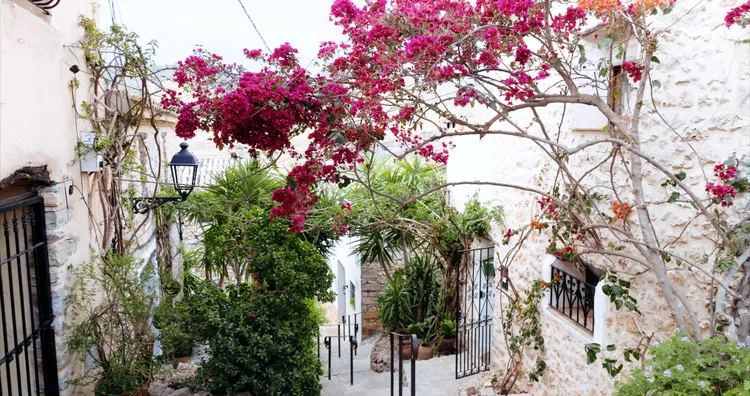
Spanish wedding traditions: A guide to intimate cultural elopements
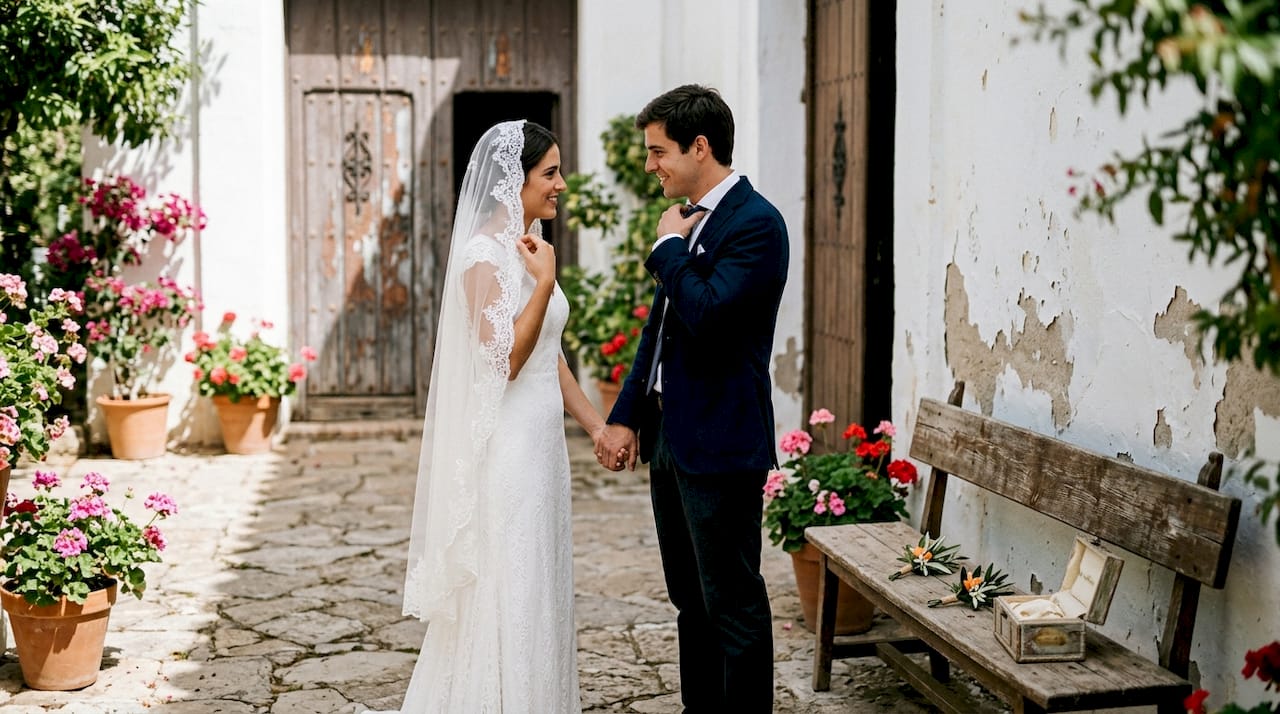
TL;DR:Spanish wedding traditions are evolving toward intimate, personalized elopements with regional influences.Key rituals like arras exchange and mantilla portraits can be adapted for small, meaningful ceremonies.Smaller celebrations emphasize the emotional significance of traditions over crowd size, transforming cultural customs.
Most people picture a Spanish wedding as a 200-guest feast that stretches past midnight, flamenco echoing off whitewashed walls, and a table groaning under plates of jamón and paella. And while that image holds truth, it tells only half the story. Spanish wedding statistics reveal that 35% of couples now choose elopement-style celebrations with just witnesses present, and 72% opt for civil rather than religious ceremonies. Spain is quietly rewriting its own romantic script. If you are dreaming of something intimate, cinematic, and deeply personal, Spanish culture offers a treasure chest of traditions waiting to be shaped around your love story.
Table of Contents
- Overview of Spanish wedding traditions
- Key rituals and their meanings
- Regional traditions: From Andalusia to Galicia
- How to personalize Spanish traditions for your elopement
- Why small, cinematic elopements are redefining Spanish traditions
- Plan your personalized Spanish elopement story
- Frequently asked questions
Key Takeaways
| Point | Details |
|---|---|
| Traditions evolve | Spanish wedding customs continue to blend heritage with modern elopement trends. |
| Regional flair matters | Couples can personalize their ceremony with unique traditions from Spanish regions. |
| Intimacy enhances impact | Small elopements allow meaningful rituals to be tailored for cinematic storytelling. |
| Blend old and new | Adapting rituals for civil, outdoor, or micro-weddings creates a poetic experience. |
Overview of Spanish wedding traditions
Spain has long celebrated love with theatrical flair. Traditional weddings here were community events, rooted in Catholic ritual and regional pride, designed to be witnessed by everyone in the village. But the landscape is shifting beautifully. Personal planning in Spain has evolved to honor both the old and the new, letting couples choose which threads of tradition they want to weave into their day.
At the heart of a classic Spanish wedding, you will find a handful of timeless elements:
- The arras exchange: Thirteen gold coins passed between partners, symbolizing shared prosperity and trust
- The mantilla: A stunning lace veil worn by the bride, often a family heirloom passed through generations
- The feast: A multi-course banquet beginning around 6 or 7 in the evening and lasting until dawn
- Regional dances: From flamenco in the south to bagpipe-led muñeira in the north
- The sword cake cutting: A theatrical moment where the couple slices the wedding cake with an actual sword
What makes Spain extraordinary is how dramatically traditions shift from one region to the next. Regional variations paint a vivid picture: Andalusia is known for the mantilla veil, sevillanas dancing, and the sword cake ritual; Catalonia features a ceremonial sash and poems read aloud by the padrinos (godparents); Galicia brings the haunting beauty of bagpipes and the muñeira dance; and Aragon celebrates with the energetic jota.
| Region | Signature tradition | Mood |
|---|---|---|
| Andalusia | Mantilla, sevillanas, sword | Passionate, theatrical |
| Catalonia | Sash, padrinos’ poem | Poetic, intimate |
| Galicia | Bagpipes, muñeira dance | Mystical, earthy |
| Aragon | Jota dance | Joyful, spirited |
A full service elopement in Spain today can honor any of these regional flavors without requiring a hundred guests to witness them. The tradition lives in the gesture, not the crowd size.
“The beauty of Spanish wedding culture is that it was always about meaning. The crowd was simply the container. Remove the crowd, and the meaning only grows stronger.”
Key rituals and their meanings
With the basics covered, let’s dive into the heart and theater of Spain’s wedding ritual artistry. Each tradition carries a layer of symbolism that becomes even more powerful when experienced in an intimate setting.
The arras exchange is perhaps the most emotionally resonant ritual. Thirteen coins, blessed and placed in a small chest or pouch, are passed from one partner to the other and back again. The number thirteen represents Christ and his twelve apostles in Catholic tradition, but in a modern elopement, it simply speaks to shared abundance and mutual care. Holding those coins in your hands, standing on a cliffside above the Mediterranean, feels quietly profound.
The mantilla is more than a veil. It is a living piece of family history, often decades or even a century old, carried forward as a symbol of elegance and heritage. Even if you do not wear it during the ceremony, a mantilla portrait at golden hour creates an image that feels timeless.
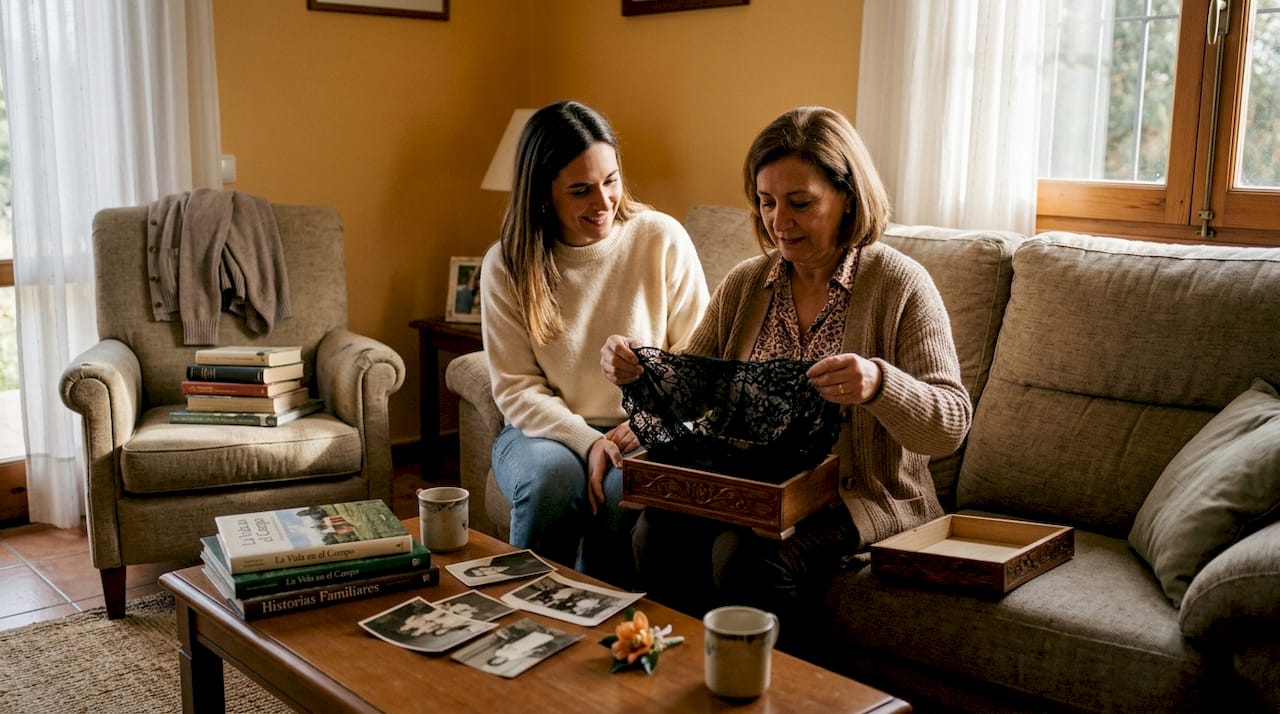
Orange blossom boutonnieres carry their own quiet magic. In Spanish tradition, orange blossoms represent purity and good fortune. A single bloom tucked into a lapel or woven into a bouquet adds a sensory layer, that sweet, heady fragrance becoming part of your memory of the day.
Then there is the theatrical side. The sword cake cutting is common in Andalusia and Catalonia, a moment of playful drama that photographs beautifully. The napkin swing, where guests lift the couple in a blanket or cloth, is joyful chaos in a large wedding but can be reimagined as a private, playful moment with just your photographer.
Pro Tip: You do not need to include every ritual. Choose one or two that genuinely move you, and let those become the emotional anchors of your ceremony. Depth always outweighs breadth.
| Ritual | Traditional setting | Elopement adaptation |
|---|---|---|
| Arras exchange | Church altar | Cliffside or olive grove |
| Mantilla | Full bridal party | Intimate portrait session |
| Orange blossom | Bouquet centerpiece | Boutonniere or hair adornment |
| Sword cake cutting | Reception hall | Private picnic moment |
Exploring personal elopement experiences in Spain shows just how naturally these rituals translate into something small and sacred. And if you are curious about where Spanish elopement trends are heading, the answer is clear: intimate, outdoor, and deeply personal.
Regional traditions: From Andalusia to Galicia
Once you understand the main traditions, you will notice how regional nuances can make your elopement truly unique. Spain is not one country in terms of culture. It is a mosaic of distinct identities, and each region offers a different emotional palette for your day.
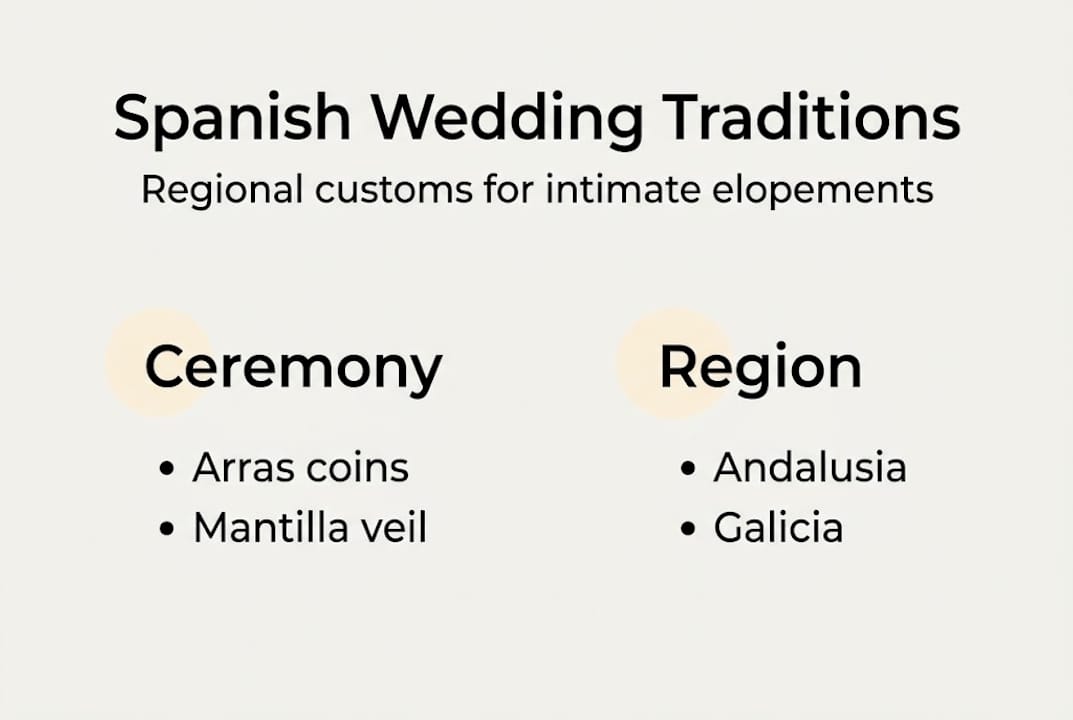
Andalusia is the Spain most people dream of. Sun-scorched landscapes, whitewashed villages, and a passion that runs deep. Andalusian wedding customs center on the mantilla veil, the sevillanas dance (a flamenco-adjacent style performed in pairs), and the dramatic sword cake cutting. If you want fire and poetry in equal measure, Andalusia calls to you.
Catalonia offers something quieter and more literary. The padrinos, or ceremonial godparents, recite a poem or blessing during the ceremony, adding a layer of storytelling that feels made for couples who love words. The ceremonial sash, tied around the couple, symbolizes unity in a visually striking way.
Galicia, tucked into Spain’s misty northwest, surprises everyone. The muñeira dance is performed to the sound of gaitas (bagpipes), creating an atmosphere that feels ancient and alive at once. The landscape here, green cliffs meeting the Atlantic, is unlike anywhere else in Spain.
Aragon brings the jota, a high-energy folk dance full of leaps and castanets. It is pure joy made physical, and even a short performance during an elopement dinner creates a memory that lingers.
Pro Tip: If you are drawn to a specific region’s traditions but planning your elopement elsewhere in Spain, you can still honor those customs. A mantilla portrait works in the mountains of Granada just as beautifully as in Seville. Traditions travel.
Exploring romantic elopement spots across Spain reveals how each region’s landscape amplifies its traditions. The setting and the ritual become one story.
- Andalusia: Whitewashed villages, golden light, dramatic flair
- Catalonia: Medieval architecture, literary ceremony, coastal cliffs
- Galicia: Atlantic mist, ancient forests, bagpipe melodies
- Aragon: Pyrenean peaks, folk energy, open skies
How to personalize Spanish traditions for your elopement
With regional insights in mind, here is how you can weave these elements into your own memorable elopement. The goal is not to replicate a traditional Spanish wedding in miniature. It is to let the spirit of these traditions speak through your own story.
- Choose your arras moment carefully. The exchange of thirteen coins does not need an altar. Standing barefoot on warm stone above the sea, passing those coins back and forth, creates a private ritual that belongs entirely to you.
- Plan a mantilla portrait. Even if you are not wearing a mantilla throughout the day, borrowing or purchasing one for a single portrait session adds a layer of cultural beauty. The lace against golden-hour light is cinematic by nature.
- Use orange blossoms intentionally. A boutonniere, a single stem in your hair, or blossoms scattered at your feet during vows. The fragrance alone will anchor this memory for years.
- Write personalized poetry or vows inspired by regional tradition. Catalonia’s padrinos recite poems for a reason. Words matter. Let your vows carry the weight of the tradition even if the form is entirely your own.
- Pair your ceremony with a cinematic location. Elopement ceremony ideas in Spain show how cliffs, olive groves, and sea-salt air transform a simple exchange into something that feels like the opening scene of a film.
Pro Tip: Avoid the trap of including traditions out of obligation. If a ritual does not resonate with you emotionally, it will read as hollow on film. Choose only what genuinely moves you, and let everything else fall away.
When planning your dream day, think of Spanish traditions as a living library rather than a checklist. An all-inclusive elopement Spain experience lets you pull from that library with guidance, so nothing feels forced and everything feels true.
Why small, cinematic elopements are redefining Spanish traditions
Here is what most wedding guides miss: the shift toward intimate elopements in Spain is not a rejection of tradition. It is a distillation of it. When you strip away the hundred guests, the pressure to perform, and the marathon schedule, what remains is the actual meaning. The coin exchange. The vow. The touch of lace. The scent of orange blossom.
Spanish wedding customs were born from Catholicism and community, yes. But Spain’s wedding landscape shows that only 28% of couples chose religious ceremonies in 2023, while 35% opted for micro-style celebrations. The culture is evolving, and it is doing so beautifully. The couples leading this shift are not abandoning their heritage. They are honoring it more honestly.
I have watched couples exchange arras on a cliff above the Costa Brava with tears in their eyes, more present than any couple I have ever seen in a cathedral. The intimacy amplifies everything. That is the truth that modern trends in Spanish elopements are beginning to reflect. Small is not lesser. Small is where the magic lives.
Plan your personalized Spanish elopement story
Ready to turn tradition into your own cinematic story? Here is how Stories by DJ can help.
As a filmmaker, storyteller, and elopement planner all in one, I work with just 3 to 6 couples each year, giving every elopement the deep creative care it deserves. From hidden gem location scouting to symbolic ceremony design, every detail is shaped around your love. Explore elopement planning tips to start building your vision, find elopement inspiration rooted in Spain’s most breathtaking landscapes, and discover how cinematic wedding storytelling in Spain can transform your traditions into a film you will watch for the rest of your lives.
Frequently asked questions
Which Spanish wedding traditions can be adapted for an elopement?
Couples can tailor arras exchanges, mantilla portraits, orange blossom boutonnieres, and region-specific dances for intimate settings. These rituals carry their full meaning even without a crowd present.
What is the typical structure of a Spanish wedding celebration?
Most ceremonies begin in the late afternoon around 6 or 7 in the evening, followed by a multi-course feast with regional dishes and festivities that often continue until dawn.
How do Spanish wedding traditions differ by region?
Andalusia features mantilla veils and sword cake cutting, Catalonia includes ceremonial sashes and poems from the padrinos, and Galicia is celebrated for its bagpipe-led muñeira dance.
Are religious ceremonies still popular in Spain?
Religious weddings represented only 28% of Spanish weddings in 2023, as civil ceremonies and outdoor elopements continue to grow in popularity across the country.
Recommended
Previous Article
Elopement in Altea Hills: Vows Above the Blue
Next Article
Intimate Wedding Albir: Soft Light, No Crowd Noise

I'm Dominick let's craft your perfect Mediterranean elopement.
Let's create a day that captures your love, surrounded by the Mediterranean's beauty. Ready to plan your perfect escape?
Start your Adventure Let's talk!