Getting Married Abroad in Spain: Legal or Symbolic?
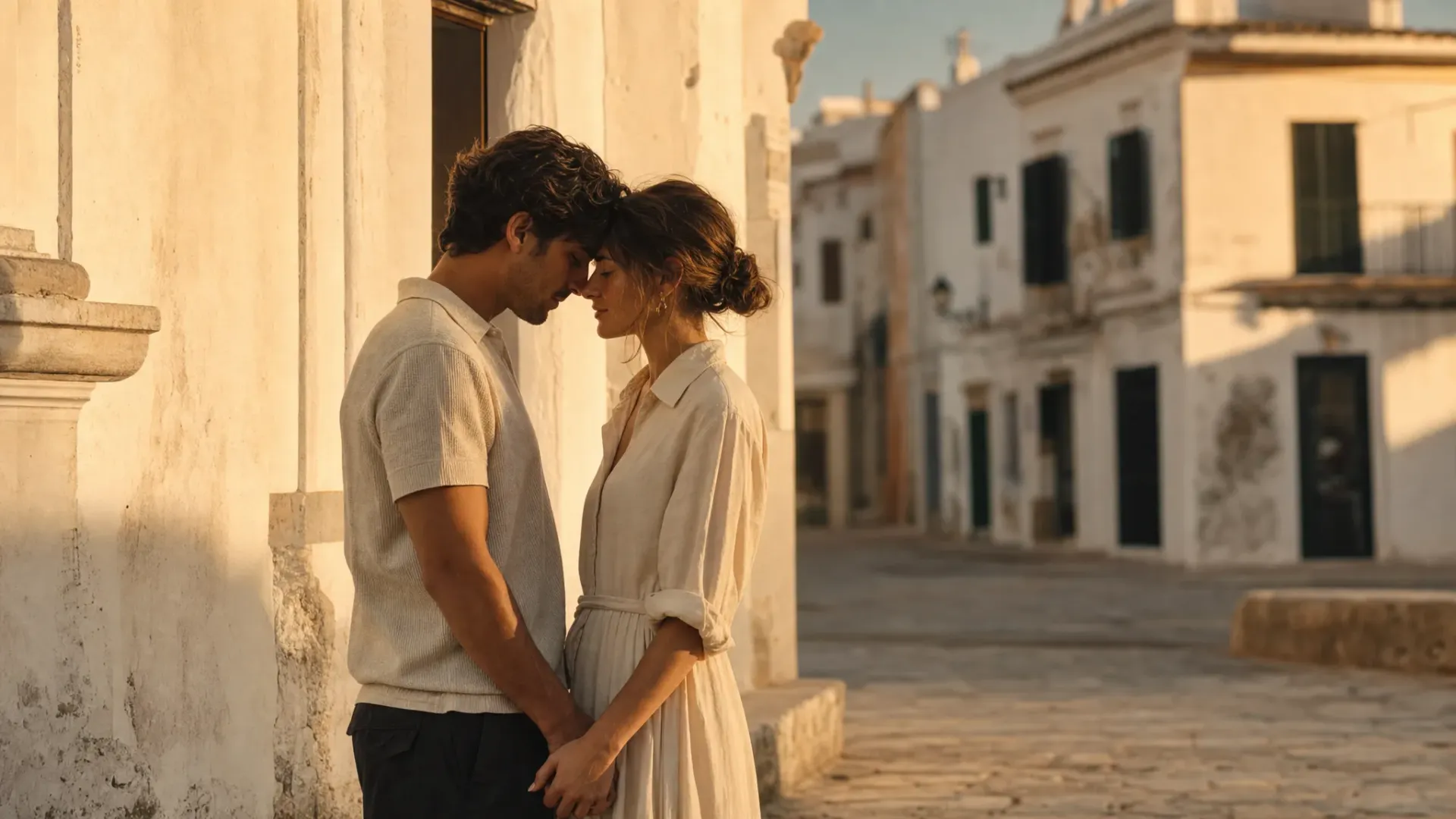
You keep seeing it in fragments.
A white shirt moving in a dry Spanish wind.
Your vows folded into a jacket pocket.
A village still asleep, stone warm from yesterday’s sun.
Getting married abroad in Spain begins there, in that small ache that says: I want this to feel like us.
Then the practical question arrives.
Does your ceremony in Spain need to be legal?
Or can it be symbolic, deeply real in every way that matters, with the paperwork handled somewhere quieter?
For many international couples, this is the first crossroads. Not because one path is more romantic than the other. Because each path asks something different from you.
One asks for documents, translations, appointments, timelines, and patience.
The other gives you more room for cliffs, olive groves, private vows, and a day shaped around light instead of bureaucracy.
Both can be beautiful.
But only one may feel like breathing.
The promise and the paperwork are not the same thing
A legal marriage is the part the state recognizes.
It creates the official record. It produces the certificate. It gives your marriage legal standing according to the rules of the country where it is performed and, usually, the rules for recognition back home.
A symbolic ceremony is different.
It is not legally binding in Spain. It does not create a Spanish marriage certificate. But it can hold everything your heart came for: your vows, your rings, your music, your tears, your silence, your first walk together afterward with dust on your shoes and your hands still shaking.
This distinction matters because Spain is not always the simplest country for non-resident couples who want a fully legal wedding.
If you live outside Spain, the legal path can be possible in some situations, but it is often document-heavy and dependent on nationality, residency, municipality, and the local civil registry. For many couples, the gentler route is to complete the legal marriage at home, then come to Spain for the ceremony that feels like the truth of it.
The signature happens in one place.
The memory happens in another.
And sometimes, that separation is the thing that sets you free.
Getting married abroad in Spain legally
If you want Spain itself to legally marry you, you are stepping into a formal civil process.
At the heart of that process is usually the expediente matrimonial, the marriage file used to confirm that you are legally able to marry. The details can vary depending on your circumstances, so you always need to check directly with the local Registro Civil, your consulate, and any religious authority if you are considering a ceremony with legal religious effect.
The Spanish Ministry of Justice explains the role of the Registro Civil, which is the official system responsible for civil status records, including marriages.
For international couples, the legal path may involve documents such as:
- Valid passports or national identity documents
- Full birth certificates
- Certificates of no impediment, single status, or equivalent documents from your home country
- Divorce decrees or death certificates from previous marriages, if relevant
- Proof of residence or local registration, if required
- Apostilles or legalisation for foreign documents
- Sworn translations into Spanish
- Witnesses for the civil process or ceremony
The exact list changes by nationality, place, and personal history.
That is why generic advice can become dangerous here. One registry may ask for something another does not. One couple may be eligible where another is not. Some municipalities are more familiar with foreign couples than others. Some situations require months of preparation.
Spain recognizes marriage equality, and civil marriage exists for all couples, but recognition does not remove the administrative steps.
If neither of you lives in Spain, this is often where the legal dream becomes heavy. Not impossible in every case, but heavier than most couples expect.
Not because your love is complicated.
Because paperwork is.
When the legal route makes sense
A legal marriage in Spain can be the right path when the practical side fits your life, not when you feel pressured to make the ceremony “official” in the same place where you say your vows.
It may make sense if one of you already lives in Spain, if you have a clear legal reason for wanting a Spanish marriage certificate, or if you are comfortable navigating documents, translations, appointments, and waiting periods.
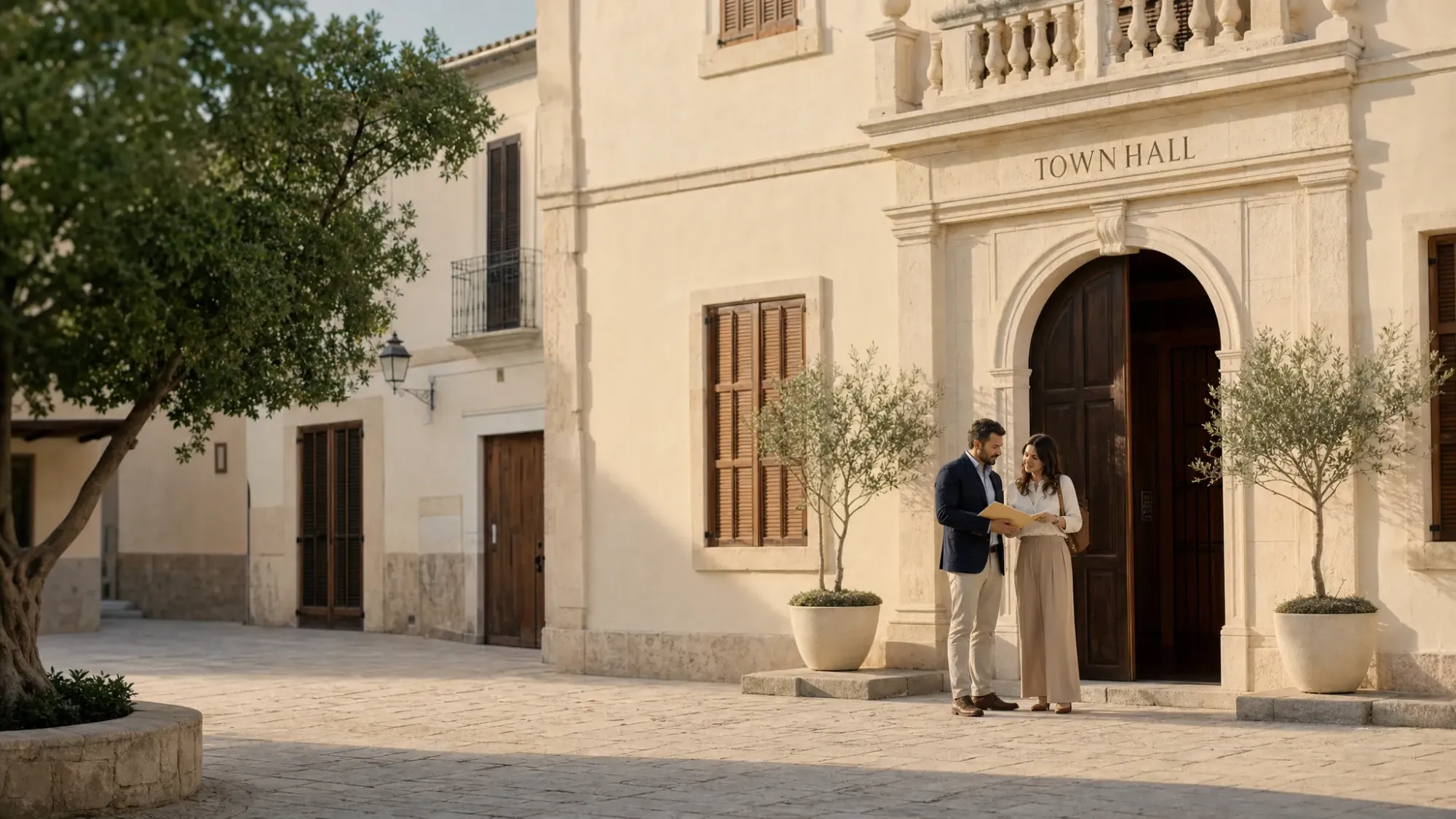
It may also make sense if your ceremony is planned around a town hall, registry office, approved venue, or religious setting where the legal structure already belongs.
If this is the route you want, give yourself time.
Not wedding-planning time. Bureaucracy time.
The kind of time that leaves space for a missing apostille, a document that expires too soon, a translation that needs correcting, or a registry appointment that is further away than you hoped.
If you want a deeper breakdown of the documents and process, Dominick’s guide on how to legally marry in Spain as an international couple walks through the legal side in more detail.
But before you choose the legal path, ask yourself one honest question.
Do you want your ceremony built around what the law requires?
Or do you want the law handled elsewhere, so your ceremony can belong completely to you?
The symbolic ceremony, and why it often feels more true
A symbolic ceremony gives you room.
You can legally marry in your home country before you travel, perhaps in a quiet courthouse with two witnesses and coffee afterward. Or you can do it after you return, when the dust from Spain is still on your suitcase.
Then, in Spain, you create the ceremony without asking the state to participate.
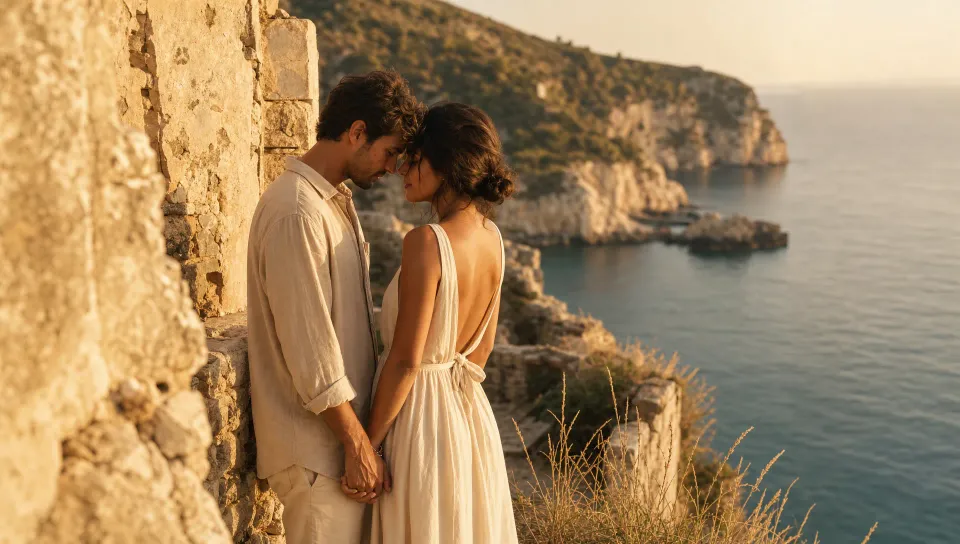
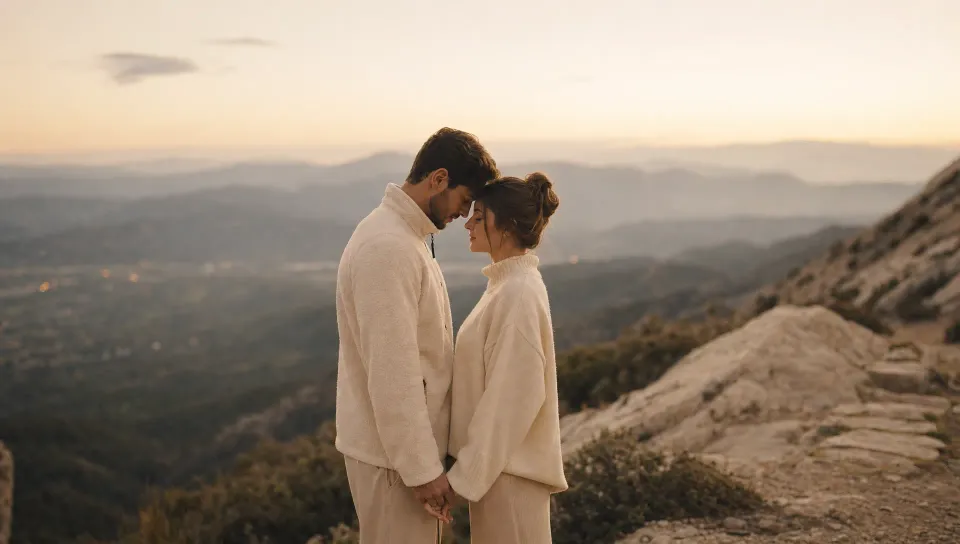
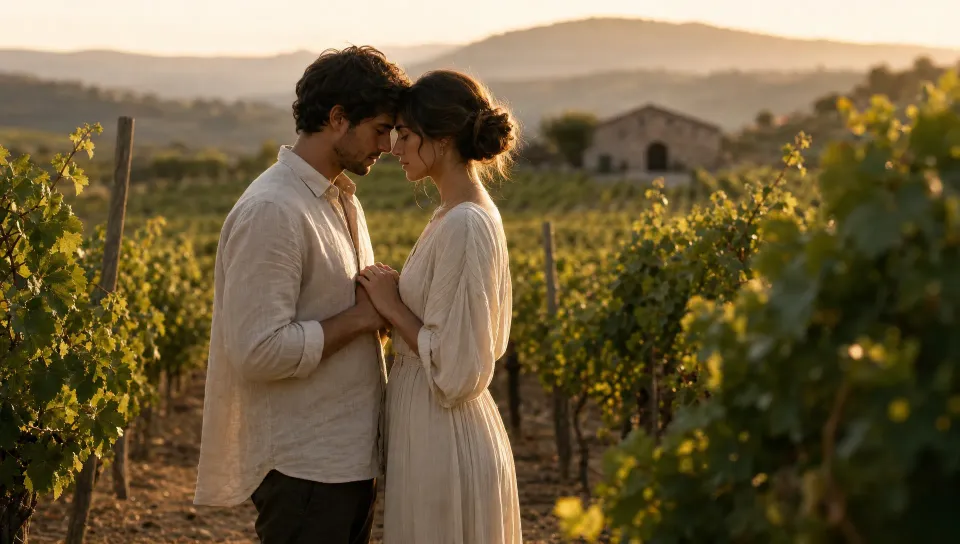
You can stand on a cliff at sunrise. You can exchange vows in an olive grove before the heat arrives. You can bring a handful of people or no one at all. You can have a celebrant, a friend, or only the two of you reading words into the wind.
Nothing about that is pretend.
The law may not be present, but your promise is.
For couples who feel allergic to performance, symbolic ceremonies often make more emotional sense. They remove the pressure to make everything official in the same moment. They let the day become slower, more cinematic, and more private.
The paperwork stays small.
The ceremony becomes vast.
Legal or symbolic: the quiet comparison
Here is the simplest way to feel the difference.
| Question | Legal ceremony in Spain | Symbolic ceremony in Spain |
|---|---|---|
| Is it legally binding in Spain? | Yes, if all legal requirements are met | No |
| Is it usually simple for non-residents? | Often no, depending on nationality, residency, and municipality | Usually much simpler |
| Do you need Spanish legal paperwork? | Yes | No, except any travel or location permissions needed |
| Can you choose a remote natural location? | Sometimes difficult, depending on legal officiant and rules | Much more flexible |
| Can it still feel emotionally real? | Yes | Yes, completely |
| Best fit for you if... | You need or truly want a Spanish legal marriage certificate | You want freedom, intimacy, and less paperwork stress |
The symbolic path is not a lesser version.
It is often the version that protects the feeling.
You are not choosing between real and fake. You are choosing where the legal act lives, and where the sacred act lives.
Sometimes they live together.
Sometimes they are better apart.
What the day can feel like when paperwork steps aside
Imagine this.
You wake before the village does.
The room is cool. The floor is old tile under bare feet. Someone has left oranges in a bowl near the window. Outside, a scooter passes once, then nothing.
You drive while the sky is still blue-black.
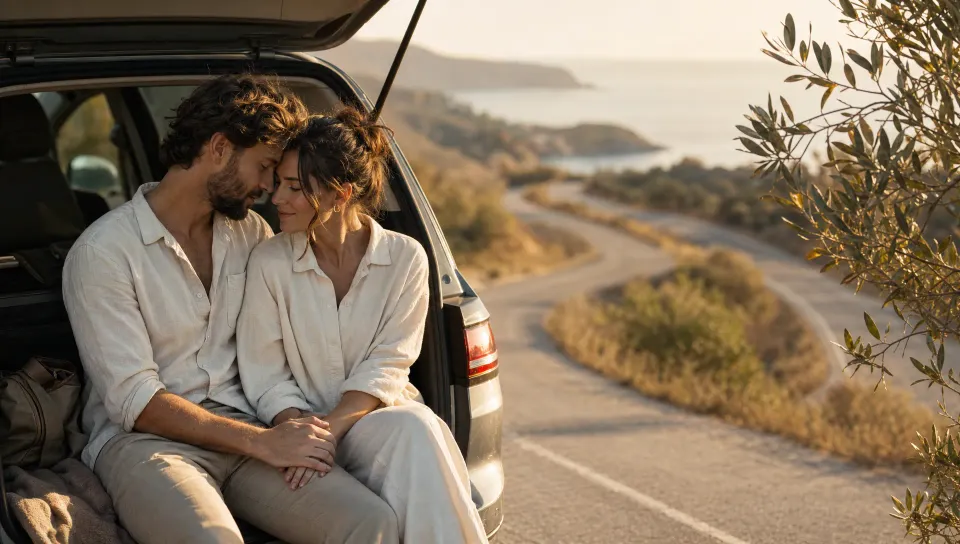
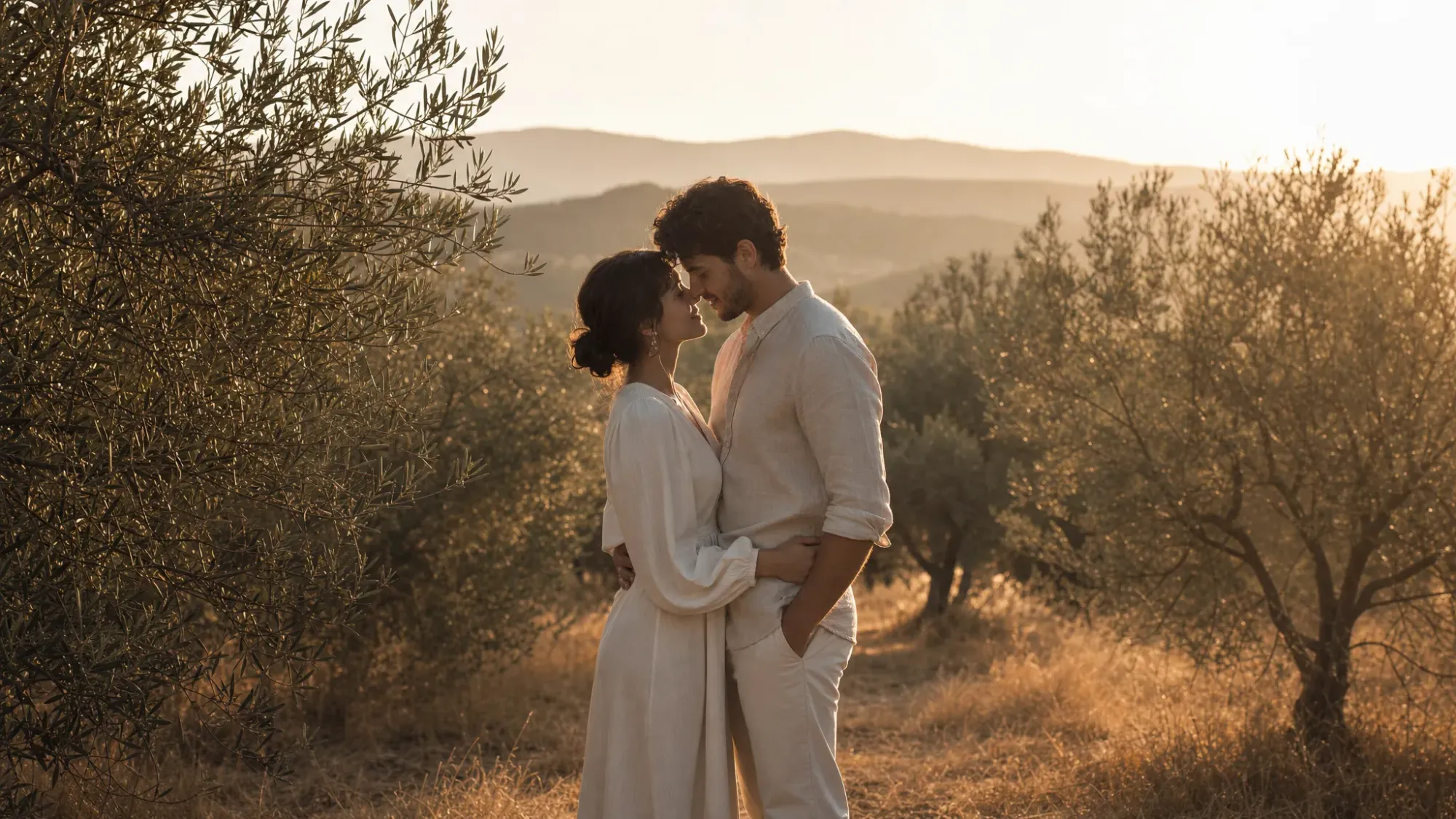
The road narrows. Olive trees gather on both sides, silver leaves flickering when the wind moves through them. Dominick has already walked this place before. He knows where the light first breaks over the ridge. He knows which path looks ordinary until it opens, suddenly, into the kind of silence that makes you stop talking.
You change behind an old stone wall.
No aisle. No seating chart. No room waiting to be impressed.
Only the two of you, the sound of insects waking in the grass, and your vows trembling in your hands.
In Costa Brava, it might smell like pine resin and salt, with the sea hitting rock below you in slow white bursts.
In Andalusia, the air might hold heat even at sunrise, with a white village behind you and swallows cutting through the sky.
In Mallorca, the limestone might glow pink before the sun climbs too high, and the whole world might feel briefly made of water and stone.
This is why many couples choose symbolic.
Not because they do not care about marriage.
Because they care so much that they refuse to let the ceremony become an appointment.
The practical path most international couples choose
For many couples getting married abroad in Spain, the simplest structure looks like this.
You handle the legal marriage in your home country first. You keep it small, clean, and administrative. Maybe you do not dress up. Maybe you do. Maybe you celebrate with breakfast and keep the real vows for Spain.
Then you travel for your symbolic ceremony.
That ceremony becomes the emotional center of your marriage story. It is the day you remember in color. It is the day you film. It is the day you return to in your body when someone asks what it felt like.
This route can reduce stress because your legal status is already secure before you board the plane. It can also give your planning more freedom. Instead of choosing a location based on civil ceremony rules, you choose based on meaning, privacy, access, season, and light.
There are still practical details.
A symbolic ceremony may not need marriage paperwork, but the place itself may still need permission. Some beaches, parks, ruins, estates, and protected landscapes have rules around gatherings, filming, photography, vehicle access, drones, or amplified sound.
This is where guidance matters.
Not someone who simply finds a pretty backdrop.
Someone who understands how a place behaves at different hours. Where the tourists arrive. Where the wind turns sharp. Which path is too steep in dress shoes. Which cove loses light early. Which hillside feels empty at 7:10 in the morning but crowded by nine.
That is the difference between planning a ceremony and protecting an experience.
If you are still exploring the wider shape of a destination elopement, the Mediterranean elopement guide can help you think through timing, travel, and the emotional rhythm of getting married far from home.
A gentle decision guide
If you are trying to choose, do not begin with the paperwork.
Begin with the feeling you want to protect.
Choose the legal route if you need a Spanish legal marriage for personal, cultural, religious, or residency reasons, and you have the time and patience to move through the process carefully.
Choose the symbolic route if you want your ceremony to feel unhurried, private, flexible, and shaped around the landscape instead of the registry.
Choose the symbolic route if you are already overwhelmed by expectations at home and you do not want to bring a second layer of pressure into the one place that is supposed to feel free.
Choose it if you want to walk to your vows rather than be scheduled into them.
And if you are unsure, let that be okay.
Most couples do not arrive with legal clarity. They arrive with a feeling.
A cliff.
A dress that can move.
A dinner table under string lights in a courtyard.
A sentence they want to say without a microphone.
The logistics can be shaped around that.
Where Dominick fits into the question
Dominick does not treat this choice like a form to check.
He listens for what you are actually trying to protect.
If you want the legal path, he can help you understand the kind of requirements you may need to research and where official guidance matters. If the symbolic path is better for you, he helps craft the ceremony around the place, the light, the timing, and the quiet emotional truth of the day.
He scouts hidden places across Spain. He builds the itinerary. He helps shape the ceremony. He films it cinematically, then pulls still frames from the film so the memory stays alive in motion and in image.
The beauty of this is not that your elopement becomes easier, although it often does.
The beauty is that it becomes more yours.
You do not need a large team hovering around your most intimate vows. You need someone who knows when to guide, when to disappear, and when to notice the exact second the wind changes.
For more practical context around locations, legal considerations, and how an intimate day can unfold, you can also explore Dominick’s guide on how to elope in Spain.
Frequently Asked Questions
Can two foreigners legally get married in Spain? Sometimes, but it depends on your nationality, residency status, municipality, documents, and the local Registro Civil. For many non-resident couples, a legal marriage at home followed by a symbolic ceremony in Spain is the simpler path.
Is a symbolic ceremony in Spain real? Yes. It is not legally binding, but it can be emotionally, spiritually, and personally real. Your vows, rings, readings, and ceremony can all happen in Spain, while the legal paperwork is handled elsewhere.
Should we do the legal paperwork before or after our symbolic ceremony? Many couples do it before traveling so they can arrive in Spain without legal stress. Others do it afterward because they want Spain to feel like the first true moment. The right order depends on what feels calm and meaningful to you.
Do symbolic ceremonies need permits in Spain? Sometimes. The ceremony itself is not legally regulated like a civil marriage, but certain locations may require permission for access, filming, photography, gatherings, drones, or setup. This depends on the specific place.
Can Dominick help us choose between legal and symbolic? Yes, he can help you understand the practical differences and guide you toward the path that best protects your experience. For legal decisions, you should still confirm details with official authorities or a qualified professional.
The door is already open
Maybe you already know.
You do not want a ceremony that feels like it belongs to everyone else.
You want a place where your voices can be quiet. A place where the light does some of the speaking. A place that holds the promise without turning it into a performance.
If getting married abroad in Spain is pulling at you, legal or symbolic is only the beginning of the conversation.
Dominick knows the coves that empty at sunrise, the olive roads that turn gold before heat arrives, and the kind of silence that makes vows feel safe.
When you are ready, you can begin the conversation here.
Previous Article
Outdoor Ceremony Spain: How to Choose a Place That Feels True
Next Article
Top 50 Elopement Locations in Spain for Dreamers

I'm Dominick let's craft your perfect Mediterranean elopement.
Let's create a day that captures your love, surrounded by the Mediterranean's beauty. Ready to plan your perfect escape?
Start your Adventure Let's talk!