How to legally marry in Spain: guide for international couples
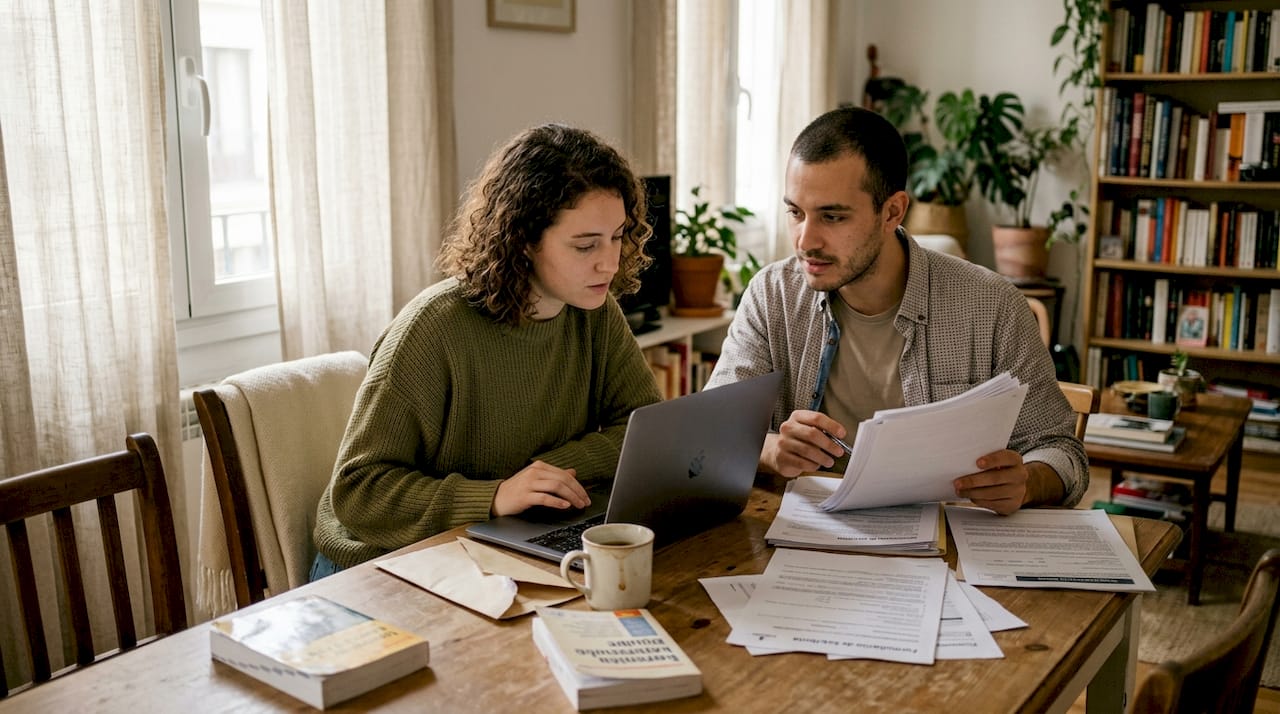
Spain calls to you with golden coastlines, ancient villages, and a romance so vivid it feels like a film. But when two people from different countries decide to make it official on Spanish soil, the dream quickly meets a wall of paperwork, residency rules, and bureaucratic timelines. The legal process for marrying in Spain as a foreigner is genuinely complex, and many couples are caught off guard. This guide walks you through every step clearly, from required documents to ceremony types to what happens after you say “I do,” so you can plan with confidence and keep the magic alive.
Table of Contents
- Understanding legal marriage requirements in Spain
- Essential documents and legal steps for international couples
- Choosing your ceremony: civil, notary, or religious
- Navigating residency, regional rules, and common pitfalls
- What happens after you’re married: registration and future benefits
- Why the romantic fantasy of eloping in Spain rarely matches the legal reality
- Simplify your Spanish elopement journey with expert support
- Frequently asked questions
Key Takeaways
| Point | Details |
|---|---|
| Residency is required | At least one partner must usually be a resident or have a domicile in Spain to legally marry. |
| Paperwork is complex | You need multiple legalized and translated documents to satisfy Spanish legal standards. |
| Ceremony flexibility | Civil, notary, and religious ceremonies are possible, but only some are accessible for internationals. |
| Symbolic marriage common | Many couples choose a symbolic wedding in Spain with legal marriage in their home country. |
| Marriage brings benefits | A legal Spanish marriage grants residency rights and paves the way to nationality for foreign spouses. |
Understanding legal marriage requirements in Spain
Spain’s legal framework for marriage is rooted in civil law, and it applies equally to Spanish nationals and foreigners. Before any ceremony can take place, couples must open what is called an expediente matrimonial, a formal marriage file reviewed by the Civil Registry, a notary, or a court. Legal marriage in Spain requires opening this file, submitting proof of legal capacity, and passing compliance checks to confirm neither party is already married or closely related.
Both partners must be at least 16 years old (with parental consent under 18), legally single or widowed or divorced, and not related within prohibited degrees of kinship. These rules apply regardless of nationality. Where things get complicated for international couples is the residency requirement.
Spain’s Civil Registry typically requires at least one partner to be registered as a resident, known as empadronamiento, in the municipality where the marriage will take place. This is not a tourist registration. It is a formal local census enrollment that takes time to establish.
| Requirement | Details |
|---|---|
| Minimum age | 16 (parental consent required under 18) |
| Marital status | Both must be legally single, divorced, or widowed |
| Residency | At least one partner needs empadronamiento |
| File opening | Required before any ceremony |
| Processing time | Typically 2 to 6 months |
Common challenges for non-resident couples include:
- Difficulty proving domicile without formal residency
- Document validity windows that expire before approval
- Language barriers during interviews and submissions
- Regional variation in how strictly rules are enforced
Understanding marriage paperwork in Spain early saves enormous stress later. Avoiding Spain elopement mistakes starts with knowing the framework before you book your flights.
Pro Tip: The empadronamiento (local census registration) is the single most misunderstood requirement. Without it, your application may be rejected outright, regardless of how perfect your other documents are.
Essential documents and legal steps for international couples
Once you understand the core requirements, gathering your paperwork becomes the next priority. The process rewards couples who start early, because document validity periods vary and apostilles (official certifications that make foreign documents legally recognized abroad) take time to obtain.
Key documents for international couples include valid passports, apostilled birth certificates with certified translations, proof of marital status, and empadronamiento for at least one partner. If either person was previously married, a divorce decree or death certificate is also required, apostilled and translated.
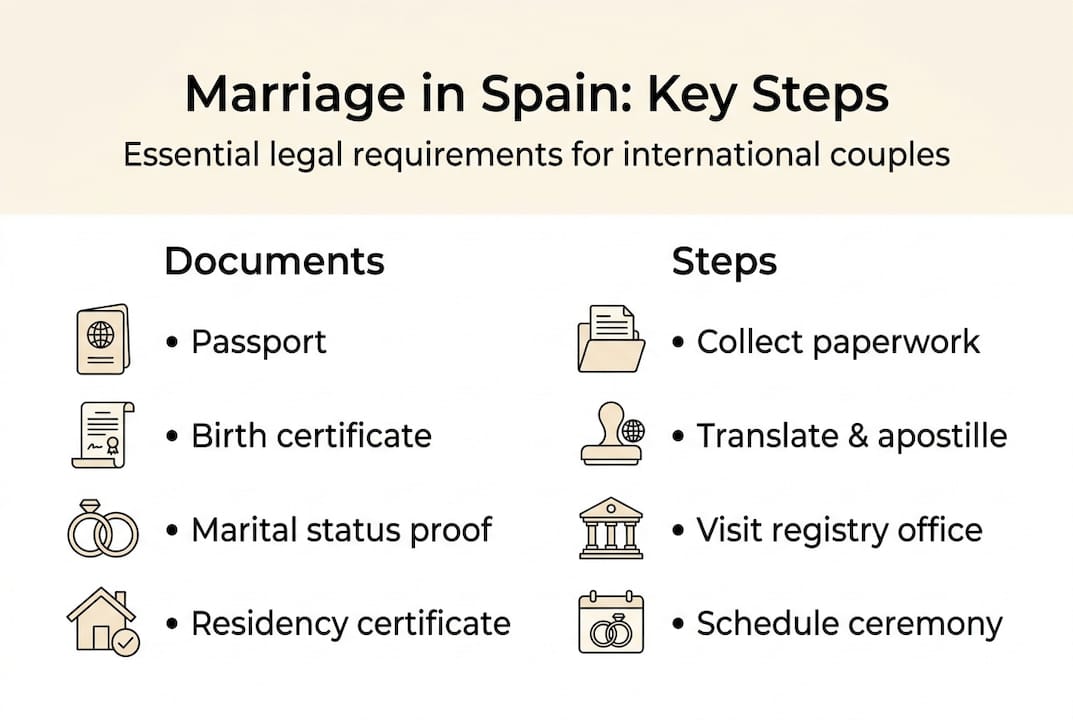
Here is a comparison of document requirements by situation:
| Document | First-time marriage | Previously married |
|---|---|---|
| Valid passport | Required | Required |
| Apostilled birth certificate | Required | Required |
| Certified Spanish translation | Required | Required |
| Certificate of no impediment | Required | Required |
| Divorce decree or death certificate | Not needed | Required + apostille |
| Empadronamiento | At least one partner | At least one partner |
The step-by-step process looks like this:
- Gather all personal documents and obtain apostilles in your home country
- Arrange certified Spanish translations through an official translator
- Submit the complete file to the local Civil Registry or notary
- Attend a personal interview (both partners may be required)
- Wait for approval, which can take 2 to 6 months
- Schedule and confirm your ceremony date
- Receive your official marriage certificate after the ceremony
A real-world example: imagine a British and Brazilian couple planning an elopement in Spain. They begin gathering documents four months out, only to discover the Brazilian partner’s birth certificate apostille has expired. Starting early gives them time to reapply without derailing the wedding date.
Pro Tip: Start collecting documents at least four to six months before your intended wedding date. Apostilles, translations, and certificate-of-no-impediment requests from foreign governments often take longer than expected.
Choosing your ceremony: civil, notary, or religious
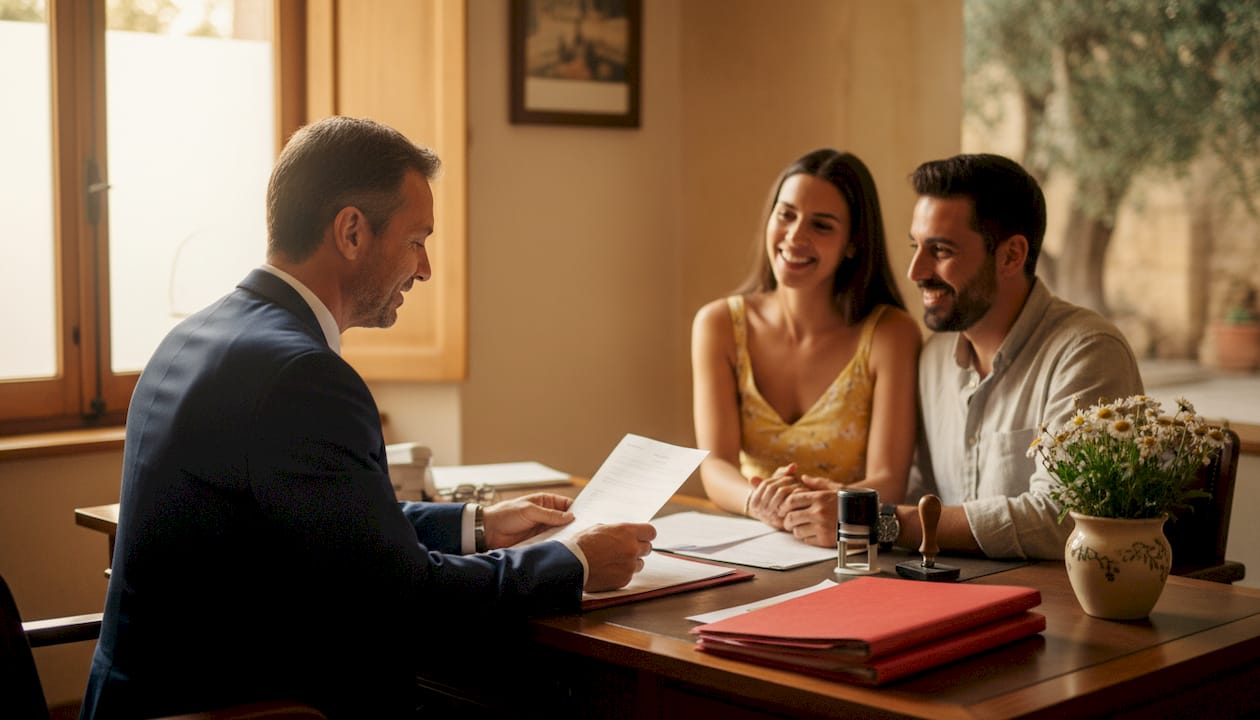
After getting your paperwork in order, the next key decision is how and where you will exchange vows. Spain recognizes three main types of legally binding ceremonies, each with different requirements, timelines, and practical implications for international couples.
Civil marriage can be performed at a registry office, town hall, or before a notary. Religious weddings must be legally recognized and registered to carry civil effect.
| Ceremony type | Speed | Cost estimate | Best for |
|---|---|---|---|
| Civil (town hall) | Moderate | Low to medium | Couples with residency |
| Notary | Fastest | Medium | Couples meeting residency rules |
| Religious | Slowest | Varies | Couples with faith tradition |
| Symbolic | Immediate | Low | Non-resident international couples |
What makes a ceremony legally binding in Spain:
- Completed and approved expediente matrimonial
- Presence of a legally authorized officiant
- Two adult witnesses
- Formal declaration of consent by both parties
- Registration in the Civil Registry after the ceremony
“A religious ceremony only carries legal civil effect in Spain if it belongs to a recognized faith and is properly registered with the Civil Registry afterward.”
For couples planning an intimate wedding in Spain, the notary route is often the most streamlined once residency is established. If you are still writing your elopement vows and dreaming of something deeply personal, a symbolic ceremony paired with a legal marriage at home is a genuinely beautiful and practical alternative.
Pro Tip: Notary weddings are currently the fastest legal option in Spain for couples who can establish residency. They tend to involve less waiting and more scheduling flexibility than town hall ceremonies.
Navigating residency, regional rules, and common pitfalls
Once you have chosen your ceremony type, the reality of Spanish law and regional bureaucracy can significantly affect your path. Spain is made up of 17 autonomous communities, and while national law sets the framework, local registries interpret and apply it with varying degrees of strictness.
Non-residents face higher hurdles, and at least one spouse usually needs Spanish residency, though requirements vary by region. Some registries in larger cities apply stricter scrutiny to non-resident applications, while smaller municipalities may be more flexible.
“Marriage is recognized as a fundamental right in Spain, but authorities apply heightened scrutiny to non-resident applications, particularly where immigration concerns exist.”
Common pitfalls to watch for:
- Assuming tourist presence qualifies as domicile
- Submitting documents outside their validity window
- Underestimating interview preparation requirements
- Choosing a municipality without checking its specific policies
- Ignoring the need for a certified interpreter during the interview
Many international couples opt for a symbolic ceremony in Spain and complete the legal marriage at home, precisely because the residency rules create real barriers for tourists. This is not a compromise. For many, it is actually the more freeing and romantic choice.
If legality in Spain is essential to you, personal planning for elopements and working with a legal specialist or experienced elopement planner can make a significant difference. They know which regions are more accommodating and can help you avoid the most common rejection triggers.
What happens after you’re married: registration and future benefits
With your ceremony complete, the legal journey is not quite finished. Registration in the Civil Registry is the step that gives your marriage its full legal effect in Spain. Without it, the ceremony holds no standing for property rights, inheritance, or residency applications.
Once married, registration in the Civil Registry is required for legal effects including property and inheritance. Foreign spouses gain important rights, including eligibility for a residence card.
Post-marriage actions to take:
- Register the marriage in the Spanish Civil Registry immediately after the ceremony
- Apply for a Tarjeta de Residencia (residence card) if you plan to live in Spain
- Update identification documents in your home country
- Notify relevant government agencies of your name change if applicable
- Consult a legal advisor about inheritance and property rights under Spanish law
- Begin the nationality application process if that is your long-term goal
Spain offers one of the shortest pathways to nationality in Europe for foreign spouses. After just one year of legal marriage and residence, a foreign spouse may apply for Spanish nationality. That is a remarkable benefit compared to many other countries.
Valid reasons to consult a legal expert after your wedding include navigating dual nationality rules, understanding community property laws, and ensuring your marriage is recognized in your home country. Avoiding wedding planning mistakes extends beyond the ceremony itself.
Pro Tip: A legal marriage in Spain can accelerate EU residence rights and open the path to Spanish nationality for foreign spouses in as little as one year, making the paperwork effort genuinely worthwhile for couples planning to build a life here.
Why the romantic fantasy of eloping in Spain rarely matches the legal reality
Here is the honest truth that most guides skip: the cinematic image of exchanging vows at golden hour on a cliffside in Andalusia, with zero paperwork and infinite freedom, is largely a fantasy for non-resident international couples. The legal barriers are real, and they catch people off guard every single time.
What I have seen, working with couples from around the world, is that the legal process often creates more stress than the wedding itself. Months of document chasing, residency confusion, and interview anxiety can quietly steal the joy from what should be the most intentional season of your relationship.
Legal restrictions deter many couples, and symbolic ceremonies are often the most pragmatic and emotionally satisfying choice for non-residents. And honestly? A symbolic ceremony, crafted with intention and witnessed by the Spanish landscape itself, can carry more emotional weight than a courthouse appointment ever could.
The couples who find the most joy are those who stop fighting the bureaucracy and start designing an experience that is true to them. Whether that means pursuing paperwork solutions for Spain elopements or embracing a symbolic ceremony with a legal registration at home, the goal is the same: a love story told authentically, without compromise.
Do not let the legal complexity define your wedding. Let your love do that.
Simplify your Spanish elopement journey with expert support
Planning a legal or symbolic elopement in Spain does not have to feel like navigating a foreign bureaucracy alone. With the right guidance, the entire journey transforms from overwhelming to extraordinary. Every hidden gem location, every golden-hour moment, every whispered vow deserves to be captured and celebrated with care.
At Stories by DJ, we specialize in designing intimate, intentional elopements across Spain’s most breathtaking landscapes. From top elopement planning tips to full how to plan an elopement guidance, we are here to walk alongside you. Explore elopement inspiration and discover how a truly personal, cinematic experience can make your Spanish love story timeless.
Frequently asked questions
Can non-residents legally marry in Spain?
At least one partner must usually hold legal residency or formal domicile in Spain. Pure tourists face significant legal barriers and are often redirected toward symbolic ceremonies.
Which documents do international couples need to provide?
Key documents include valid passports, apostilled birth certificates with certified Spanish translations, proof of marital status, and empadronamiento for at least one partner. Previously married individuals must also provide apostilled divorce or death certificates.
How long does the legal marriage process in Spain take?
Expect a timeline of 2 to 6 months from document submission to final authorization, depending on your municipality and the completeness of your file.
Why do many couples choose a symbolic ceremony in Spain?
Symbolic ceremonies are popular because the legal residency requirements create real delays and barriers for tourists, making a meaningful symbolic celebration paired with a legal marriage at home the most practical and joyful path.
What legal benefits come after marrying in Spain?
Registered foreign spouses can apply for a Spanish residence card and may become eligible for Spanish nationality after just one year of marriage and legal residence in the country.
Recommended
Previous Article
Adventure Elopement: A Two-Day Timeline That Breathes
Next Article
Elope on the Beach: A Sunrise Plan for Private Vows

I'm Dominick let's craft your perfect Mediterranean elopement.
Let's create a day that captures your love, surrounded by the Mediterranean's beauty. Ready to plan your perfect escape?
Start your Adventure Let's talk!