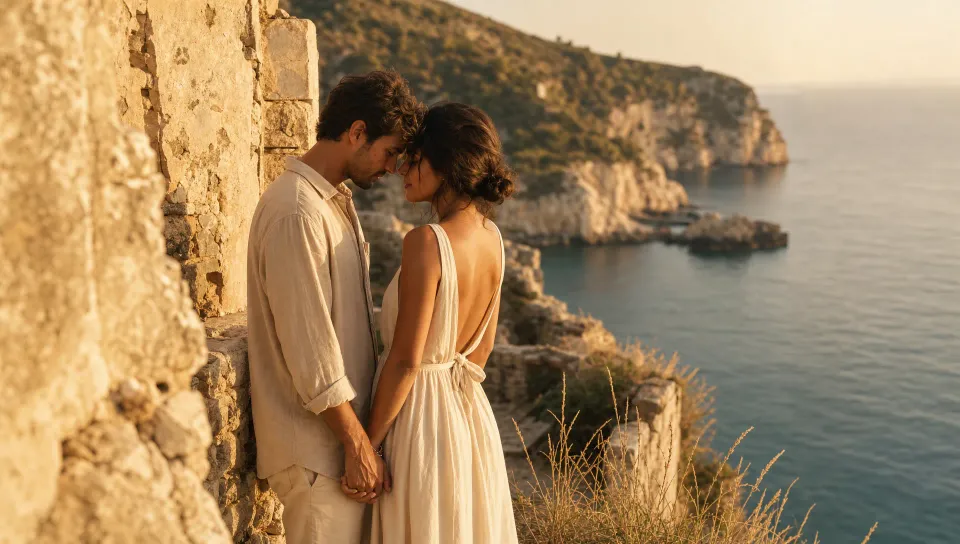
Your intimate wedding workflow: plan, film, and elope in Spain

TL;DR:An intimate wedding workflow is a structured process that ensures seamless planning and emotional storytelling.Planning a Spain elopement involves cross-border legal paperwork, expert venue scouting, and careful logistics coordination.Prioritizing cinematic storytelling creates a genuine, emotionally rich experience that transforms the wedding film.
Planning an intimate elopement in Spain sounds like pure magic until the logistics arrive and steal your breath. Suddenly you are navigating foreign permit offices, scouting venues on Google Maps from another continent, and trying to coordinate vendors who do not speak your language. The joy fades fast beneath the weight of uncertainty. That is why having a clear, structured intimate wedding workflow changes everything. It transforms chaos into calm, confusion into confidence, and a series of fragmented tasks into one seamless story. In this guide, we walk through every phase together, from vision and preparation to execution and review, so your day unfolds as beautifully as it deserves. Because your love story is worth more than a checklist.
Table of Contents
- Understanding your intimate wedding workflow
- Preparation: Personalizing your intimate wedding in Spain
- Execution: Orchestrating the day for seamless storytelling
- Verification: Reviewing and troubleshooting your intimate wedding workflow
- Why cinematic storytelling transforms your intimate wedding workflow
- Explore tailored workflows and cinematic elopement packages
- Frequently asked questions
Key Takeaways
| Point | Details |
|---|---|
| Workflow clarity | Understanding your workflow ensures every step of your intimate wedding or elopement is seamless and stress-free. |
| Personalized planning | Tailoring details to your dreams helps create a meaningful and unique experience for you and your guests. |
| Cinematic storytelling | Focusing on storytelling brings emotional depth and creates unforgettable memories for your special day. |
| Troubleshooting tips | Regular workflow reviews and common mistake checklists prevent last-minute surprises and ensure a smooth wedding. |
| Expert resources | Leveraging professional planning and videography guides simplifies your journey and elevates your elopement in Spain. |
Understanding your intimate wedding workflow
Before you can build anything beautiful, you need a blueprint. An intimate wedding workflow is a structured, sequential planning process designed specifically for small, deeply personal ceremonies. It is not a generic event timeline. It is a living framework that connects your vision, your logistics, your storytelling, and your emotional experience into one cohesive journey.
Think of it like a love letter written in chapters. Each chapter builds on the last. Skip one and the story feels incomplete. Get them all right and you have something truly extraordinary, a day that lives in your memory and on film forever.
For adventurous international couples planning an elopement in Spain, the benefits of intimate weddings go well beyond smaller guest lists. You gain presence. You gain freedom. You gain the ability to make every single moment intentional. But that freedom only feels liberating when it is held within a solid workflow structure.
The four core phases of an intimate wedding workflow
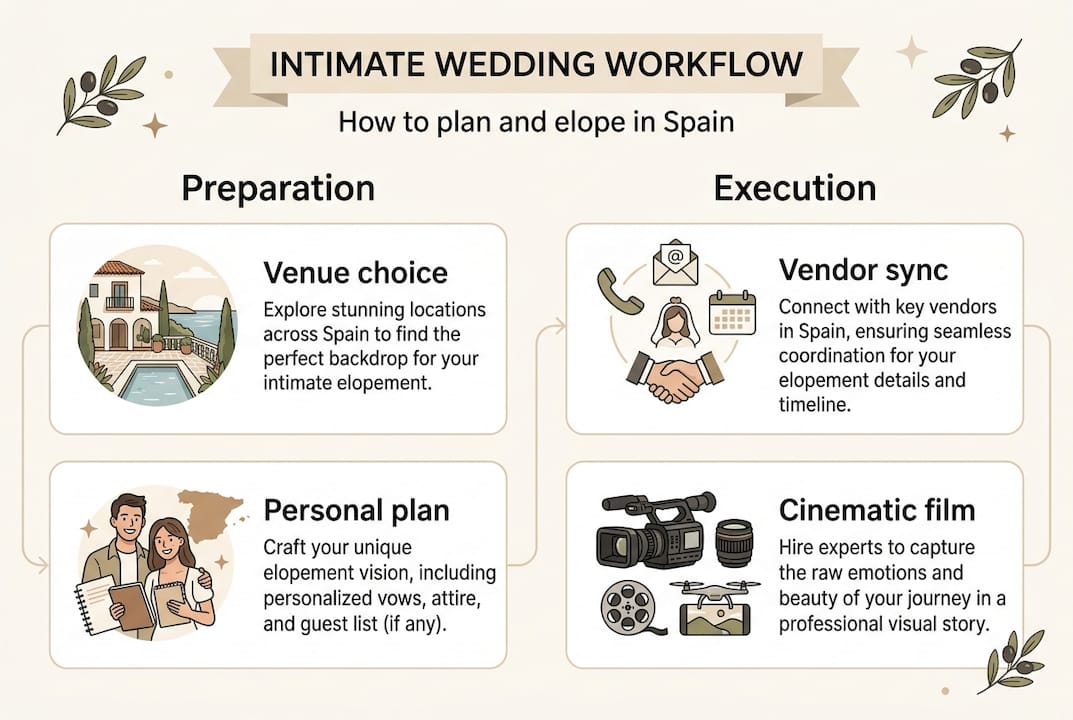
Every great elopement workflow moves through four essential phases:
- Vision and goals — What story do you want to tell? What emotions do you want to feel? What landscape do you want wrapped around your vows?
- Logistics and preparation — Venues, legal paperwork, travel plans, vendor selection, timeline design.
- Cinematic storytelling — How the day is choreographed for emotional impact, narrative arc, and film-worthy moments.
- Execution and review — The day itself, followed by a careful check to ensure nothing was missed and everything is preserved.
Understanding small intimate weddings as a distinct category of celebration helps you see why each phase looks different from a traditional wedding. You are not coordinating a ballroom of 200 guests. You are curating an experience for two, or perhaps a handful of your most beloved people.
What makes Spain unique for this workflow
Spain introduces specific layers that international couples must account for. Here is a clear look at what differs from a typical domestic elopement workflow:
| Workflow element | Domestic elopement | Spain elopement |
|---|---|---|
| Legal paperwork | Single country requirements | Cross-border apostilles and translations needed |
| Venue scouting | Local knowledge available | Hidden gems require expert local scouting |
| Vendor communication | Same language, same time zone | Language barriers, time zone gaps to navigate |
| Light and landscape | Variable | Golden Mediterranean light, dramatic coastal and inland settings |
| Permit requirements | Often minimal | May require location-specific permits for filming and ceremonies |
| Travel logistics | Simple | Flights, accommodations, and transport all need coordination |
Key requirements that every international couple should keep in mind:
- Guest management: Even with just two people, you need to plan arrival logistics, accommodations, and on-the-ground transport.
- Venue selection: Not every stunning Spanish location is permit-friendly or accessible. Expert scouting is essential.
- Cross-border paperwork: Marriage certificates, apostilles, and translated documents take time. Start this process months in advance.
A well-designed workflow does not eliminate surprises. It simply ensures that when surprises arrive, you are ready to dance with them rather than drown in them.
Preparation: Personalizing your intimate wedding in Spain
With the workflow mapped out, the next step is preparing your personalized plan for Spain. This is where the abstract becomes real and where your vision starts breathing.
Choosing a venue that fits your soul
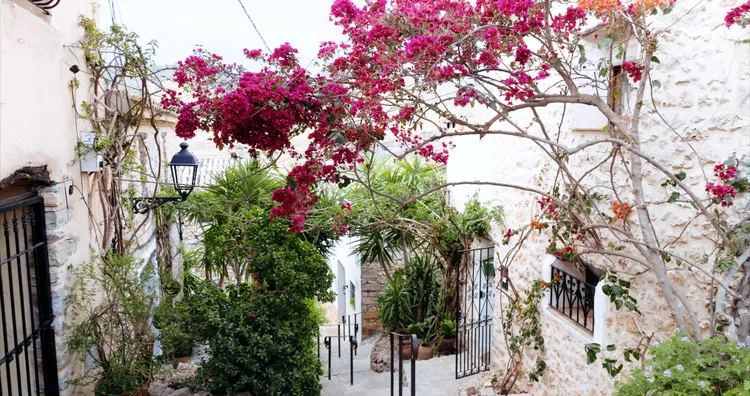
The venue is not just a backdrop. It is a character in your story. In Spain, you have an almost overwhelming variety to choose from: whitewashed Andalusian villages where sun-warmed walls glow golden at dusk, rugged Catalonian cliffs where the sea roars its approval, lush Basque countryside where mist rolls softly over ancient stone, and forgotten olive groves where time forgets to move.
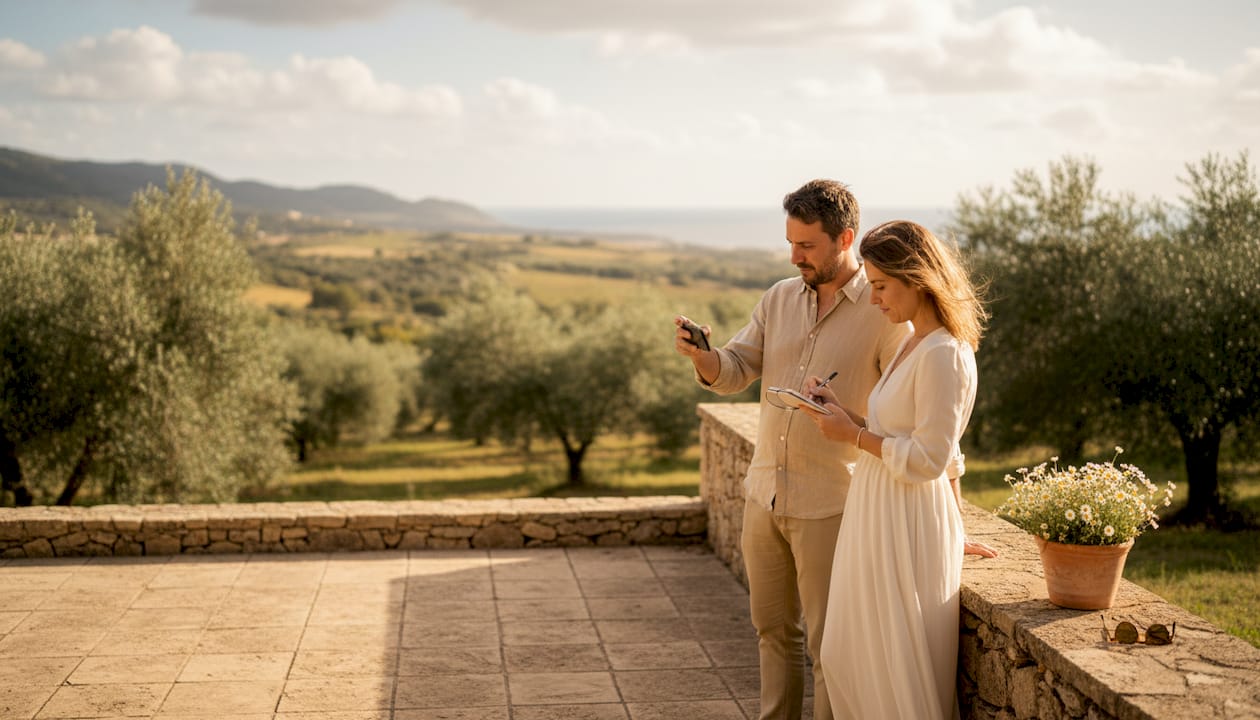
When planning intimate weddings in Spain, your venue decision should be guided by three factors: your emotional vision, your practical guest count, and your logistical reality. A clifftop ceremony may be breathtaking but reaching it may require a four-wheel drive and a willingness to hike. Know what you are choosing before you fall in love with a photo.
Explore intimate wedding venues across Spain and you will find that the hidden gems, the ones without wedding packages and Pinterest boards, are almost always the most extraordinary. They require more research but reward you with authenticity that no staged venue can replicate.
Traditional wedding vs. intimate elopement preparation
Understanding the difference between these two planning worlds helps you release the pressure of convention and lean fully into your own vision.
| Preparation element | Traditional wedding | Intimate elopement in Spain |
|---|---|---|
| Planning timeline | 12 to 18 months | 3 to 9 months |
| Guest coordination | Complex: seating, catering, invitations | Minimal or none |
| Vendor team size | Large: 6 to 12+ vendors | Small: 1 to 3 trusted partners |
| Legal paperwork | Handled locally | International documents required |
| Budget focus | Spread across many elements | Concentrated on experience and film |
| Personalization level | Often limited by venue packages | Fully customized to your story |
Legal checklist for international couples eloping in Spain
Here is a step-by-step preparation list to keep your legal path clear and stress-free:
- Research Spain’s civil vs. symbolic ceremony options — A legal ceremony requires more paperwork; a symbolic ceremony offers greater flexibility and is often the preferred choice for international couples.
- Gather your apostille-certified documents — Birth certificates and any divorce decrees (if applicable) must be apostille-stamped and officially translated into Spanish.
- Contact the local Civil Registry — If you choose a legal marriage, you must register your intent at the Registro Civil in the municipality where you plan to marry.
- Check visa and residency requirements — Depending on your nationality, you may need specific permits to stay in Spain for the duration of your planning trips.
- Confirm venue permit requirements — Some natural locations, national parks, and heritage sites require filming and ceremony permits. Secure these early.
- Hire a local legal advisor or experienced planner — Someone with on-the-ground knowledge can navigate Spanish bureaucracy far faster than you can from abroad.
When personalizing your wedding beyond convention, a symbolic ceremony in Spain gives you complete creative freedom. You write the vows, choose the rituals, set the tone, and let the landscape do the rest.
Pro Tip: Reach out to your venue coordinator at least six months before your date to ask specifically about permit requirements for filming. In Spain, some of the most beautiful natural locations require advance applications that can take weeks to process. Starting early protects both your timeline and your dream location.
Execution: Orchestrating the day for seamless storytelling
Once preparations are complete, everything shifts. The planning phase gives way to presence. This is where the story actually begins to live and breathe.
Synchronizing your vendors and schedule
Even in the smallest elopement, timing is everything. The golden hour in Spain is extraordinary: warm, amber light that pours across stone and water like honey. Missing it by thirty minutes because a vendor was late is a heartbreak that no editing can fully fix. A tightly synchronized schedule protects your most precious moments.
Here is how to orchestrate your day’s flow for maximum cinematic impact:
- Build in breathing room — Do not schedule moments back to back. Let there be space between your preparation and your ceremony walk. That space is where real emotions surface.
- Share a detailed timeline with every vendor — Even if it is just your filmmaker and one other person, everyone should know exactly where to be and when.
- Plan for light, not just time — In Spain, light shifts dramatically. Work with your filmmaker to schedule key moments, especially vows and the first embrace, around the best natural light of the day.
- Account for travel time between locations — If you are moving from a coastal ceremony to a hilltop dinner, factor in real travel time, not ideal travel time.
- Create signal moments — Agree on small, quiet signals with your filmmaker so they know when an emotionally significant moment is approaching. A glance, a nod. These micro-communications protect the most tender scenes.
Exploring microwedding alternatives can also inspire creative execution ideas, from intimate candlelit dinners to spontaneous champagne moments that feel completely unscripted even when gently planned.
Cinematic storytelling woven through the day
Storytelling is not something you add to your wedding. It is something you design from the very beginning and then allow to unfold naturally on the day. The best cinematic elopement films have a narrative arc: a beginning that builds anticipation, a middle that holds the emotional core, and an end that feels like both a resolution and a beginning.
A critical truth about emotional moments in film: The most powerful scenes are rarely the ones you planned. They are the breath before the vow. The laugh that broke through the tears. The way you reached for each other’s hand without thinking. Great filmmaking does not manufacture these moments. It creates the conditions for them to happen and then honors them completely. That is why working with a filmmaker who understands storytelling, not just camera settings, transforms your wedding film into something that moves people for decades.
A skilled microwedding planner guide approach also emphasizes that execution is not about perfection. It is about authenticity. When your day is designed around emotional presence rather than performance, the film captures something real. And real is always more beautiful than perfect.
Pro Tip: Ask your filmmaker to capture “in-between” moments: you adjusting each other’s clothing before the ceremony, quiet whispered words, the way the wind moves through your hair. These seemingly small details become the emotional heartbeat of your film.
Verification: Reviewing and troubleshooting your intimate wedding workflow
After you execute your plan, follow a process to review and troubleshoot so everything is seamless. The verification phase is often overlooked but it is what separates a good elopement from a truly unforgettable one.
Workflow review checklist
Before your wedding day arrives, run through this final review:
- Confirm all vendor contracts are signed and payment schedules are clear.
- Verify all legal documents are apostilled, translated, and submitted where required.
- Reconfirm venue access, including any parking, access roads, or hiking requirements.
- Test all communication channels: does everyone have the right phone numbers and backup contact methods?
- Confirm your accommodation bookings for the nights before and after the ceremony.
- Check the weather forecast and have a gentle backup plan that still honors your vision.
- Review your filmmaker’s shot list together and share any emotional moments you want specifically captured.
The top five mistakes couples make when planning a destination elopement
Learning from common errors saves you time, money, and heartbreak. These are the mistakes we see most often:
- Underestimating legal timelines — Apostilles and translations take time. Starting this process less than three months before your date is a serious risk.
- Choosing a venue based on photos alone — A location that photographs beautifully may be inaccessible, noisy, or permit-restricted. Always verify in person or through a trusted local scout.
- Skipping a buffer day — Traveling internationally and walking straight into your ceremony the next morning leaves no room for jet lag, delayed flights, or unexpected detours.
- Over-scheduling the day — When every moment is planned, none of them feel spontaneous. Leave room for the story to breathe.
- Forgetting the emotional review — After your day, take time to sit with your memories before the film arrives. Writing down your feelings within 48 hours captures details you will want to remember forever.
Adapting for cross-cultural and language challenges
Spain is warm and welcoming but navigating a foreign system without language support can create real friction. Here are practical ways to manage this gracefully:
- Use a local planner or filmmaker with deep regional knowledge who can communicate directly with venues and vendors in Spanish.
- Carry translated copies of all important documents, not just originals.
- Learn a handful of key Spanish phrases related to your ceremony. Even small efforts are received with enormous warmth.
- Use a shared digital workspace to store all documents, contacts, and timelines so nothing is ever lost in translation.
According to bespoke wedding experiences research and industry data, couples who use a structured workflow with professional guidance report significantly smoother planning experiences and dramatically lower stress levels in the weeks leading up to their ceremony. The difference is not luck. It is preparation.
Statistic callout: Couples who engage a dedicated elopement planner report up to 70% less planning stress compared to those who self-manage all logistics for a destination wedding abroad. The investment in expert guidance pays dividends in joy.
Why cinematic storytelling transforms your intimate wedding workflow
Here is the perspective that most wedding planning guides will never tell you: logistics are the least important part of your elopement workflow.
I know. That feels counterintuitive after everything we just covered. But stay with me.
The permits, the timelines, the checklists, all of it exists for one reason only: to create the conditions for your story to be told beautifully. When couples treat their workflow as purely logistical, they arrive at their wedding day organized but emotionally disconnected. They have managed an event. They have not lived an experience.
Cinematic wedding storytelling fundamentally shifts the purpose of your workflow. Instead of asking “what needs to happen when,” you start asking “what do we want to feel, and how do we create space for that feeling?” That question changes everything. It changes how you choose your venue, how you write your vows, how you schedule your day, and how you remember it afterward.
Traditional wedding timelines are built around events: ceremony at 3pm, photos at 4pm, dinner at 7pm. They treat the day as a series of deliverables. But your love story is not a deliverable. It is a living, breathing, emotionally textured experience that deserves to be honored as such.
The most powerful elopement films I have created did not come from perfectly executed timelines. They came from couples who were so deeply present with each other that the camera simply had to follow. A well-designed workflow gets you to that moment of presence. The wedding videography guide principles I work by always center emotional truth above technical perfection. When you prioritize storytelling from the very first planning conversation, every workflow decision becomes infused with meaning. And meaning, more than anything else, is what makes a small wedding unforgettable.
Explore tailored workflows and cinematic elopement packages
Your intimate wedding in Spain deserves more than a template. It deserves a workflow built entirely around your story, your vision, and the emotions you want to carry forward for the rest of your lives.
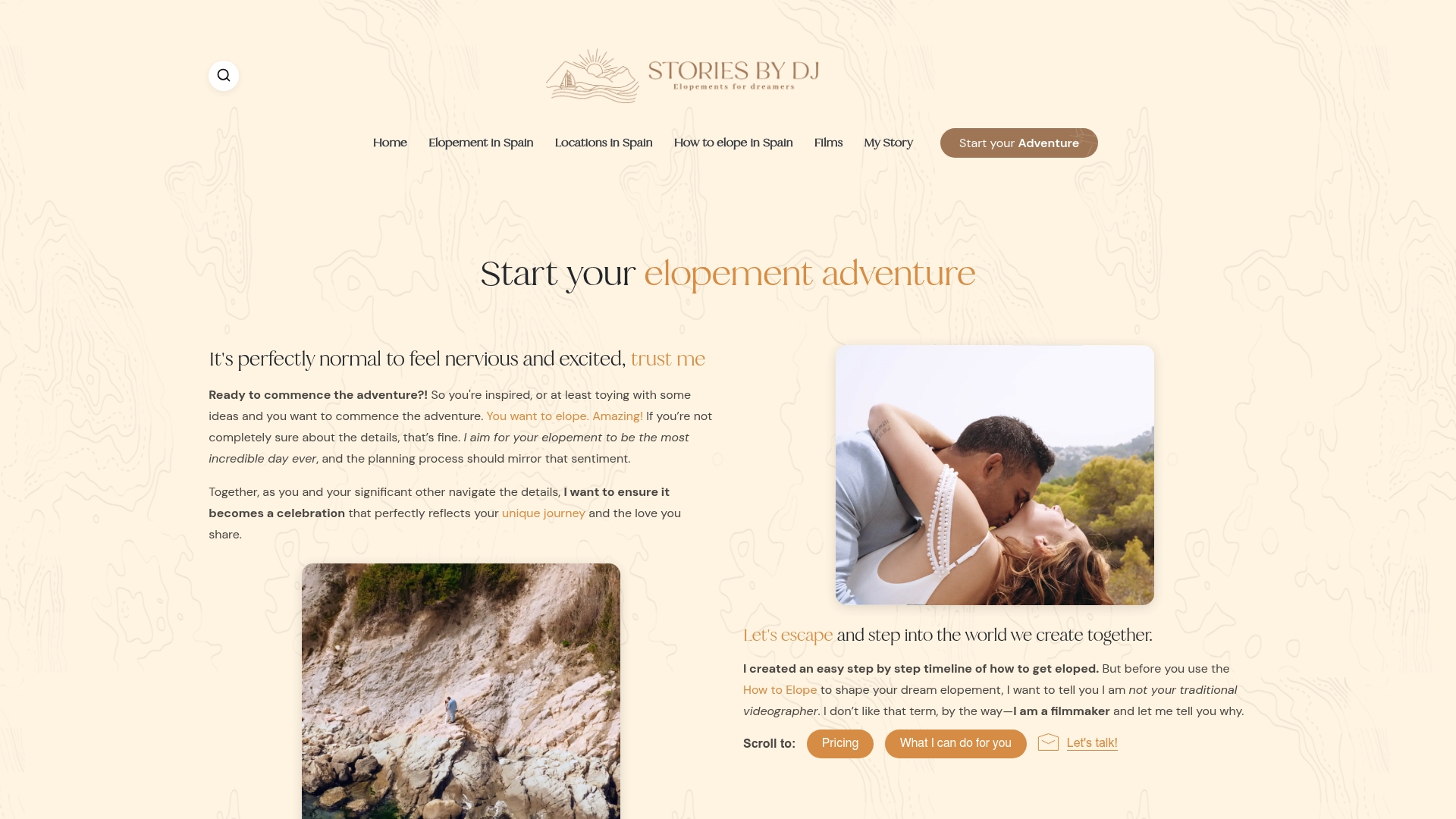
Whether you are just beginning to explore your options or you are ready to start planning, there are resources waiting for you. Discover elopement planning tips that cover everything from choosing your Spanish region to crafting your personal vows. Learn what working with an expert means for your experience by exploring the elopement planner benefits that make the difference between a stressful process and a joyful one. And when you are ready to see what a fully tailored cinematic elopement looks like, browse elopement package deals designed for couples who want presence, beauty, and a film that tells their truth. Your Spanish adventure is waiting. Let’s begin building it together.
Frequently asked questions
What is an intimate wedding workflow?
An intimate wedding workflow is a step-by-step planning process covering vision, logistics, cinematic storytelling, execution, and review, designed to make a small, personalized ceremony feel seamless and deeply meaningful.
How do I handle legal requirements for an elopement in Spain?
International couples should begin the apostille and translation process for key documents at least six months in advance, and consult a local planner or Civil Registry office to confirm whether they need a civil or symbolic ceremony structure.
How can cinematic storytelling enhance our wedding experience?
When your day is designed around emotional narrative rather than a rigid event schedule, your filmmaker can capture authentic, unscripted moments that transform your wedding film into a story you will want to watch again and again for decades.
What is a common mistake in planning an intimate elopement?
One of the most frequent errors is underestimating how much time legal paperwork takes, especially for international couples who need apostilled documents and official Spanish translations before any civil ceremony can proceed.
Are there resources to help with elopement planning and videography?
Yes, couples planning an intimate elopement in Spain can explore curated planning guides, expert filmmaker insights, and tailored cinematic packages specifically designed for adventurous couples seeking a fully personalized Mediterranean experience.
Recommended
Previous Article
Elopement Photographer Confrides: Wild Air, Soft Frames

I'm Dominick let's craft your perfect Mediterranean elopement.
Let's create a day that captures your love, surrounded by the Mediterranean's beauty. Ready to plan your perfect escape?
Start your Adventure Let's talk!