Document your elopement day in Spain: cinematic guide
TL;DR:Cinematic documentation requires careful planning around Spain’s golden hour and location permits.A hybrid filmmaker using the right gear captures authentic moments and emotional storytelling.Letting go of control and trusting the team creates genuine, memorable elopement films.
Your elopement day in Spain holds a kind of magic that ordinary wedding documentation simply cannot contain. The salt air off the Costa Brava, the golden warmth of Andalusian light, the quiet intimacy of a ceremony meant only for the two of you. Yet so many couples return home with images that feel staged, stiff, or disconnected from the emotion they actually lived. The difference between a memory that makes you cry and one that makes you cringe comes down to intention, preparation, and the right storytelling approach. This guide walks you through every step of documenting your Spanish elopement in a way that feels as extraordinary as the day itself.
Table of Contents
- Planning your cinematic elopement documentation
- Choosing the right storytelling team and gear
- Using Spain’s breathtaking landscapes for cinematic storytelling
- Troubleshooting and ensuring a seamless elopement day
- What most couples miss: the real secret to cinematic elopement memories
- Connect your story with expert elopement solutions
- Frequently asked questions
Key Takeaways
| Point | Details |
|---|---|
| Plan for golden hour | Scheduling your elopement during sunrise or sunset gives the most cinematic, flattering light for photos and video. |
| Choose intimate teams | Working with one or two experienced photographers or videographers ensures a personal, emotional capture without distraction. |
| Embrace storytelling landscapes | Incorporating Spain’s unique settings creates powerful narratives and visual depth in your elopement documentation. |
| Anticipate challenges | Prepare for wind, heat, permits, and short ceremonies with backups and flexible plans to ensure seamless documentation. |
| Trust emotional capture | Focusing on natural interactions and emotional moments delivers memories that truly reflect your intimate celebration. |
Planning your cinematic elopement documentation
Great cinematic documentation does not happen by accident. It is designed, layer by layer, before a single frame is captured. When you start planning your elopement in Spain, the first decision that shapes everything else is your timeline.
Spain’s light is legendary, but it is also unforgiving if you miss it. Schedule documentation around golden hour for the warm, directional glow that makes cinematic footage feel alive. Golden hour in Spain typically lasts 30 to 60 minutes after sunrise or before sunset, and it transforms any location into something breathtaking.
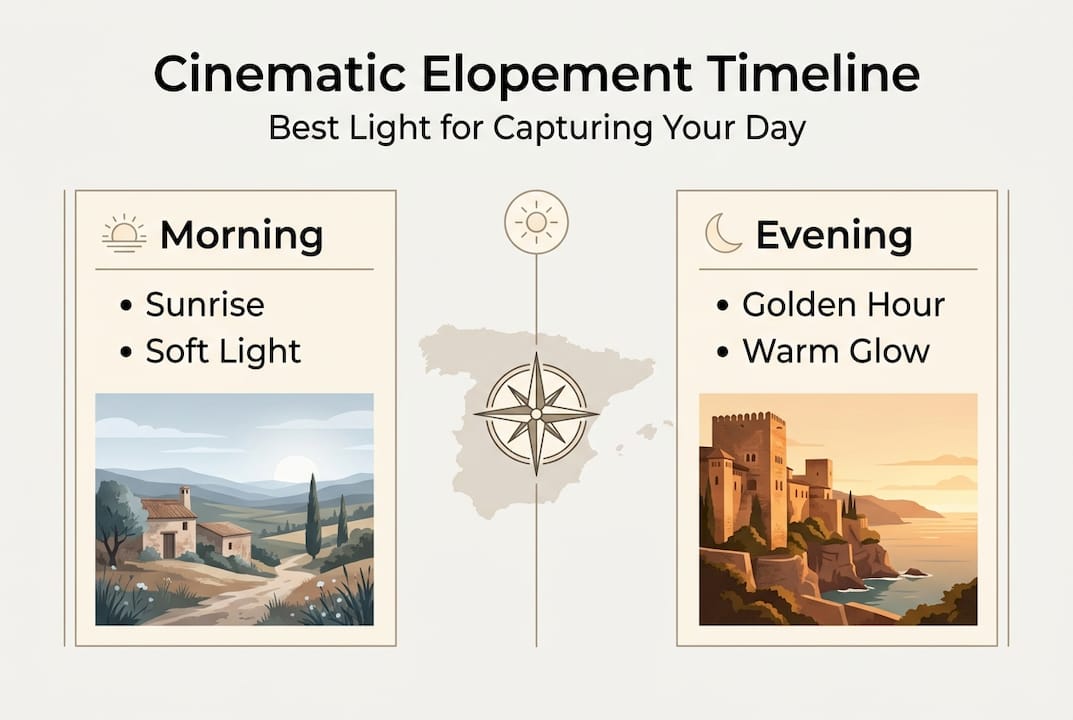
Here is a simple timeline framework to build your day around:
| Time of day | Light quality | Best use |
|---|---|---|
| Sunrise (6:00–7:00 AM) | Soft, cool, mist-kissed | Cliffside ceremonies, forest walks |
| Mid-morning (9:00–11:00 AM) | Bright, even | Getting-ready moments, travel shots |
| Midday (12:00–3:00 PM) | Harsh, high contrast | Avoid for portraits; use for architecture |
| Golden hour (7:00–8:30 PM) | Warm, directional, magical | Vows, portraits, first moments together |
Location scouting is equally essential. Spain offers elopement photography settings that range from dramatic coastal cliffs to sun-drenched olive groves, each with its own permit requirements and logistical considerations. Some of the most stunning spots in national parks or protected beaches require advance permits, so research this early.
Your pre-day checklist should include:
- Confirm golden hour times for your specific date and location
- Research permit requirements for your chosen site
- Identify a weather backup location within 30 minutes of your primary spot
- Share the full timeline with your filmmaker at least two weeks before the day
- Pack layers for temperature shifts, especially on coastal cliffs at sunrise
Pro Tip: Always scout your location at the same time of day you plan to shoot. Light changes dramatically between morning and evening, and what looks perfect at noon can feel completely different at golden hour.
For deeper elopement storytelling insights, think about how each location on your timeline connects emotionally to the next. A morning walk through an olive grove, a midday pause at a coastal village, and sunset vows on a cliff all weave together into a narrative arc that your film will follow naturally.
Choosing the right storytelling team and gear
Once the day is planned, selecting your documentation team and their toolkit sets the stage for cinematic storytelling. This choice matters more than most couples realize.
There is a meaningful difference between a photographer, a videographer, and a hybrid professional. Understanding what each brings helps you decide what your story needs.
| Role | Strengths | Limitations |
|---|---|---|
| Photographer only | Timeless stills, editorial quality | No motion, no audio, no film |
| Videographer only | Emotion through movement and sound | Fewer still options |
| Hybrid filmmaker | Unified story: film and stills together | Requires exceptional skill and experience |
For intimate elopements, a full-service elopement pro who functions as a hybrid filmmaker is often the most powerful choice. You get a cohesive story without a crowd of people around you on your most personal day.
Gear matters, but it serves the story, not the other way around. For cinematic storytelling, look for professionals who use:
- Mirrorless cameras with full-frame sensors for rich color and low-light performance
- A 24-70mm lens for versatile storytelling across wide and intimate scenes
- An 85mm prime lens for soft, romantic portraits with beautiful background separation
- Stabilization tools like gimbals for fluid, emotional motion sequences
- External audio recorders to capture vows and ambient sound with clarity
A small team of one to two professionals is ideal for intimacy, and their familiarity with Spain’s locations, including permit processes, is essential. Meanwhile, hybrid pros in Spain are increasingly common for exactly this reason: couples want both motion and stills without sacrificing the quiet, personal atmosphere that makes an elopement so special.
Pro Tip: During your consultation, ask your filmmaker how they direct natural interactions. A great storyteller does not pose you robotically. They prompt genuine moments, like whispering something funny, walking slowly together, or simply looking out at the view, and then they capture what unfolds.
Using Spain’s breathtaking landscapes for cinematic storytelling
With your team ready, it is time to weave Spain’s iconic landscapes into your story. The country is a filmmaker’s dream, and every region offers something emotionally distinct.
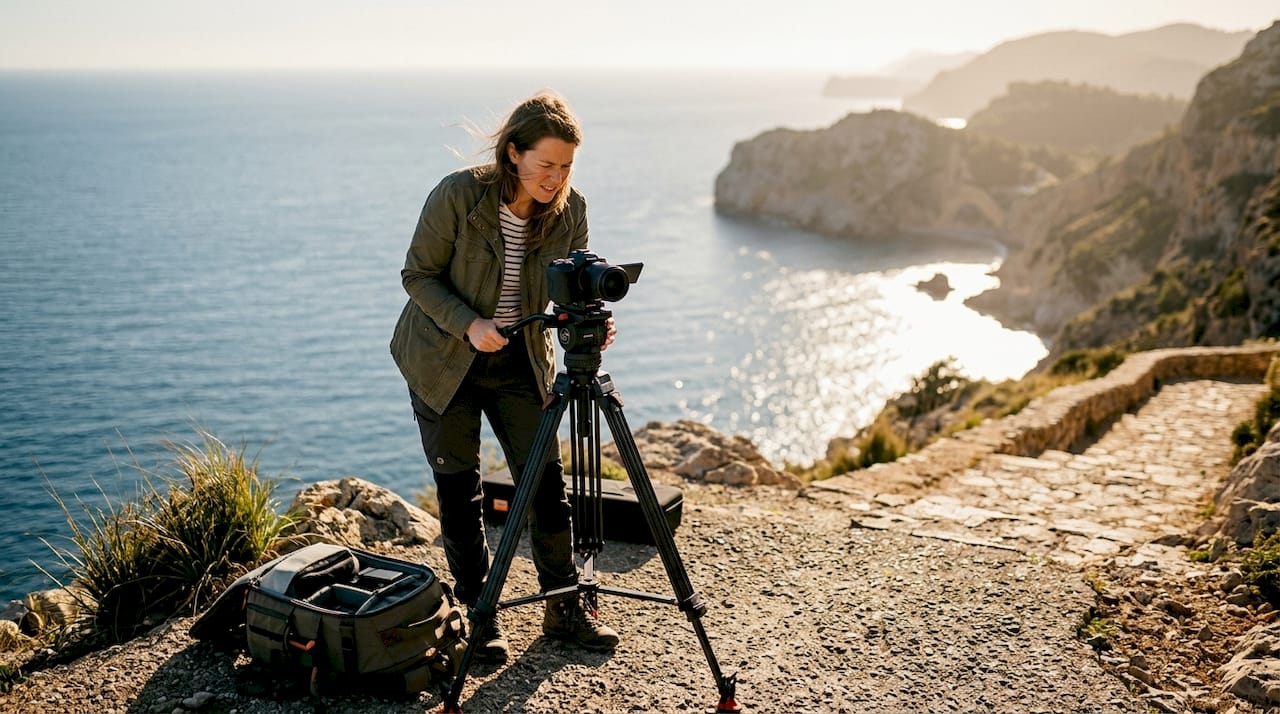
Environmental storytelling means the landscape is not just a backdrop. It is a character in your film. The way Spain’s cliffs, coves, and deserts frame a couple communicates scale, solitude, and wonder in a single frame. A wide shot on a Costa Brava cliff makes you feel the vastness of love against the world. A low-angle shot through lavender fields in Castile whispers intimacy and softness.
“Cinematic storytelling prioritizes emotion over posed shots: natural interactions and varied perspectives create films that feel lived-in rather than performed.”
Here are some of Spain’s most emotionally resonant locations for cinematic elopements:
- Costa Brava: Dramatic cliffs, turquoise coves, and pine-scented air create a sense of wild romance
- Andalusia: White-washed villages, golden light, and flamenco-soaked culture evoke timeless passion
- Bardenas Reales: Spain’s semi-desert landscape offers surreal, otherworldly frames unlike anywhere in Europe
- Mallorca: Sea caves, ancient olive groves, and terraced mountains offer extraordinary variety in a single island
- Ronda: A clifftop city suspended above a gorge, where love itself seems to hang in the air
Natural reflectors are one of the most underused tools in outdoor elopement filmmaking. The sea, white-washed walls, and pale stone all bounce soft light back onto your faces, filling shadows and creating that luminous, editorial quality you see in the best cinematic elopement films.
The role of storytelling in elopements is to honor the emotional truth of your day. Every composition choice, from a close-up of intertwined hands to a sweeping aerial view of a coastline, should serve that truth. When you explore magical storytelling in Spain, you start to see each location not just as beautiful, but as meaningful.
Troubleshooting and ensuring a seamless elopement day
Even the best-laid plans need to anticipate bumps. Here is how to troubleshoot the most common challenges and ensure your documentation shines.
- Wind on coastal locations: Spain’s cliffs and beaches can be breezy, which affects audio and hair. Position your couple with their backs to the wind, use a directional microphone with a windscreen, and embrace the movement as part of the cinematic aesthetic.
- Intense midday heat: Spain’s sun is powerful. If your timeline includes midday moments, seek shade under olive trees or use a light diffuser to soften harsh shadows on faces.
- Permit complications: Many of Spain’s most stunning parks, beaches, and historic sites require filming permits. An experienced elopement planner handles this seamlessly, so you never have to worry about being turned away at the gate.
- Weather changes: Spain is generally reliable, but coastal weather shifts quickly. Always identify a backup location that matches the emotional tone of your primary spot, ideally within a short drive.
- Short ceremony timing: Brief ceremonies are beautiful, but they can limit the number of angles and emotional moments captured. Build in at least 15 minutes of unhurried time around your vows for your filmmaker to move freely and capture multiple perspectives.
Post-production is where adventure and intimacy are woven into a cohesive narrative. The best editors cull for story flow rather than sheer quantity, selecting frames and sequences that build emotional momentum. A comprehensive gallery and film can absolutely emerge from a small, intimate event when the adventure elopement planning is thoughtful and the post-production is skilled.
Pro Tip: Ask your filmmaker about their editing philosophy before you book. Do they edit chronologically, or do they build emotional arcs? The answer tells you everything about how your story will feel when you watch it for the first time.
What most couples miss: the real secret to cinematic elopement memories
After years of documenting adventurous elopements across Spain and the Mediterranean, I have noticed one pattern that separates the couples who treasure their films forever from those who feel something is missing. It is not the location. It is not the gear. It is not even the light.
It is the willingness to let go.
Couples who arrive with rigid shot lists and a need to control every frame often get beautiful images, but they rarely get true ones. The most cinematic storytelling happens in the unscripted seconds: the laugh that escapes during vows, the way one of you reaches for the other’s hand without thinking, the moment you both fall silent and just look at the view together.
Trust your filmmaker the way you trust your partner. Brief them on what matters emotionally, share your story, and then release the need to perform. The camera does not want a performance. It wants you. That is the secret no gear list or location guide can give you. Presence is the most cinematic thing in the world.
Connect your story with expert elopement solutions
You now have a clear picture of what it takes to document your elopement in Spain with genuine cinematic beauty. The next step is finding the right guidance to bring it all together.
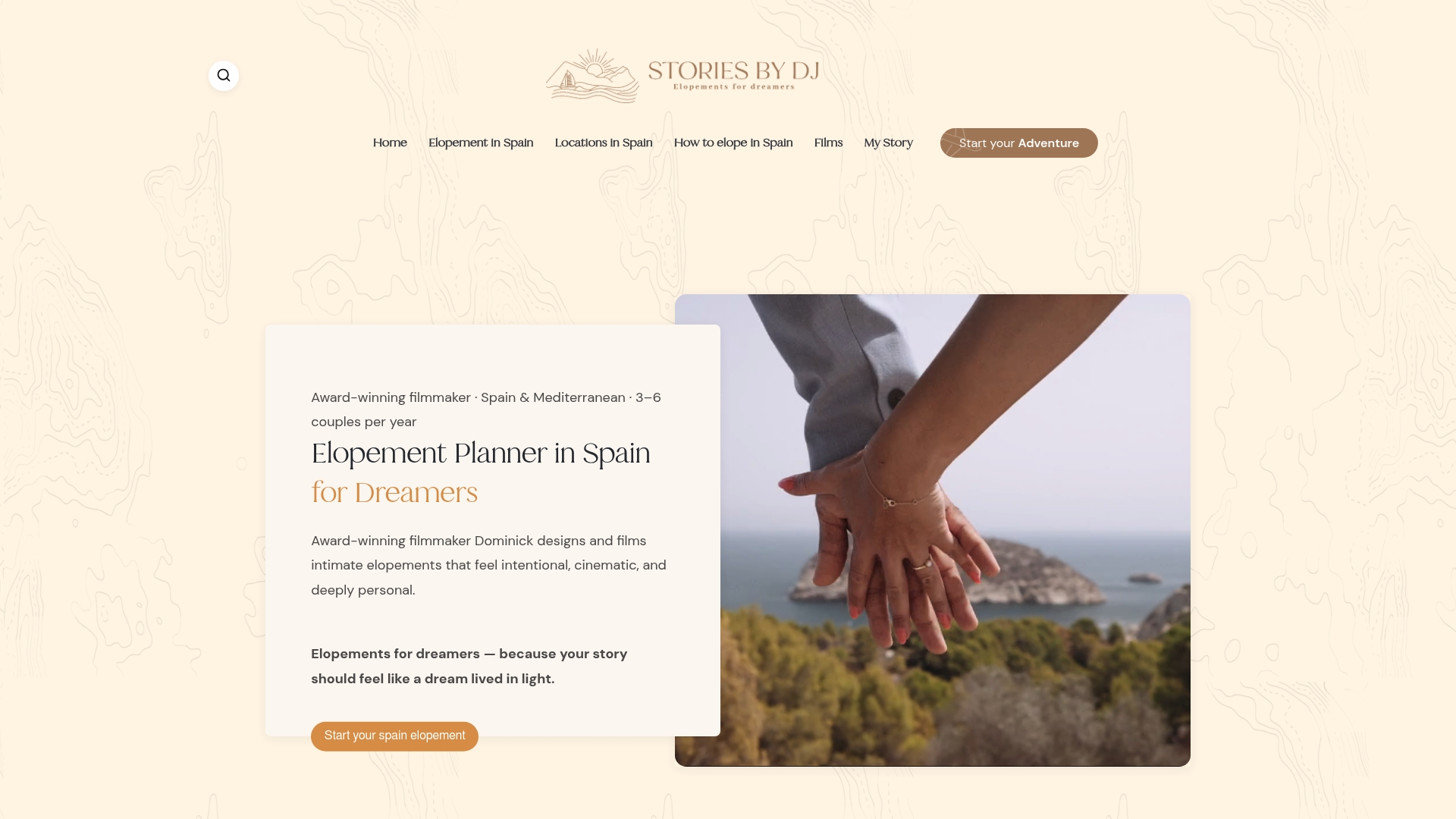
Explore elopement planning tips to refine your vision and build a day that feels entirely your own. If you are wondering whether professional support is worth it, discover why elopement planners matter for couples who want every detail handled with care. And when you are ready to dream a little, let elopement inspiration spark ideas for locations, moments, and stories that are waiting to be told. Your extraordinary day deserves an extraordinary film.
Frequently asked questions
When is the best time of day for elopement photos in Spain?
Golden hour, at sunrise or sunset, delivers the warmest, most cinematic natural light in Spain’s stunning outdoor settings. Most filmmakers and photographers consider it non-negotiable for truly breathtaking results.
Do we need special permits to document an elopement in Spanish parks or beaches?
Yes, many popular locations require permits for filming or photography. Working with an experienced planner familiar with Spain ensures all permits are secured well in advance without stress.
How many people should be on our documentation team?
A small team of one or two professionals keeps the atmosphere intimate and personal, which is essential for capturing authentic emotion on your elopement day.
What should we prioritize: posed shots or candid moments?
Cinematic storytelling prioritizes emotion and natural interactions over staged poses, creating memories that feel genuinely lived rather than performed.
Recommended
Previous Article
Elopement Planner Near Me: How to Find the One Who Gets You

I'm Dominick let's craft your perfect Mediterranean elopement.
Let's create a day that captures your love, surrounded by the Mediterranean's beauty. Ready to plan your perfect escape?
Start your Adventure Let's talk!