Legal Requirements for Eloping in Spain: Your Essential Guide

You close your eyes and feel the salt wind, the hush before golden light, and the tiny shock of choosing to live the story you want. You have a private ritual in mind, a place where the world falls away and it is just the two of you, raw and honest.
When you start untangling the dream from the paperwork, the practical questions arrive. That’s where the details matter. Below you’ll find a clear, compassionate walkthrough of the legal requirements for eloping in Spain, what to prepare, and how to keep the day feeling like your own.
When the world narrows to a single choice
You want the ceremony to belong to you, not to bureaucracy. Spain is generous with scenery and ceremony, but there are legal steps if you want your marriage to be officially recognized. Some couples choose a symbolic ceremony and skip civil paperwork. Others want both: a legal civil marriage and a cinematic celebration in a wild place.
Here's the thing, with the right timeline and a little help, paperwork becomes part of the plan, not an obstacle to the feeling.
What Are the Legal Requirements for Eloping in Spain?
To have a legally recognized marriage in Spain you must complete civil procedures. Requirements vary by region and whether one of you is a Spanish resident or citizen, but the essentials are consistent:
- Valid passports for both partners.
- Original birth certificates showing parents' names.
- Certificate of marital status or Certificate of No Impediment from your home country.
- Proof of residency or empadronamiento in some cases, depending on local rules.
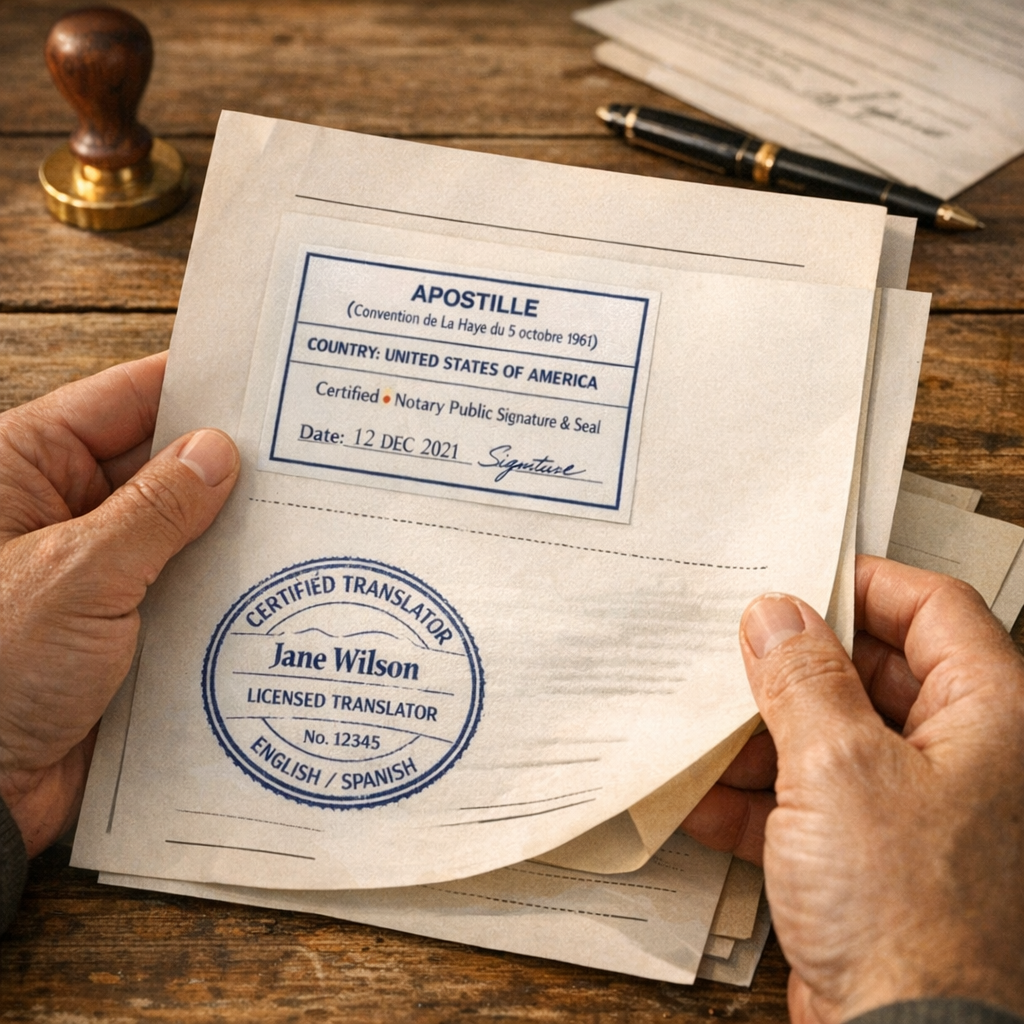
- Official translations of any non-Spanish documents by a sworn translator.
- Apostille authentication (Hague Convention) where required, or legalization if your country is not a signatory.
- Two witnesses for a civil ceremony, where required.
Practical note, many of these steps depend on the Civil Registry office that will process your file, or the notary handling the marriage. Local interpretation matters, so plan for small regional differences.
How the process usually flows
1. Start the marriage file
You or your planner opens the matrimonial case at the local Civil Registry (Registro Civil) where one of you is registered, or at the consulate abroad if you live outside Spain. This begins the qualification process to confirm there is no legal impediment to marry.
2. Collect and legalize documents
Gather originals, request apostilles from your issuing authority, and order sworn translations into Spanish. Translation and apostille timelines vary by country, so begin early.
3. Submit paperwork and wait for qualification
The Civil Registry or competent authority reviews your documents. Processing can take weeks or months depending on the location and workload.
4. Schedule the ceremony
Once qualified, you can arrange a civil ceremony before a judge, mayor, or authorized officiant. Some regions allow notary weddings which can simplify timing, but local rules apply.
5. Register and obtain certificates
After the ceremony the marriage is registered and you receive the official Spanish marriage certificate, useful for updating passports, residency, or foreign registrations.
Sensory note: the paperwork with light
Imagine signing a form at a town hall where light falls through a stained glass window, or outside on a terrace, the smell of orange trees nearby. The legal steps are simply small acts within a larger, luminous day.
Who needs what: quick scenarios
- If one partner is Spanish: expect additional Spanish documents and registration steps, and possible use of the Central Civil Registry.
- If both are foreigners: you typically must demonstrate freedom to marry, provide apostilled documents and translations, and sometimes prove residency or submit through your consulate.
- If you want a religious ceremony to be recognized: extra ecclesiastical paperwork and local parish requirements apply.
Practical checklist: documents to prepare (start 3–6 months ahead)
- Passport, original and several photocopies.
- Full birth certificate, literal copy.
- Certificate of marital status or no impediment, apostilled.
- Divorce decree or death certificate of prior spouse if applicable, apostilled.
- Proof of residence or empadronamiento, if requested by registry.
- Sworn Spanish translations of any foreign-language documents.
- Contact details of two witnesses.
Timeline and processing expectations
Processing varies: some registries take 30 days, others several months. If you need a fast timeline, working with a planner who knows the local registry or using a notary option where available can reduce delays. Always confirm deadlines with the specific Civil Registry office handling your file.
Regional quirks and notary weddings
Spain’s autonomous communities sometimes interpret national rules differently. In some places you can process documentation via a notary, which can be quicker, while in others the registry is strict about residency and documentation. If you plan a cliffside symbolic ceremony, you can still complete the legal civil act separately at town hall or before travel, then celebrate where you want.
Common concerns and how to handle them
- "Can we elope in Spain without becoming residents?" Often yes, but you must meet documentary requirements. Some regions ask for proof of residency, others do not. If residency is required, your planner can advise on options like consular processing.
- "Do foreign documents need an apostille?" Most do if your country is a Hague Convention signatory. If not, consular legalization may be necessary.
- "Is a symbolic ceremony easier?" Yes, symbolic ceremonies have no legal paperwork, but they do not produce an official marriage certificate.
Sensory pause: standing on a cliff after the last signature
After signatures and stamps, go somewhere that feels like the reason you eloped. Notice the light, the small near-imperceptible comforts, the way your hand finds theirs. Those details make the legal steps feel like part of a larger promise.
Helpful resources and reading
- Spanish Ministry of Justice, Registro Civil information: https://www.mjusticia.gob.es
- Practical guidance on marriage registration and certificates: https://www.registrocivil.es
- Expat-focused overview of marrying in Spain: https://www.expatica.com
For planning help, legal guidance, and a cinematic approach to your day, Stories by DJ walks beside you through archives, appointments, and light. See our guide to elopement services and legal support on our Elopement in Spain page and our destination pricing page for planning context:
- Explore practical and cinematic services on the Elopement in Spain page: https://www.storiesbydj.com/elopement-in-spain/
- Review typical costs and planning details on Destination Elopement Pricing for Spain: https://www.storiesbydj.com/destination-elopement-pricing-spain/
- For inspiration about dramatic Spanish locations, read Top 5 Deserts in Spain for Your Elopement: https://www.storiesbydj.com/top-5-deserts-in-spain-for-your-elopement/
FAQs
Do we have to live in Spain to get legally married there?
No. Many foreigners marry in Spain without being residents, though some registries request proof of residency. If residency is required for your chosen registry, your planner or consulate can advise next steps.
How long does it take to get documents apostilled and translated?
Apostille turnaround depends on your country, often days to a few weeks. Sworn translations vary by translator availability, so aim to start 8–12 weeks before your planned date.
Can we have a legal ceremony in one place and celebrate elsewhere?
Yes. You can complete the civil ceremony at a town hall or with an authorized notary and then celebrate symbolically at a cliff, beach, or private estate later the same day.
What if one of us is divorced or widowed?
You must present final divorce decrees or death certificates, apostilled and translated. These documents are part of the qualification process and should be prepared early.
Are English translations accepted at the registry?
No. Spanish authorities generally require sworn translations into Spanish for official documents.
Can a wedding be done by proxy if one partner cannot travel?
Proxy marriages are possible under specific notary and registry rules, but they require precise documentation and often additional steps like a special power of attorney. Confirm with the local registry.
Do we need witnesses?
Civil ceremonies typically require two witnesses, present at the ceremony with valid ID.
Let's plan your conversation
You are allowed to want a day that feels like yours, paperwork and all. If you want someone who knows the light, who has stood on those cliffs and handled the filings, Dominick and Stories by DJ are here to help. Start with a friendly discovery call and we’ll talk through what matters most to you, no pressure, just possibilities.
Plan a free discovery call with Stories by DJ: https://www.storiesbydj.com
Conclusion
Eloping in Spain is a generous combination of feeling and form. The legal steps are concrete, sometimes exacting, but they need not steal the intimacy of your decision. Prepare documents early, work with a trusted planner or translator, and choose a registry that fits your timeline. Then stand in the light you imagined, with the legalities completed and the day finally, quietly yours.

I'm Dominick let's craft your perfect Mediterranean elopement.
Let's create a day that captures your love, surrounded by the Mediterranean's beauty. Ready to plan your perfect escape?
Start your Adventure Let's talk!