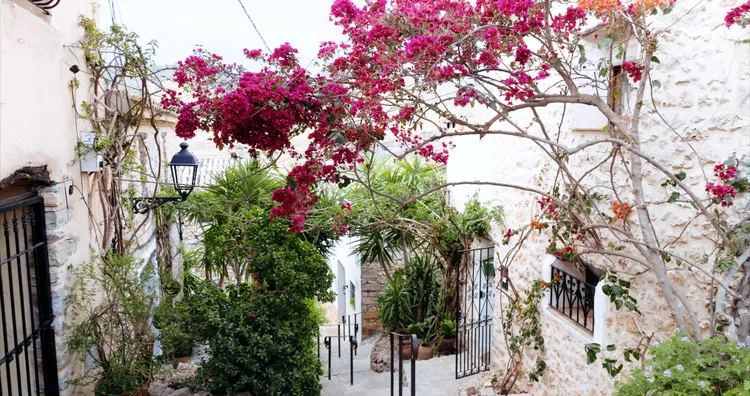
Elope in Alicante: The Best Spots for a Coastal Wedding Escape on the Costa Blanca
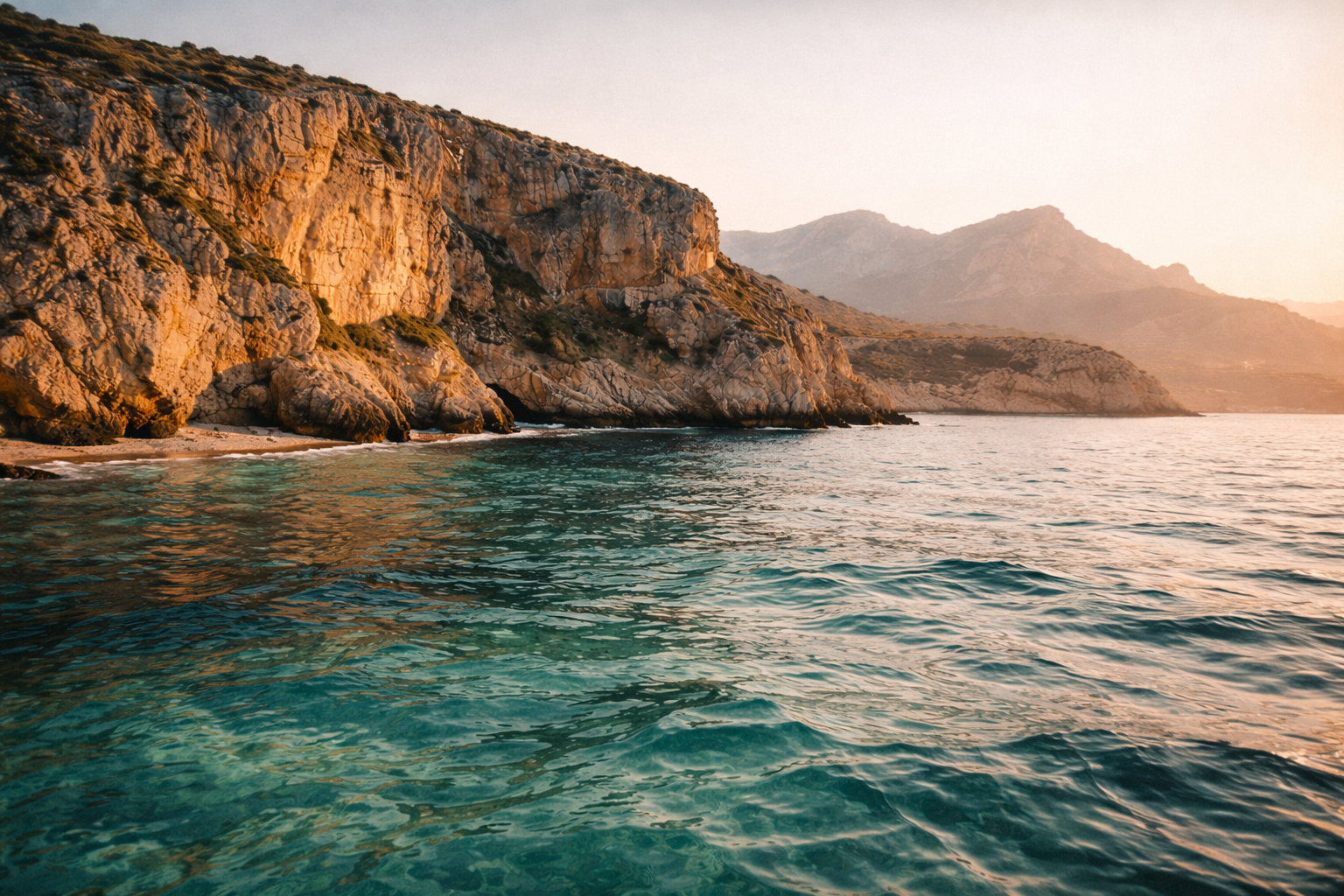
You've been picturing it for a while now. Not a ballroom. Not a hundred people watching you try to hold it together during a speech. Something quieter. The smell of salt and pine resin. Water so clear you can see the sand shifting beneath it. Your person, right there, and nothing else between you and the moment.
That picture has a place. It's called the Costa Blanca.
And if you've been wondering whether eloping in Alicante could actually work — whether a city known for sunshine and Spanish ease could hold the weight of something this intimate — the answer is yes. More than yes. Alicante and its coastline are one of the most quietly extraordinary elopement regions in Spain, and almost no one talks about it the way it deserves.
This is for the couple who wants to find out why.
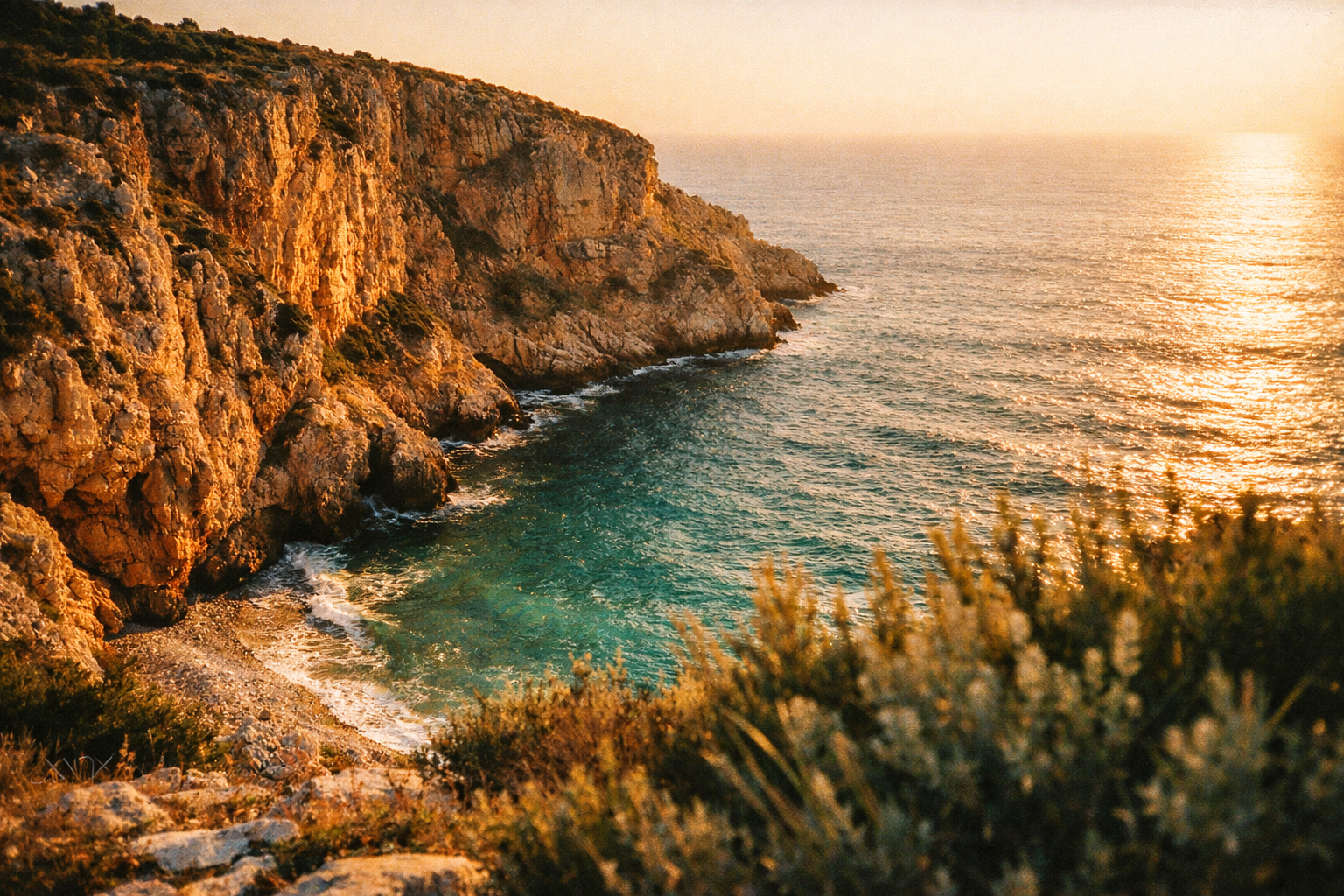
Why Alicante Hits Differently
Most couples looking to elope in Spain think Barcelona or Seville first. Those places are beautiful and deserve their reputation. But Alicante gives you something different: a coastline that hasn't been fully discovered yet, a light that comes in warm and direct for most of the year, and a landscape that moves between city drama and wild, untouched coves within a single afternoon's drive.
The province of Alicante stretches along the Costa Blanca — the White Coast — with more Blue Flag beaches than any other province in Spain. But it's not the famous beaches you want for an elopement. It's the ones between them: the narrow coves reached by rocky paths, the sea caves you can only enter by kayak, the clifftops where the only sound is wind and water.
The culture here is warm, late, and sensory. Mornings are slow and golden. Evenings go long, tapas and wine bleeding into something unhurried. If you want a day that feels like it belongs to a different way of living, Alicante delivers that without trying.
The Spots Worth Knowing
Castillo de Santa Bárbara, Alicante City
Before the city wakes up, the castle is yours.
Castillo de Santa Bárbara sits on the summit of Mount Benacantil, 166 metres above the sea. From up there, the entire bay of Alicante curves below you — the port, the old town, the Mediterranean stretching south toward the horizon. On clear mornings, you can see the outline of Tabarca Island in the distance, a faint shape in a pale blue sea.
Come at sunrise. The lift doesn't open until 10am, but you can walk the path in near-dark, arriving at the top as the first light catches the water. The stone walls are 11th century. The silence is complete. There's no one else.
This is a city elopement that still feels like wilderness. After, you walk back down through the old town as the coffee bars are just opening — the smell of espresso, the first pigeons, the light going golden on the terracotta.
Best season: September through November, or February through April — warm enough, quiet enough, and the afternoon heat won't reach you at that elevation.
Cala del Moraig, Benitatxell
There's a sea cave at the back of this cove. Its entrance is just wide enough to swim through, and inside, the light filters down through cracks in the rock ceiling and scatters across the water in shifting patterns of green and white.
Cala del Moraig is reached by descending a steep path through scrub and cliff — appropriate shoes, nothing too precious — and when you finally step onto the gravel shore, the cliffs close around you like walls. The water here is the specific shade of turquoise that doesn't photograph accurately because no one believes it's real.
Say your vows at the waterline, with the cave entrance behind you. Or stand on the flat rocks above the water as the light comes in over the cliff edge at midday. Either way, Cala Moraig has a quality that few locations can claim: it feels genuinely secret, even after you know how to find it.
Access is limited in high summer — arrive before 9am or visit in shoulder season to have it to yourselves. No facilities, no mobile signal. Just the two of you and the sound of the sea.
Jávea and the Cap de Sant Antoni Marine Reserve
An hour north of Alicante city, Jávea is a mosaic of coves and clifftops that the word beautiful doesn't quite cover. The Cap de Sant Antoni juts into the Mediterranean at the northern edge of the town, and below it the Cap de Sant Antoni Marine Reserve protects some of the clearest water on the Spanish coast.
Cala La Granadella sits at the southern end of the town — a small bay of white gravel and rock, sheltered by cliffs on three sides, with water so transparent you can watch the seabed the entire way down. Arrive at dawn and the cove is silent. The cliffs catch the first light and hold it amber for about twenty minutes before it shifts to white.
There's also Cala Portitxol — white houses with blue doors at the cliff's edge, a stone cove with reliably calm water, a restaurant terrace above the sea for the afternoon after. The kind of place that feels lived-in and secret at the same time.
If you want vows on a cliff above open water, the paths along Cap de Sant Antoni take you there. The light at the headland in late afternoon moves horizontally across the rock face, catching every texture. On film, it's extraordinary.
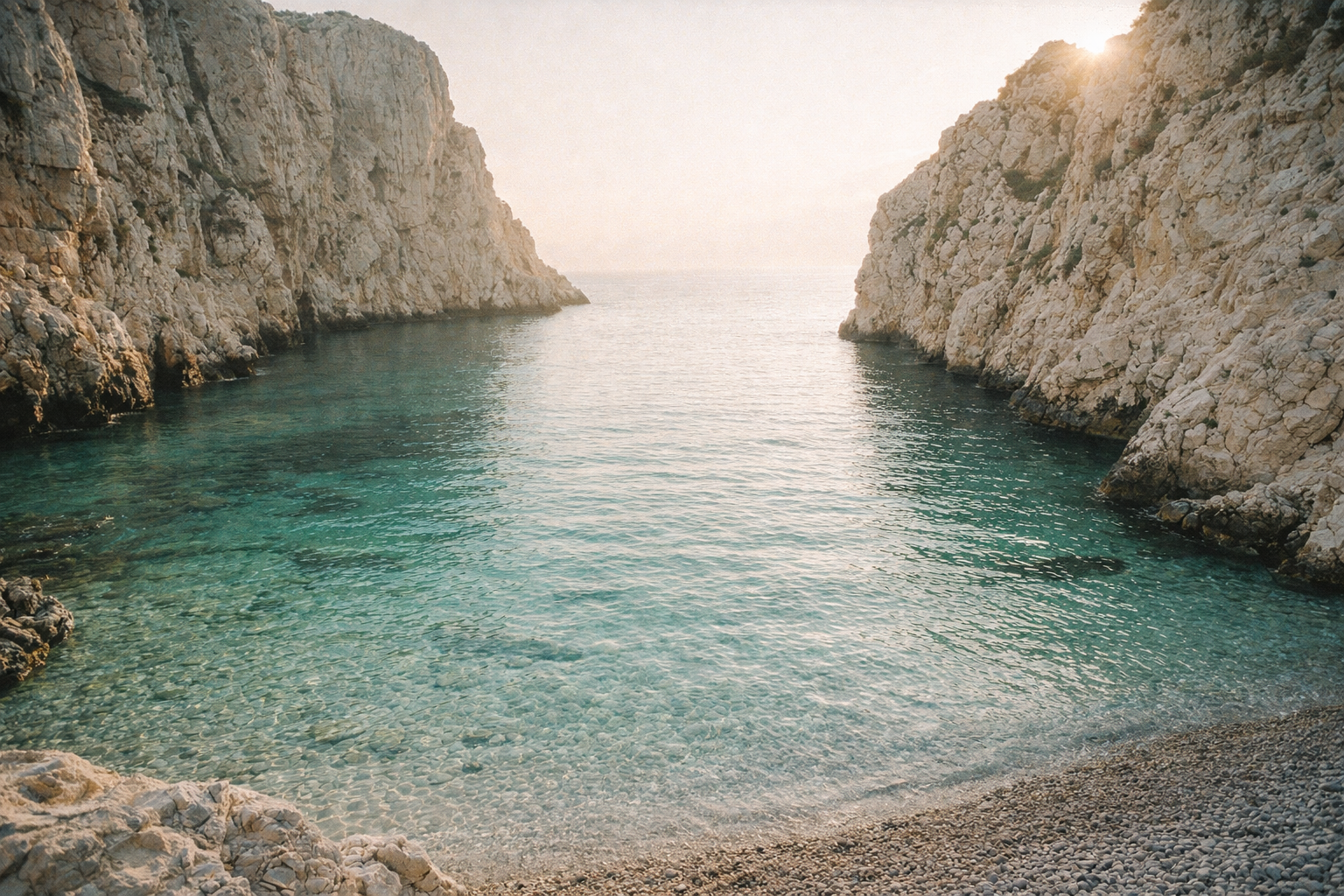
Villajoyosa: Color, Quiet, and Chocolate
Thirty kilometres north of Alicante city, the fishing town of Villajoyosa is famous for two things: its waterfront houses painted in acid yellows, corals, and blues (originally so fishermen could spot their homes from the sea), and its chocolate — the town has made it since the 18th century, and the smell drifts through the streets in the morning.
For an elopement, Villajoyosa offers something rarer than a dramatic cliff: a sense of actual life. The Platja del Bol Nou lies just south of town, flanked by cliffs, gravel shore, water that sits still and clear. Nearby, the coastal path between Villajoyosa and Benidorm passes through the Serra Gelada Nature Park, and along this stretch are small wild coves — Cala del Racó del Conill is one — reachable only on foot, with no services, no crowds, just pines coming down to the water's edge.
Celebrate afterward with the town's local chocolate. It's not a metaphor. It's genuinely one of the best ways to end a morning of vows.
What makes it work for film: The colored houses create a backdrop that's specific to this place alone. Nowhere else on the Costa Blanca looks quite like it.
Isla de Tabarca: The Only Inhabited Island on the Valencian Coast
A short ferry from the port of Alicante — the boats leave several times a day from Santa Pola as well — Tabarca is two kilometres long and was once a pirate refuge. King Carlos III had it fortified in the 18th century; the walls are still standing, and so is the church, the small harbor, and a handful of whitewashed houses with blue trim.
The marine reserve surrounding the island has protected its waters since 1986 — the first of its kind in Spain. The result is extraordinary clarity. Snorkeling here is like looking through glass at a living seabed: posidonia meadows, octopus, red mullet moving in and out of the rock.
An elopement on Tabarca feels entirely removed from mainland life. The island has a few restaurants, a church interior that's stripped back and honest, and coves on the far side where the ferry passengers don't tend to wander. Vows at the harbor wall as the ferry disappears into the open water. Coffee in the square afterward, watching the fishing boats shift with the tide.
Arrive on the first ferry. Leave on the last one.
Guadalest: When You Want the Mountains Behind You
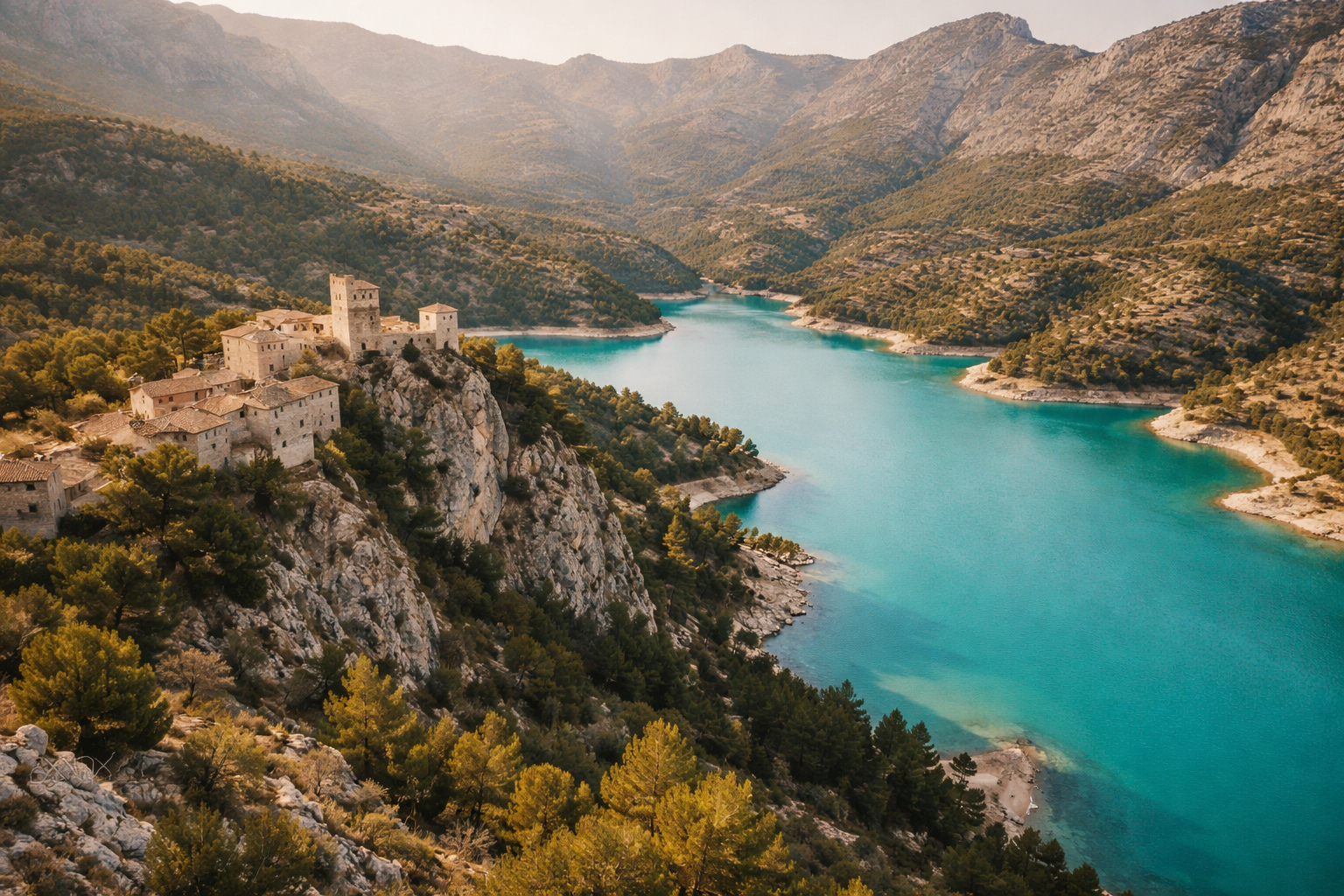
Fifteen minutes inland from Benidorm — a drive that feels like arriving in a different century — the medieval village of Guadalest sits on a rock above a turquoise reservoir. The castle is in ruins. The village below it is tiny and impossibly picturesque. And the views from the summit, looking back toward the coast, compress the entire landscape of Alicante into one frame: mountains, reservoir, sea.
Guadalest is the answer to the question: what if we want more than just water?
Come in the morning before the day-trippers arrive. The stone paths through the village are quiet, and from the castle ruins you can see the sun beginning its first arc over the Sierra de Aitana. The air is a few degrees cooler than the coast, and the silence is different — it has texture, the kind that makes you want to say something true.
After the ceremony, drive back down to the coast. By the time you arrive, the sea will be the color it only gets in late morning.
What to Know Before You Plan
When to come. September and October are the golden months — the heat drops to something comfortable, the summer crowds thin out, and the light does what you want it to do for longer in the morning and evening. April and May run a close second: wildflowers on the coastal paths, water still cool enough that the sea looks electric, and Alicante city at its most alive without the full weight of summer tourism.
How to get here. Alicante has an international airport (ALC) with direct connections from most of Europe. A car gives you access to the quieter coves and inland locations — most of the spots worth visiting aren't reachable without one.
About permits. Some protected areas along the Costa Blanca require advance booking or have capacity limits in high season — Cala del Moraig and Cova Tallada, for example. A local guide who knows the coast will handle this without it becoming your problem.
Legal marriage vs. symbolic ceremony. As a foreign couple, getting legally married in Spain requires Spanish residency for at least one partner. Most international couples opt for a symbolic ceremony — personally written vows, a meaningful location, the full emotional weight of the day — and handle the legal paperwork in their home country before or after. This actually gives you more freedom: you choose the spot, the words, and the timing without bureaucratic constraints. Read more about how to elope in Spain for the full picture.
What to bring. The coves with the best light require a walk. Wear shoes you can move in. Bring water. The Mediterranean in September is still warm enough to swim — so if you want to end your ceremony in the sea, that's an entirely reasonable plan.
What a Day Could Actually Look Like
You wake before the light. The air through the window smells of salt and something floral — rosemary, or the pine trees on the hillside above the road.
You drive to the coast while it's still grey-blue and empty. The path down to the cove takes twelve minutes. By the time you reach the water, the sky is beginning to shift — amber at the edges, the sea going from black to green to something without a name.
You say the words you wrote for each other. They're specific. They're funny in one place and honest in another and neither of you gets through the whole thing without stopping for a moment. The camera catches what it catches.
Afterward, you swim. Then you drive slowly back toward Alicante along the coast road, stopping when something looks worth stopping for. Lunch is long — grilled fish, local wine, bread you tear apart with your hands while the sun comes through the restaurant window.
By evening you're at a terrace somewhere in the old town, the castle lit gold above you, and the day is still going.
That's what it can be. That's what Alicante offers — if you know where to look.
Frequently Asked
Is Alicante good for elopements, or is it too touristy? The city itself gets busy in summer, but the elopement experience happens at the edges — the hidden coves, the castle at sunrise, the mountain village in the morning quiet. Knowing where to go, and when, makes all the difference. The Costa Blanca has a coastline long enough and varied enough that you can always find the version that belongs to you.
What's the best time of year to elope in Alicante? September through November, and March through May. The light in these months is exceptional, the temperatures are comfortable, and the tourist peak has passed. You won't be competing with summer crowds for access to the quieter spots.
Can we include a boat or the sea in our elopement day? Absolutely. A sailboat on the Mediterranean is one of the most cinematic ways to elope in this region — ceremony on deck, open water in every direction, the Costa Blanca coastline visible from the sea rather than from the land.
Do we need a guide, or can we plan this ourselves? You can research the locations, but the difference between a good day and an extraordinary one is often timing: knowing exactly when the light hits a particular cove, which path is actually walkable in the shoes you packed, and which spot the ferry passengers don't find. Someone who has stood in those places in every season is worth everything.
A Quiet Invitation
Dominick has walked the path down to Cala del Moraig before the gates open and stood at the top of Santa Bárbara while the city was still asleep below. He knows where the light lands on the Jávea cliffs at 7am in October, and which table at which restaurant makes the best ending to a morning of vows.
He loves those early conversations — when a couple describes the day they've been picturing, and he gets to say: I know exactly the place.
If Alicante feels like it might be yours, start the conversation here.
Previous Article
Elopement with your Dog: A Spain Day Built Around Paws and Peace

I'm Dominick let's craft your perfect Mediterranean elopement.
Let's create a day that captures your love, surrounded by the Mediterranean's beauty. Ready to plan your perfect escape?
Start your Adventure Let's talk!