Elopement Videography: What Your Film Captures That Photos Can’t
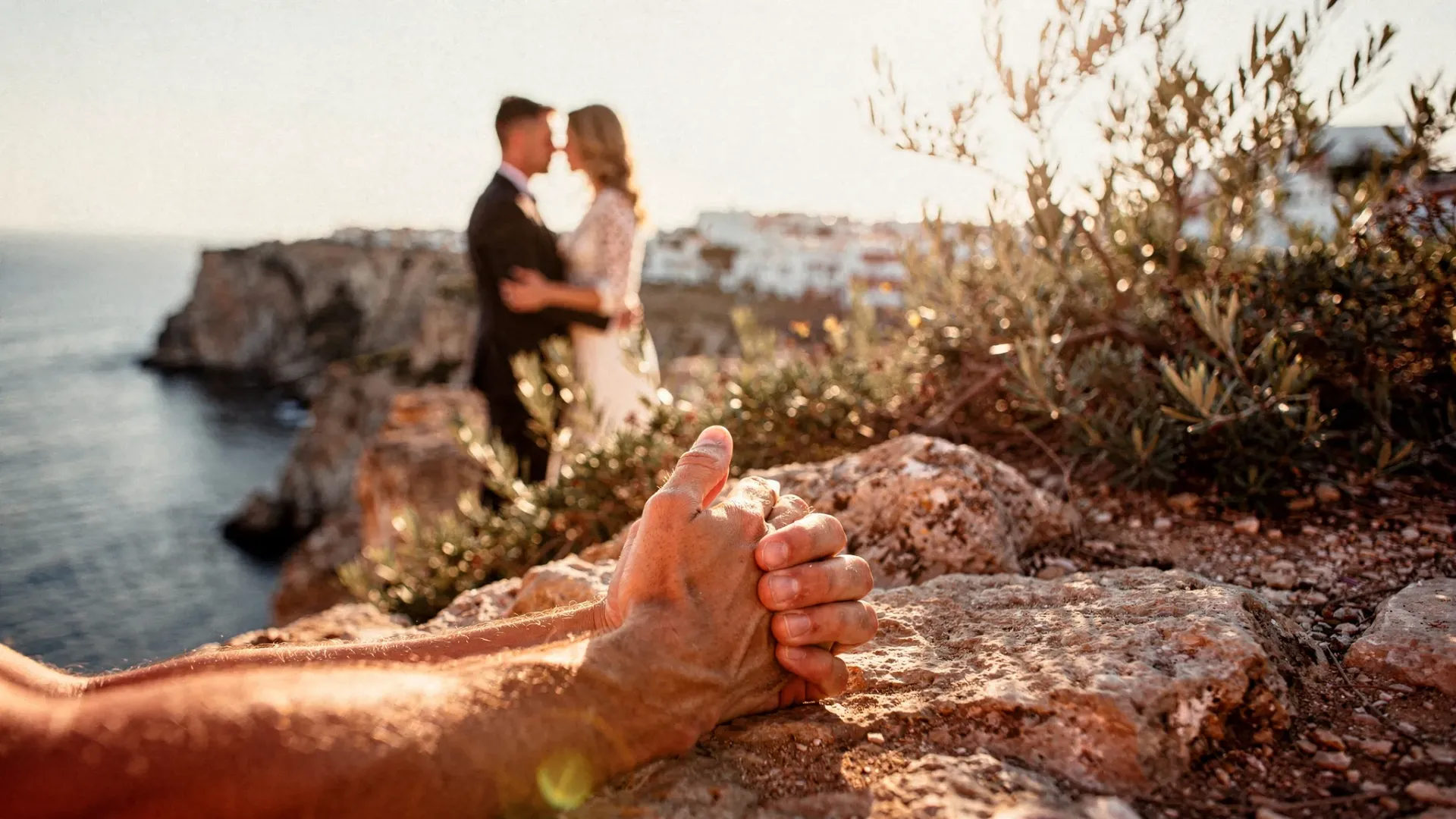
You keep imagining it.
Not a ballroom.
A quiet path that smells like rosemary.
The sea below you, the wind turning soft for a moment, like it’s listening too.
And when you say the words, it feels like the world finally gets out of your way.
That’s the part you’re afraid you’ll lose.
Not the way you look.
The way it moves.
The way it sounds.
That is why elopement videography feels less like documentation, and more like a time machine you get to keep.
A photo is a heartbeat. A film is the whole pulse.
Photos are sacred.
They freeze a fraction of a second so perfectly you can frame it on a wall and feel your chest tighten.
But a film holds what can’t be framed.
It holds the moment before you speak, when your throat closes and you laugh because it’s all so real.
It holds what happens after, when your shoulders drop and you realize you can breathe again.
And it holds something else too.
Sound.
Movement.
Time.
The tiny, ordinary miracles that are gone the instant you try to explain them to someone else.
What elopement videography captures that photos can’t
The sound you don’t realize you’ll miss
You will forget things.
Not because they aren’t important, but because your nervous system is doing something wild that day, it’s trying to absorb a once-in-a-lifetime truth.
Film gives you back the audio your body can’t hold onto forever.
- The crack in your voice when you say the first line.
- The pause where you both stop reading because you’re crying.
- The wind pushing through tall grass.
- Your footsteps on stone as you walk toward the ceremony spot.
- That small, involuntary laugh when you realize you’re shaking.
Good elopement videography is obsessed with sound.
Not the “music-video” kind of pretty.
The honest kind.
The kind that lets you hear the sea behind your vows, and suddenly you’re there again.
The way your love moves
A photograph can show you holding hands.
A film shows you how you reach.
How your fingers find each other without thinking.
How you lean in when you get shy.
How your partner’s jaw tightens when they’re trying not to cry.
Movement is emotion you can’t fake.
It’s the difference between “this happened” and “this is how it felt.”
The in-between moments you never pose for
The best parts of an elopement are rarely the “main” parts.
It’s you fixing a strand of hair and then stopping because you notice the light changing.
It’s the way you look at each other when you think no one’s watching.
It’s the ten seconds after the vows, when you both go quiet, like you just stepped into a new life.
Film is built for the in-between.
It lets the day breathe.
And it lets you remember what you were actually like together, not what you tried to be.
The story of the place, not just the backdrop
A good image shows a coastline.
A good film lets you arrive there again.
You see the way the landscape opens as you walk.
You hear the insects in the warm brush.
You watch the sun slide lower until everything turns honey-colored for a few minutes.
That is the Mediterranean magic most people miss.
It’s not only what’s in front of you.
It’s how it changes, minute by minute.
Time, held gently, the way memory actually works
Photos are constellations.
Film is the night sky.
You don’t only remember the vows.
You remember the drive there.
The way you held a coffee with both hands because you were too excited to eat.
The quick stop at a lookout because Dominick knows there’s a bend in the road where the light hits the hills like a spotlight.
You remember the whole arc.
Not because it’s “more content.”
Because it’s more truth.
A sensory portrait: the moment the wind changes
You wake before sunrise.
Not because you have to.
Because your body knows.
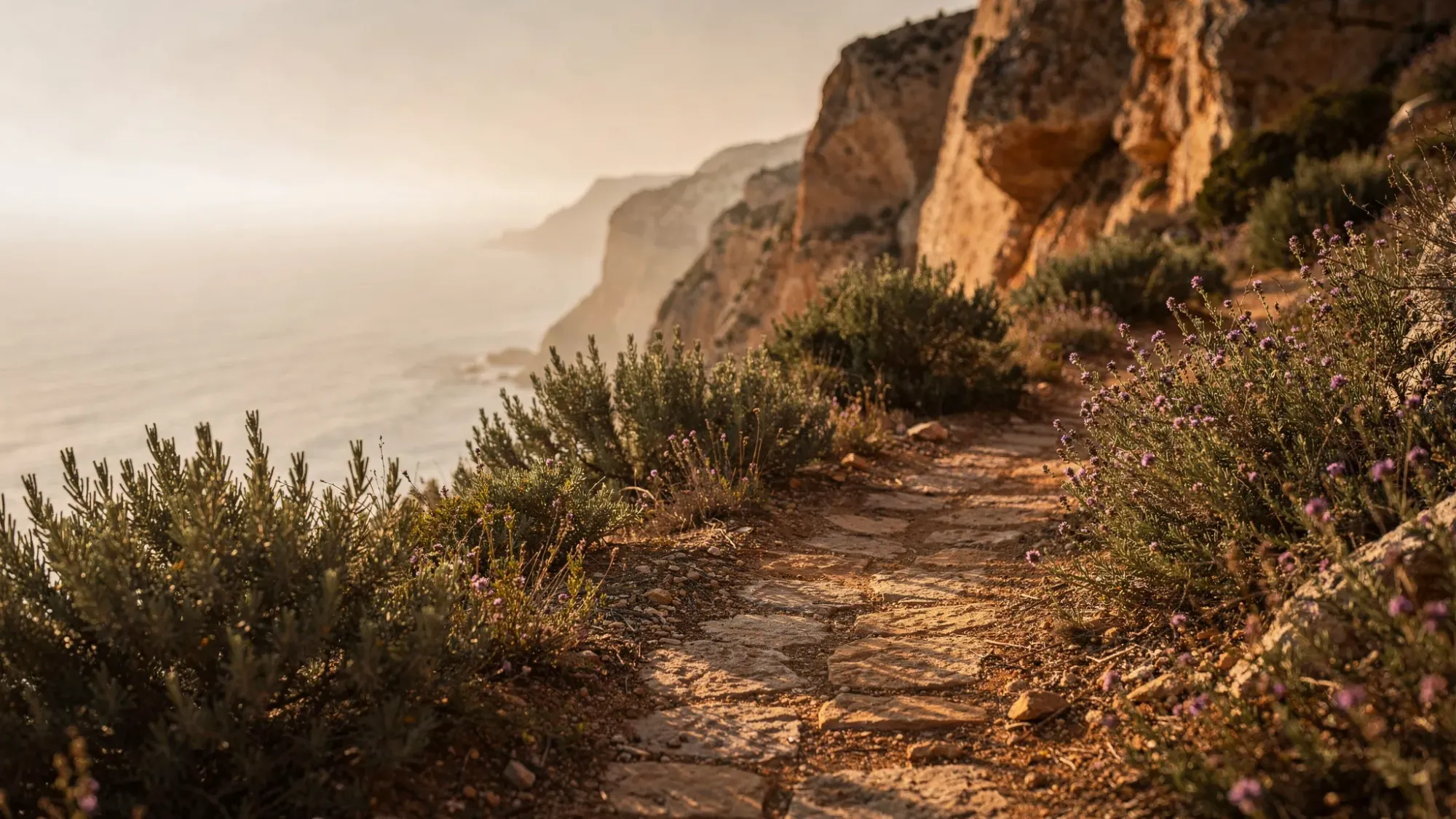
The air is cool and smells like salt and wet stone.
You walk down a path that feels like a secret, and your clothes catch on low branches, soft and alive.
Somewhere below, waves hit the cliffs in a steady rhythm.
When you reach the edge, the world is wide.
Not crowded wide.
Empty wide.
The kind of wide that makes you exhale.
A few minutes before the sun breaks, the wind shifts.
It gets quieter.
Like the coast is taking a breath.
And when you say your vows, you don’t perform.
You just speak.
Film catches that shift.
The way your voice sounds against the open air.
The way the light arrives, slowly, across your shoulders.
The way you both look smaller in the frame for a second, not because you are small, but because the landscape makes your commitment feel ancient.
That is what you are really trying to preserve.
Not a pose.
A place in time.
“Do we need video if we already have photos?”
You don’t need either.
You could keep it all in your chest and let it live there.
But if you already know you’re building something intimate, something intentional, something you want to return to when life gets loud, film becomes the keepsake that changes with you.
Because a photo is a moment you can show.
A film is a memory you can enter.
Here’s a simple way to think about it:
| What you want to remember | Photos do this best | Film does this best |
|---|---|---|
| One perfect fraction of a second | Yes | Sometimes |
| The sound of your vows and voices | No | Yes |
| How it felt to walk into the moment | Not fully | Yes |
| The way the light changed over time | Not fully | Yes |
| A gallery you can print and frame | Yes | No |
| A story you can relive together on a quiet night | Not in the same way | Yes |
And if you love the idea of staying small, staying intimate, staying with one guide instead of a big team, you might also love the film-first approach Dominick uses.
It’s the reason he can deliver beautiful still frames pulled from the film, so your memories stay cohesive, cinematic, and honest.
If you want to go deeper into that idea, you’ll love this: Elopement Photographer Spain: Stills Pulled From Real Motion.
The practical part (so your film feels like you)
A dreamy film is not an accident.
It’s created by protecting the conditions where real moments can happen.
Here are a few choices that make the biggest difference.
Build a timeline with breathing room (not a shot list)
The most cinematic moments show up when nothing is rushing you.
A film needs space for:
- walking, slowly, without being directed
- quiet pauses after vows
- small transitions (getting out of the car, smoothing fabric, taking each other in)
- a pocket of time where you do nothing but exist together
If you want help shaping a day that’s planned like a film (without turning it into a production), start here: Elopement Wedding Spain: A Private Day, Planned Like a Film.
Choose a ceremony spot with sound in mind
Wind is romantic.
Wind is also loud.
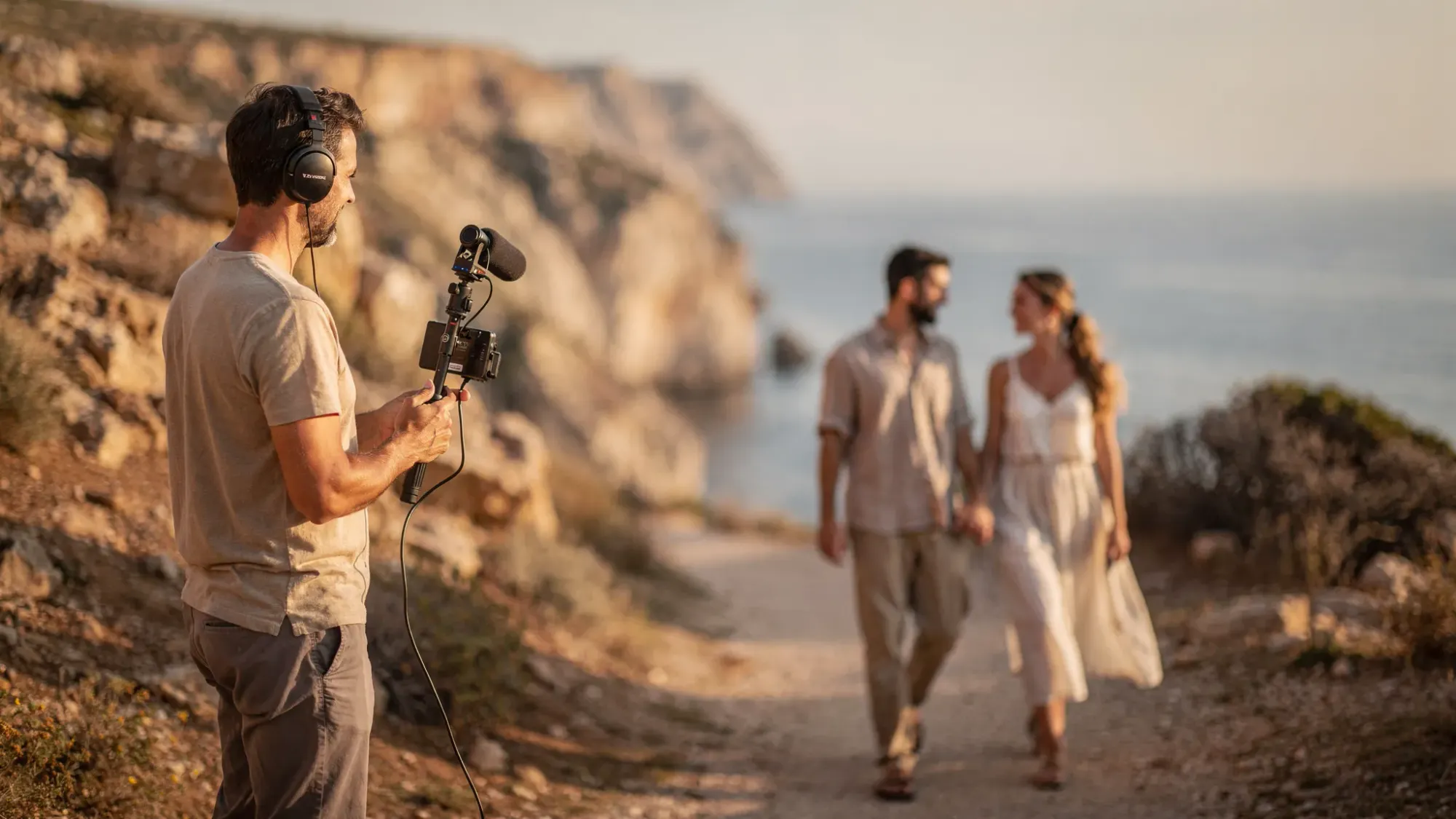
A filmmaker who cares will plan for it with the right audio setup and the right micro-location.
Sometimes that means stepping ten feet behind a rock line.
Sometimes it means choosing the cove instead of the cliff edge.
The film still looks like your dream, but it also sounds like it.
Let the location shape the emotional tone
Some places make you whisper.
Some places make you laugh.
Some places make you feel braver than you’ve ever felt.
If you want a guide to how landscapes change not only logistics, but the mood of your vows, read: How location shapes your intimate elopement in Spain.
If you’re camera shy, film can still be for you
Most couples are.
Not because you don’t love each other, but because being witnessed is vulnerable.
The right filmmaker doesn’t demand a performance.
He protects your privacy inside the frame.
He gives you prompts that feel like real life.
And he lets you forget the camera exists.
If that’s you, keep this close: Overcoming Camera Shyness for Elopement Films.
Frequently Asked Questions
How long should an elopement film be? It depends on the kind of story you want to relive. Some couples love a shorter highlight that feels like a poem, others want a longer cinematic cut that lets the day unfold. The key is that it feels unhurried.
How does your filmmaker capture clear vows outdoors? With intentional audio planning (usually discreet microphones) and smart location choices that reduce wind and harsh ambient noise. It’s not glamorous, but it’s everything.
Do we still need a photographer if we book elopement videography? Not always. If you love the idea of keeping the team small, a film-first approach can deliver both motion and still frames pulled from the footage. If you want lots of posed portraits or extensive prints, adding a dedicated photographer can make sense.
Can we get photos from the video? Yes, if the film is shot and edited with that in mind. Not every video is designed for printable stills, so it’s worth asking how your filmmaker approaches this.
When will we receive our film? Delivery timelines vary by artist and season. With Stories by DJ, couples receive a trailer within 48 hours and the full film within 6 to 8 weeks.
What if we don’t want anything to feel staged? Then you’re already thinking like a filmmaker. The best elopement films are built around real connection, not poses, and around a day that gives you room to be yourselves.
A quiet invitation
You’re allowed to want something different.
You’re allowed to want privacy, presence, and a story that feels like it belongs only to you two.
Dominick doesn’t show up as a vendor with a checklist.
He shows up as a filmmaker, a scout, a steady hand, someone who has stood in these landscapes and knows when the light turns soft.
If you’re feeling that pull toward elopement videography, toward a film that holds your vows, your laughter, and the sound of the sea behind your voices, you can start with a simple conversation.
Step in here: Commence the adventure
Previous Article
Romantic wedding filmmaking: your cinematic elopement guide
Next Article
Elopement storytelling: magical memories in Spain

I'm Dominick let's craft your perfect Mediterranean elopement.
Let's create a day that captures your love, surrounded by the Mediterranean's beauty. Ready to plan your perfect escape?
Start your Adventure Let's talk!