How to write elopement vows for Spain weddings (2026)
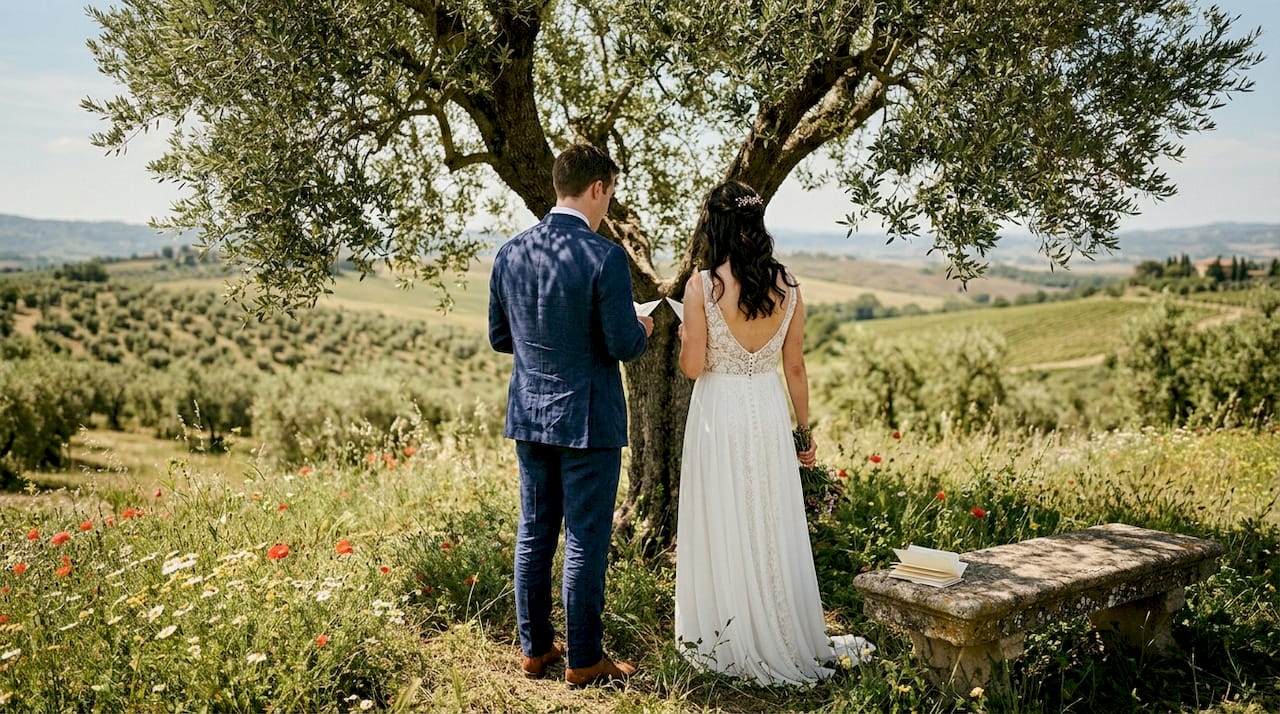
Writing your own vows can feel overwhelming, especially when you’re planning an intimate elopement in Spain and want to honor both your love story and the cultural beauty of your chosen setting. You want words that feel authentic, cinematic, and deeply personal, not generic promises copied from the internet. This guide walks you through creating meaningful, bilingual vows that capture the poetry of Spain’s landscapes, from sunrise cliffs to ancient olive groves, giving you a clear framework to craft vows you’ll both treasure forever.
Table of Contents
- Key takeaways
- Understanding the essence of elopement vows in Spain
- Preparing your vows: structure, length, and bilingual touches
- Step-by-step guide to writing your elopement vows
- Common mistakes and final tips for perfect elopement vows
- Plan your perfect Spanish elopement with expert help
- FAQ
Key Takeaways
| Point | Details |
|---|---|
| Sensory location details | Incorporate textures, scents, and sounds from your ceremony site to ground your vows in the moment and make them feel intimate. |
| Cinematic vow structure | Use a three part sequence of anticipation vows and afterglow to create a natural emotional arc. |
| Bilingual vows honor roots | Alternate phrases in each partner language or weave traditional expressions to honor cultural backgrounds while keeping the vows personal. |
| Word count target | Aim for roughly one to two minutes of speaking, which translates to about one hundred fifty to two hundred fifty words. |
Understanding the essence of elopement vows in Spain
Elopement vows in Spain carry a unique emotional weight because they’re deeply connected to the landscape and cultural symbolism surrounding you. When you exchange promises on a windswept cliff at sunrise or beneath centuries-old olive trees, your words can draw power from these settings. Spanish culture offers rich poetic motifs that transform ordinary vows into something cinematic and memorable.
Incorporating location-specific ceremony ideas like salt for preservation, olives for peace, and wind for freedom creates imagery that enhances intimacy. These aren’t just decorative metaphors. They ground your promises in the physical world you’re inhabiting together, making your vows feel inseparable from the moment and place.
Consider how these common Spanish motifs might resonate with your relationship:
- Salt represents preservation and the timeless quality of your commitment
- Olive branches symbolize peace, abundance, and rootedness
- Wind embodies freedom, change, and the invisible forces that brought you together
- Mediterranean light captures clarity, warmth, and the golden moments you’ll share
- Ancient stone reflects endurance, history, and the foundation you’re building
Reflect on which elements speak to your shared story. Maybe you met during a coastal vacation and salt water holds special meaning. Perhaps you both value the slow, rooted life symbolized by olive groves. Let these personal connections guide your word choices, creating vows that feel both universal and uniquely yours.
Pro Tip: Visit your ceremony location before writing your vows if possible, or study photos carefully to identify sensory details like textures, scents, and sounds you can reference.
Preparing your vows: structure, length, and bilingual touches
Ideal vows typically contain 150 to 250 words, which translates to about one to two minutes of speaking time. This length maintains emotional intensity without losing your audience’s attention or overwhelming the moment. Shorter vows often create stronger impact in intimate elopement settings where every word carries weight.
Structure your vows using a cinematic sequence approach: anticipation, vows, afterglow. Start by acknowledging the journey that brought you here, deliver your core promises with specific details, then close with the emotional resonance of your shared future. This creates narrative flow that feels natural and compelling, like watching a beautifully edited film scene unfold.
Be ruthlessly specific. Instead of saying “I promise to support you,” try “I promise to make coffee when you’re tired from late-night editing sessions.” These concrete examples capture everyday love in ways generic statements never can. They also give your partner vivid mental images tied to real shared experiences.

For international couples, bilingual vows honor cultural backgrounds beautifully. You might alternate phrases between languages, each speaking in your partner’s native tongue, or weave traditional Spanish expressions into English vows. Since legal paperwork in Spain can be complex, many couples opt for symbolic ceremonies where bilingual creativity flows freely without legal constraints.
Follow these preparation steps:
- Brainstorm separately, listing moments, qualities, and promises that matter most
- Draft your vows in your primary language without self-editing
- Identify phrases or lines to translate for bilingual sections
- Edit for clarity, removing redundancy and strengthening specific details
- Practice aloud multiple times, adjusting rhythm and pacing
- Time yourself to ensure you stay within the 1-2 minute range
Consider planning your elopement day like a film, where vow delivery happens during optimal light. Golden hour or blue hour timing enhances the cinematic quality of both your words and the moment itself. This quiet approach works perfectly for couples who value intimacy over spectacle.
Pro Tip: Record yourself reading your vows aloud to catch awkward phrasing or spots where you naturally pause for breath.
Step-by-step guide to writing your elopement vows
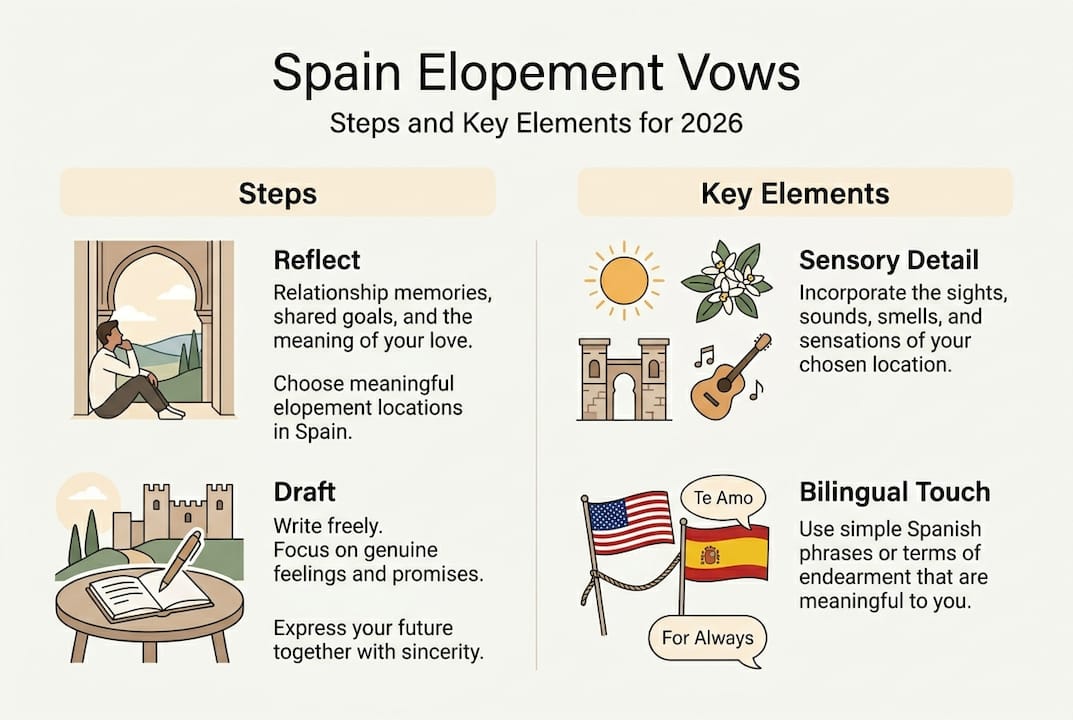
Start by reflecting deeply on your shared story and the sensory-rich details of your chosen elopement location. What textures, scents, colors, and sounds define the place where you’ll marry? How do these connect to your relationship’s emotional landscape? Write down everything that comes to mind without filtering.
Draft your vows in whichever language feels most natural first. Don’t worry about perfection or structure yet. Focus on getting your raw feelings and promises onto the page. Once you have this foundation, identify sections where bilingual elements would add meaning, then translate or adapt those phrases thoughtfully.
Structure your draft using the cinematic sequence:
- Anticipation: Acknowledge the journey, the setting, or the emotion of this moment
- Core vows: State your specific promises using concrete examples and sensory details
- Afterglow: Close with the feeling of your shared future or the transformation this commitment represents
Edit ruthlessly for clarity and length. Remove filler words, redundant phrases, and vague statements. Every sentence should add distinct value. Aim for that 150-250 word sweet spot that creates impact without dragging.
Practice aloud during golden or blue hour if possible, or at least in natural light that mimics your ceremony conditions. Notice where you stumble, where emotion wells up, and where pacing feels off. Adjust accordingly.
Use this framework as your guide:
| Element | Target | Purpose |
|---|---|---|
| Word count | 150-250 words | Maintains intimacy and attention |
| Speaking time | 1-2 minutes | Allows emotional delivery without rushing |
| Specific details | 3-5 concrete examples | Creates memorable, personal imagery |
| Bilingual phrases | 2-4 alternating lines | Honors cultural backgrounds authentically |
| Spanish motifs | 1-2 symbolic elements | Connects vows to location and tradition |
Consider exploring elopement tips specific to Spain to understand how location logistics might influence your vow delivery timing. Research wedding destinations and seasonal considerations to align your vow content with the natural beauty you’ll experience.
Pro Tip: Write short, action-oriented promises rather than abstract concepts for maximum emotional resonance and memorability.
Common mistakes and final tips for perfect elopement vows
Many couples write vows that run too long, losing emotional punch through repetition and filler. Others make promises so vague they could apply to anyone, missing the chance to capture what makes their relationship unique. Ignoring bilingual opportunities when both partners speak different native languages represents another missed chance for deeper connection.
Rushing delivery kills the cinematic quality you’re aiming for. Slow down intentionally. Pause between thoughts. Make eye contact with your partner. Let the weight of each promise settle before moving to the next. This creates space for emotion to breathe and for your words to land with full impact.
Apply these final refinements:
- Rehearse with a timer to nail your pacing without feeling rushed
- Replace every cliché with a specific memory or shared inside reference
- Weave in local Spanish motifs that connect to your ceremony setting
- Balance bilingual sections so neither language dominates awkwardly
- Read your vows to a trusted friend for honest feedback on clarity
- Practice emotional regulation techniques for moments when tears might interrupt
“For a truly cinematic feel, write your vows like film scenes: use specific sensory details, create emotional threads that connect beginning to end, and time your delivery around natural light that enhances the mood you’re creating together.”
Consider working with an experienced elopement planner in Spain who understands the rhythm of intimate ceremonies and can help you perfect your vow timing and flow. Professional guidance ensures your words land with maximum emotional impact while managing all the logistical details that could otherwise distract you from the moment.
Plan your perfect Spanish elopement with expert help
Crafting beautiful vows is just one element of creating a seamless, cinematic elopement experience in Spain. Professional elopement planners manage the legal complexities, coordinate timing for optimal light, and ensure your ceremony location showcases the natural drama you’re seeking. They transform logistical stress into creative freedom.
Expert teams understand how to structure your entire day like a film, where vow delivery becomes the emotional centerpiece surrounded by perfectly timed moments in stunning settings. This approach lets you focus entirely on each other while professionals handle permits, timing, and documentation. When you’re ready to move from planning to experiencing, specialized services ensure your Spanish elopement feels like destiny unfolding naturally.
FAQ
How long should elopement vows be?
Vows typically range from 150 to 250 words, roughly one to two minutes when spoken aloud. This length allows for personal detail and emotional delivery without losing intimacy or your partner’s attention. Shorter vows often create stronger impact in elopement settings where every word carries significant weight.
Can we include bilingual vows in our ceremony?
Yes, alternating lines or phrases in each partner’s native language personalizes the ceremony beautifully and bridges cultural backgrounds. Including traditional Spanish phrases like “Yo, [name], te acepto” enriches symbolism especially in Spain elopements. This approach honors both partners equally while creating a unique ceremony texture.
How can we make our vows feel cinematic?
Use specific sensory details and personal stories to paint vivid emotional scenes rather than abstract promises. Time your delivery around natural light like golden hour to enhance the visual and emotional atmosphere. Structure your vows with narrative flow: anticipation, core promises, emotional resolution.
What if we’re not comfortable writing vows?
Consider hiring an elopement planner who can guide you through vow creation or help script symbolic vows that feel authentic. Professional support removes pressure while ensuring your words genuinely reflect your relationship. Many planners offer vow-writing workshops as part of their comprehensive services.
Recommended
Previous Article
How location shapes your intimate elopement in Spain

I'm Dominick let's craft your perfect Mediterranean elopement.
Let's create a day that captures your love, surrounded by the Mediterranean's beauty. Ready to plan your perfect escape?
Start your Adventure Let's talk!