A Couples Story: How Real Moments Become Cinematic Memory
You keep trying to picture it, and the picture keeps changing.
Not the two of you. That part is solid.
It’s everything around you, the noise, the expectations, the choreography you never asked to learn.
And underneath it all, there’s a quieter want.
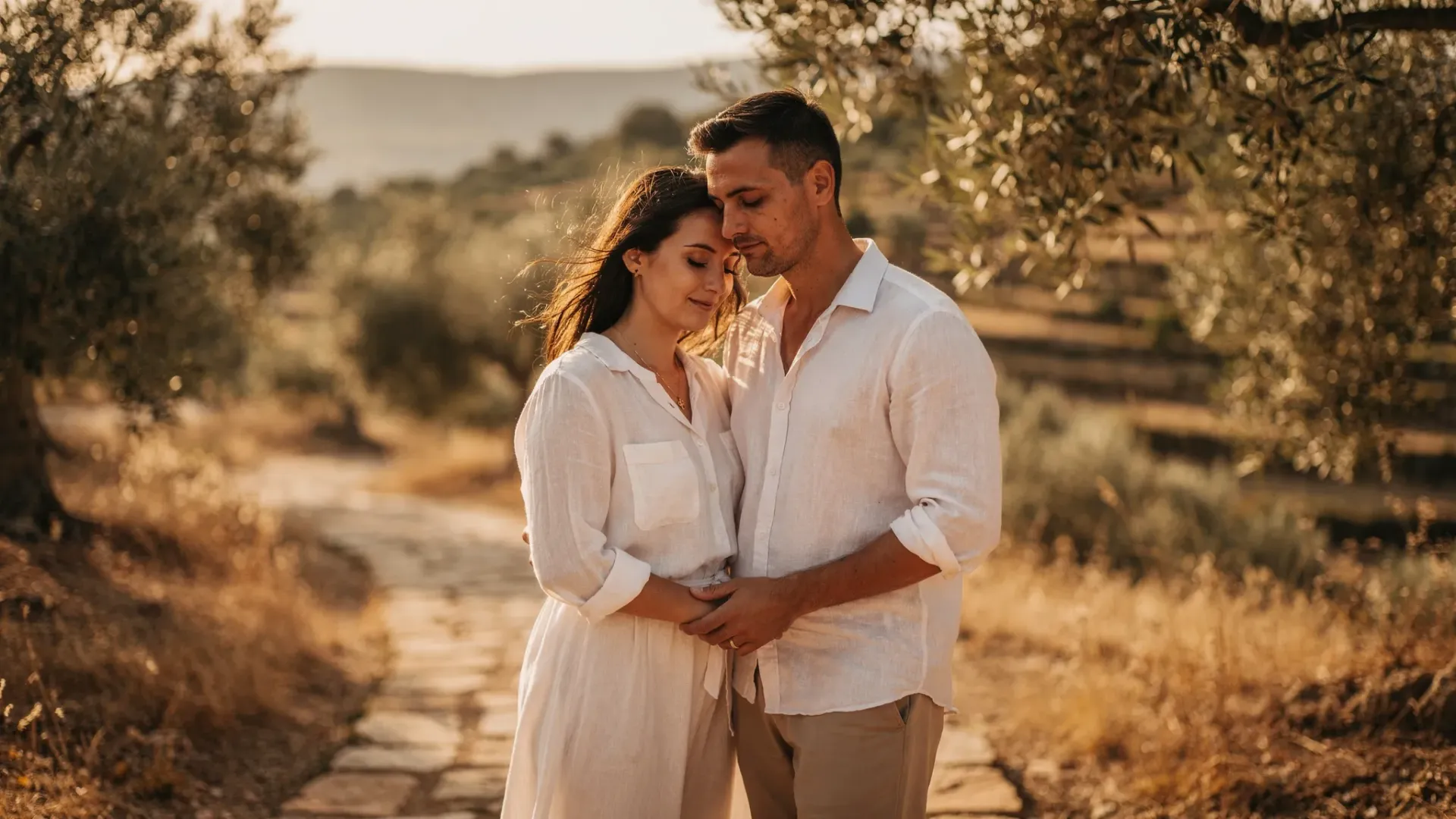
To stand somewhere real, feel the wind shift, and say what you mean.
A couples story is rarely loud when it’s true. It’s often made of small things: the way your hand finds theirs without thinking, the laugh you try to swallow because it’s too tender, the breath you take right before you speak.
You don’t want a performance, you want a memory you can return to
When people say “cinematic,” they often mean epic.
But the most cinematic moments are usually the most human ones.
A sleeve caught on a button.
A glance that lasts half a second too long.
The way your voice sounds when you realize you’re not trying to impress anyone.
Dominick builds days that leave space for those moments to happen, and then he captures them in a way that doesn’t flatten them. Not as content. Not as a highlight reel.
As memory.
Your couples story lives in the in-between
There’s a version of elopement coverage that treats your day like a checklist.
And then there’s the kind that watches for the in-between.
Because your couples story is not only the vows.
It’s the walk to the spot.
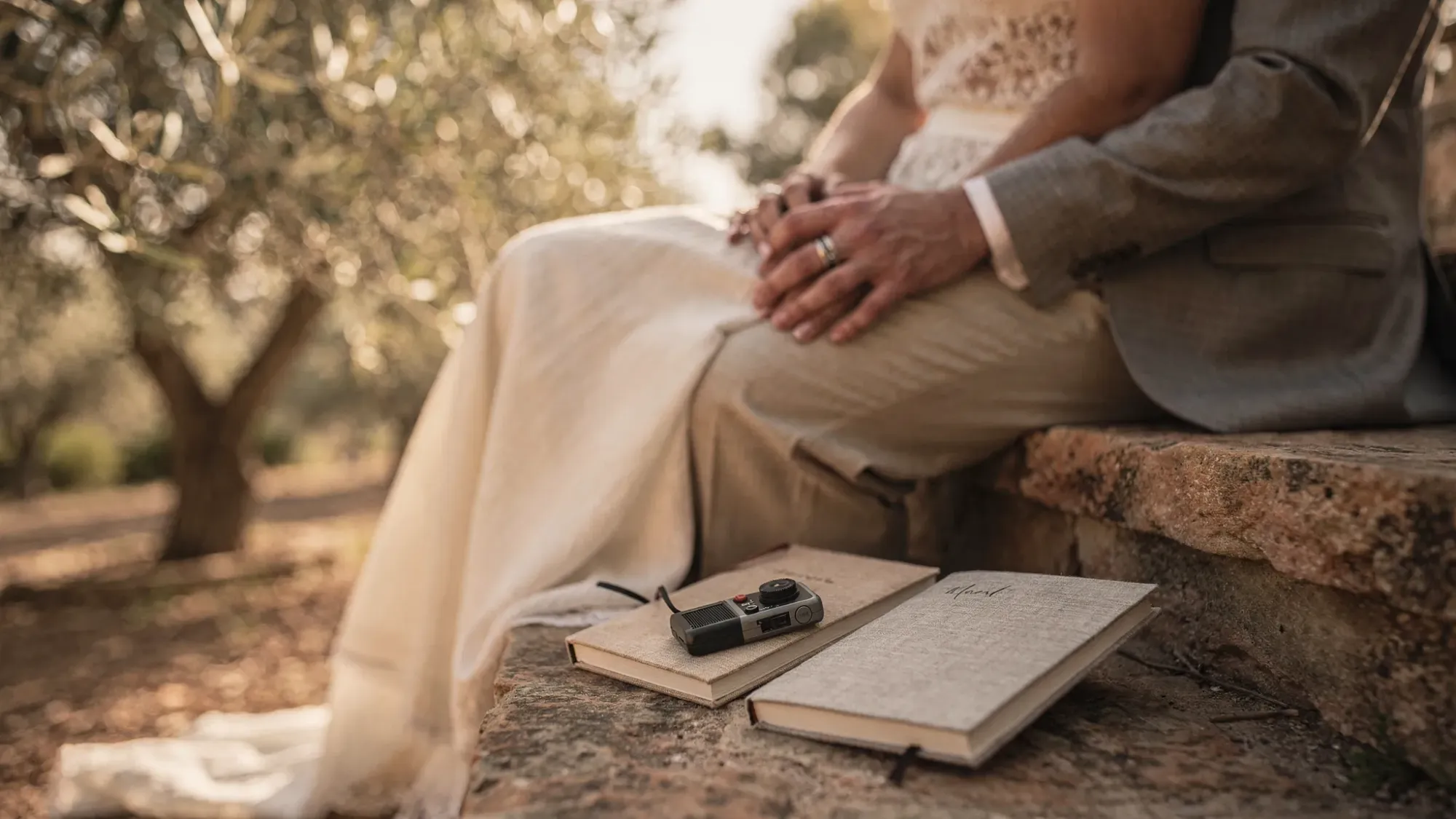
It’s you rereading a line you wrote at 2 a.m. and smiling like you just recognized yourself.
It’s the pause after you say the thing that matters.
A filmmaker is listening for that pause.
Not just with a microphone, but with patience.
The difference between “pretty” and “cinematic” is often sound
A still image can be breathtaking.
But a film lets you return to what you couldn’t hold onto in the moment.
- The texture of your voice.
- The ocean’s low roar under your words.
- The soft laugh when you mess up a sentence and keep going.
That’s the part your future self will miss most.
Not the perfection.
The realness.
The place isn’t a backdrop, it’s part of the plot
You can feel it when a location is chosen for photos.
And you can feel it when a location is chosen for meaning.
In Spain, the hidden places do something to you.
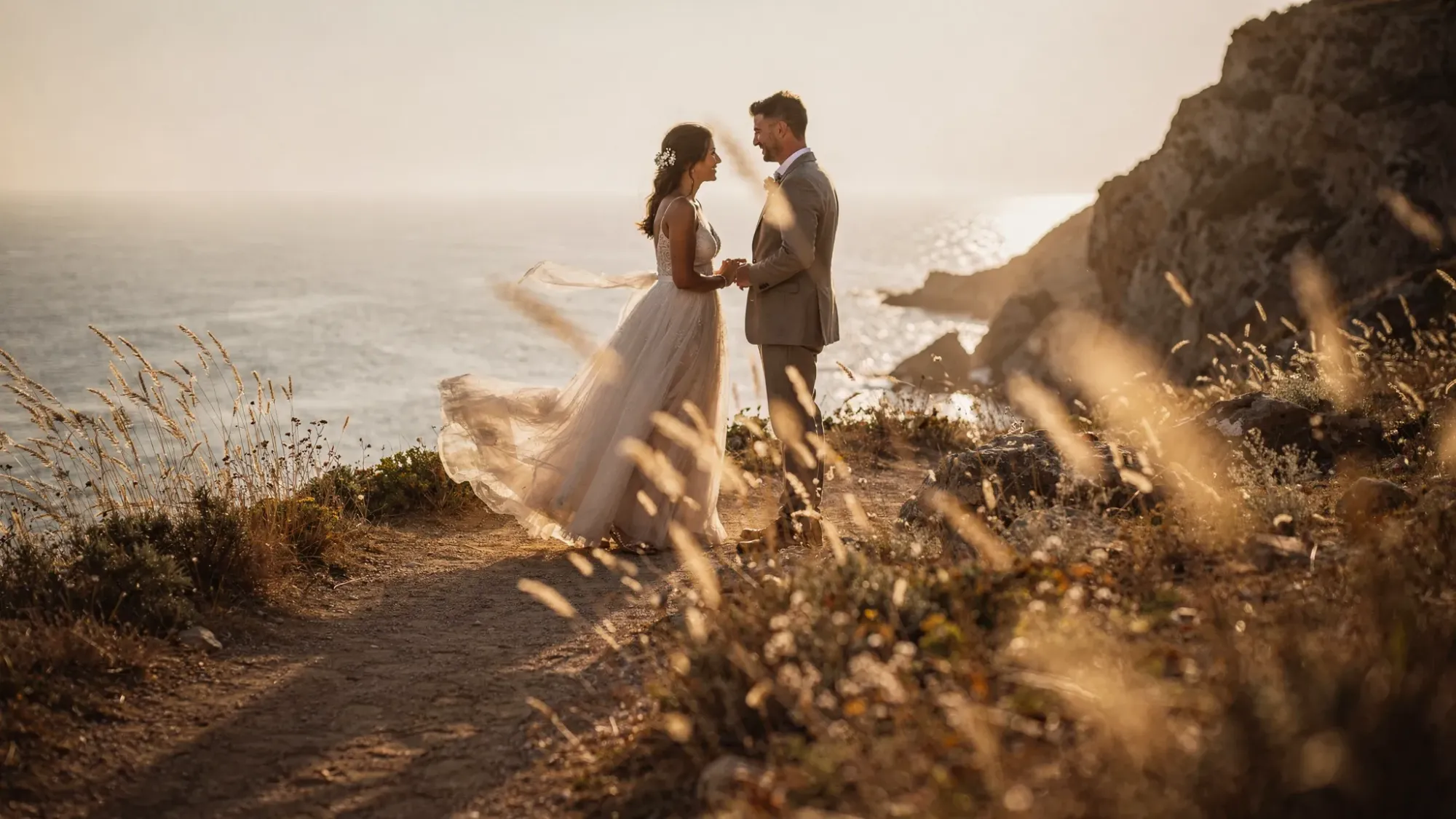
A narrow path through wild rosemary.
A cliff edge where the air changes temperature a few steps from the drop.
A quiet stone terrace above an olive grove, where the morning smells green and clean, like crushed leaves between your fingers.
The light here is not a filter. It’s a character.
It arrives slowly, touches everything, then leaves.
And if you build your timeline around that truth, your film stops feeling staged.
It starts feeling inevitable.
A sensory portrait, so you can feel it before you choose it
Imagine this:
You wake early, not because you have to, but because your body knows it’s a day worth meeting slowly.
The room is cool. The window is open. Somewhere outside, a scooter passes and disappears.
You drink something warm, standing barefoot on tile.
Later, you drive out of town, and the road narrows. You pull over where Dominick tells you to, because he’s already walked this trail, already checked the light, already found the exact bend where the world opens.
You hike five minutes.
Then the sea appears.
Not all at once. First as sound, then as brightness, then as a horizon line that makes you feel small in the best way.
When you speak your vows, the silence isn’t empty.
It’s full.
The small choices that protect real moments (and make them film beautifully)
You don’t need to “know what to do.”
You need a day designed so you can forget what to do.
Here’s what actually helps your moments stay real, on camera and in your body:
- Plan for light, not for clocks. Choose your vow time based on sunrise or sunset and the direction the landscape faces, not a traditional schedule.
- Build in margins. Add buffers between locations so you’re not rushing, and so spontaneous moments have room to exist.
- Choose one meaningful ritual. Not ten. One. Pour a small glass of local wine, exchange letters, wash hands in the sea, carry an heirloom.
- Prioritize sound for vows. Ask your filmmaker how they record audio in wind, near waves, or on a mountain. Crisp audio is the difference between watching and time traveling.
- Wear something you can move in. Not “comfortable” like pajamas, comfortable like you can climb a few steps, spin once, breathe fully.
- Let weather be part of the story. Wind gives movement. Clouds give depth. A sprinkle gives you a reason to huddle close.
To make this tangible, here’s a simple way to think about “cinematic” without turning your day into a production:
| Real moment | What makes it cinematic | What protects it from feeling staged |
|---|---|---|
| You walk to the vow spot | Movement, anticipation, natural pacing | No rushing, no crowd, no strict pose list |
| You read vows | Sound, silence, breath | A private location, wind-aware audio setup |
| You laugh mid-ceremony | Contrast, honesty | Permission to be imperfect |
| You take it in afterward | Wide landscape, small human details | A pause built into the timeline |
A practical plan creates emotional freedom.
That’s the whole point.
Why having one guide (who also films) changes everything
When you bring a big team, you bring a vibe.
Sometimes that vibe is fun, but sometimes it turns your nervous system on high alert.
Dominick keeps it intimate on purpose.
He’s your location scout, itinerary builder, ceremony helper, calm presence, and filmmaker.
That matters because the film is only as honest as you feel.
If you trust the person beside you, you stop performing.
And when you stop performing, your story shows up.
If you want to understand what that kind of experience looks like in practice, start with Dominick’s approach as an adventure elopement planner. It reads like a philosophy, because it is.
And if you’re already leaning toward film (or you’re not sure yet), his guide to cinematic elopement films helps you see what’s possible when storytelling leads.
If you’re camera-shy, you’re not behind
Some couples worry they’ll look awkward.
They worry they’ll “ruin” the footage by being themselves.
But being yourself is the footage.
If this fear is sitting quietly in your chest, you’ll feel less alone reading Overcoming camera shyness for elopement films.
It’s gentle, and it’s practical.
How cinematic memory is actually made (it’s not in the edit, it’s in the pacing)
Editing is powerful.
But it can’t invent what never happened.
Cinematic memory comes from how the day is shaped.
- You choose one or two locations that make sense together.
- You move slowly enough to notice what’s happening.
- You let emotion land before you move on.
Dominick scouts for places where the environment does half the work: texture, light, quiet.
Then he films in a way that respects what’s unfolding.
Not interrupting.
Not posing every breath.
Just collecting the truth with care.
A note for the couples building a life across borders
Sometimes your love story isn’t only about where you marry.
It’s about where you’re heading.
Maybe your work is shifting countries.
Maybe you’re planning a new chapter somewhere you’ve never lived before.
If you’re an Australian couple also navigating practical cross-border decisions (like investing or setting up a business in the UAE), services such as Dubai Invest’s guidance for Australians can make that side of life feel less overwhelming.
And that’s the throughline.
Whether it’s paperwork, travel, timelines, or the shape of your vows, you don’t want to hold it all alone.
You want a guide.
When you’re ready, you don’t need a pitch, you need a conversation
Wanting something quieter is not a phase.
It’s a form of honesty.
Your couples story deserves to be lived in full color, with room to breathe, and with someone beside you who knows how to find the hidden places and the right hour of light.
Dominick loves those early conversations, when you tell him what you keep imagining, and he gets to say, softly, “I know the place.”
When you’re ready to open that door, you can commence the adventure here.
Previous Article
Intimate Wedding Spain: A Slow, Cinematic Way to Say Yes

I'm Dominick let's craft your perfect Mediterranean elopement.
Let's create a day that captures your love, surrounded by the Mediterranean's beauty. Ready to plan your perfect escape?
Start your Adventure Let's talk!